How to Choose a Coarse Fishery for Your First Sessions
Compares the main types of coarse water for first sessions, from day-ticket lakes to canals and rivers, and gives a simple checklist for judging any water from its own published information.
At a Glance
- A rod licence is a legal requirement in England and Wales but does not give permission to fish; you also need a ticket, permit or membership.
- A well-run day-ticket stillwater is usually the most forgiving first water.
- Judge a water on who controls it, its stocks, its rules, its access and whether it is open.
- In England the coarse close season (15 March to 15 June) applies to rivers, but not to most stillwaters and canals.
- Add canals, rivers and club waters as your confidence grows.
There are lakes, canals, rivers and club waters within reach of most of us, and from the outside they can all look much the same. If you are new to coarse fishing, or coming back after a long break, it is hard to tell which one will give you a good first session and which one will leave you sitting behind a motionless float.
This guide explains how to choose a coarse fishery without relying on a directory or someone else's list. It compares the main types of water and gives you a simple set of checks you can run on any water from its own published information.
The short answer first. For most first sessions, a well-run day-ticket stillwater with clear rules, good access and a healthy head of fish is usually the most forgiving place to start. It is not the only good choice, and the rest of this guide will help you decide what suits you.
Before You Choose: Licence and Permission
In England and Wales, if you are 13 or over you need an Environment Agency rod licence to fish for freshwater fish with a rod and line. Under 13s do not need one, and licences for 13 to 16-year-olds are free. You can buy a rod fishing licence on GOV.UK, with 1-day, 8-day and 12-month options.
A rod licence does not give you permission to fish any particular water. Permission comes from whoever controls the fishing, whether that is a fishery owner, an angling club, a council or a navigation authority, through a day ticket, permit or membership. For the detail, see our guide to fishing licences and day tickets in England and Wales.
Types of Water Compared for First Sessions
The pros and cons below are general guidance, and every water is different, so treat them as a starting point rather than a rule.
Commercial day-ticket stillwaters
Commercial fisheries are purpose-built or heavily managed lakes, often stocked with carp and other coarse species. Many have parking and toilets, and some have a tackle shop or café on site.
If you want to pick a day ticket lake for your first sessions, this is often the easiest place to start. Stocks are often good and catch rates fairly consistent, rules and pegs are usually signposted, and there are no river levels or boat traffic to worry about. On the other hand, commercials can be busy and noisy at peak times, and they have a more managed feel. Rules can be strict, for example barbless hooks only, specific nets or bait bans, but they exist for the welfare of the fish.
Club waters
With a club, you pay an annual membership, and some clubs also sell guest day tickets. If you fish regularly, the cost per session is often lower, one membership can cover several waters, and club matches and experienced members can be a great help when you are learning.
The trade-offs are an up-front fee, a possible application process and, at some clubs, a waiting list. Club rules and etiquette can also be stricter than on commercial waters.
Canals
Canals are often urban, or close to town centres and public transport, which makes them easy to reach for a short session. You share them with boats and towpath users, so expect some disturbance.
Who you get your permit from depends on who controls the stretch. Most canals in England have no statutory close season, but some, such as canalised rivers, do. Our guide to canal fishing for beginners covers canals in more detail.
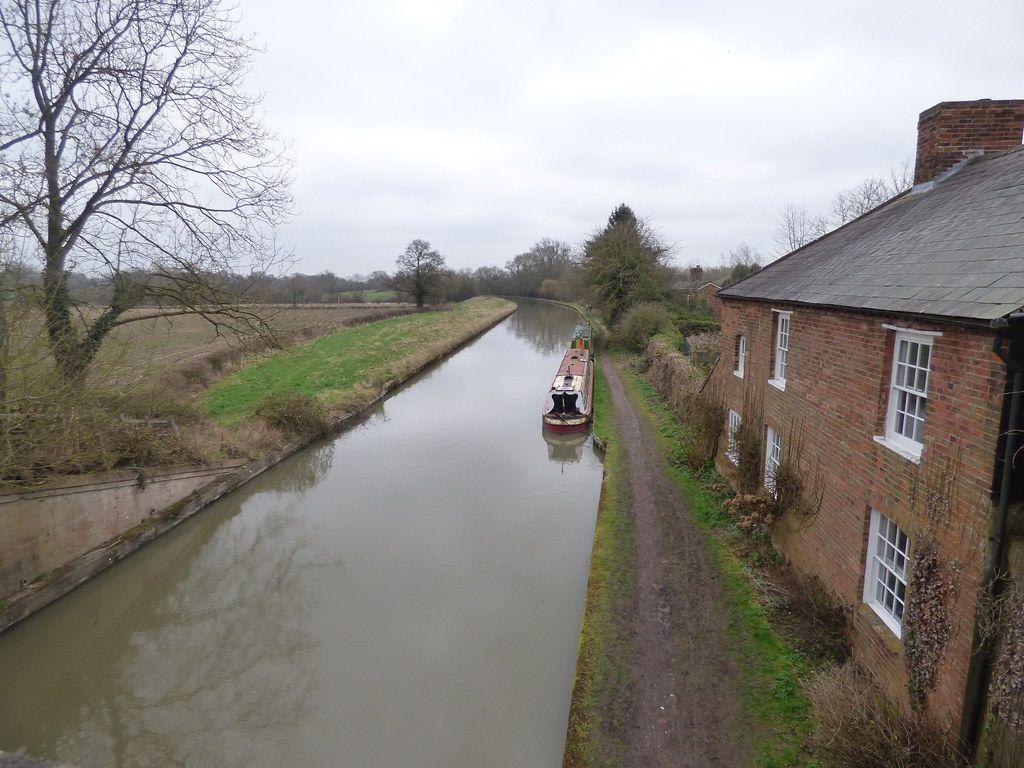
Station House alongside the Grand Union Canal at Hatton. by ell brown · Flickr · CC BY-SA 2.0
Rivers
Rivers are moving water, with varied depth and flow and a more natural feel. They are good places to learn watercraft, and they are often quieter than a busy commercial.
They can also be harder for a beginner. Levels, colour and flow can all make fishing more difficult, and banks can be uneven or overgrown. In England the coarse close season applies to rivers, so river fishing for coarse species is off the table for part of the spring.
Council and authority-managed waters
Some councils and navigation bodies offer coarse fishing on permits or tickets, often at modest cost and with published rules. These waters can suit families and casual sessions. They often have fewer pegs, though, and facilities can be basic.
| Type of water | Usually suits | Things to weigh up |
|---|---|---|
| Commercial day-ticket stillwater | Learning the basics with fairly regular bites | Can be busy at peak times; rules can be strict, for fish welfare |
| Club water | Anglers who expect to fish regularly | Up-front membership fee; some clubs have waiting lists |
| Canal | Anglers who want somewhere close to home | Shared with boats and towpath users; permit depends on who controls the stretch |
| River | Anglers ready for flow and changing levels | Coarse close season applies on rivers in England; levels and banks vary |
| Council or authority water | Families and casual sessions | Fewer pegs; facilities can be basic |
Choosing a Coarse Fishery: What to Check
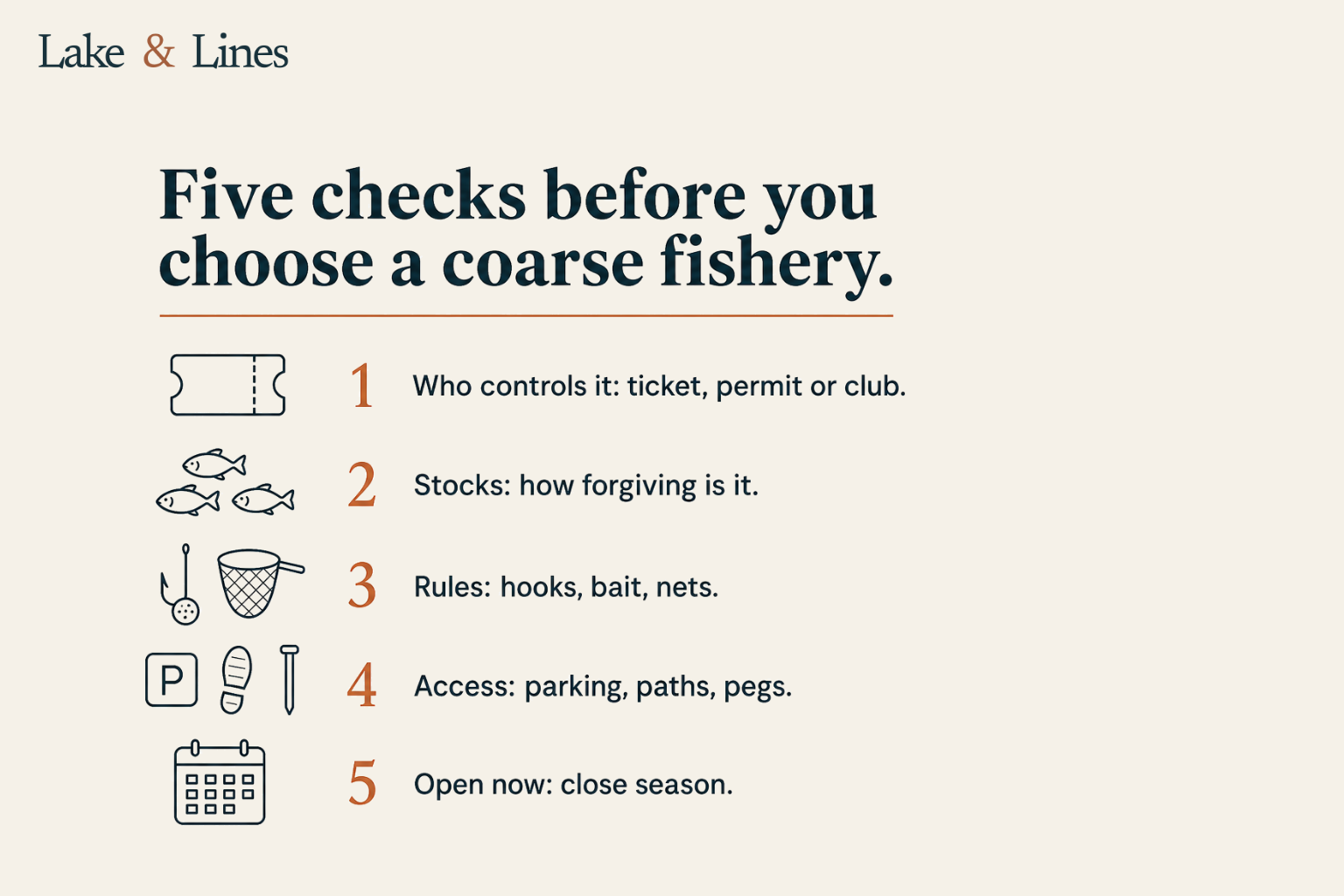
Once you have a type of water in mind, judge each candidate on five things. You can usually find every answer in the water's own information: its website, permit page, notice board or rules sheet.
Who controls it, and what ticket or permit you need
Start by finding out who controls the fishing, because that tells you what permission you need and where to buy it. It might be a day ticket from the fishery, a club permit or membership, or a permit from a council or navigation authority.
The Canal & River Trust is a useful example. On its waterways, the permit depends on who manages that stretch. The fishing rights on most of its waterways are rented to local angling clubs; stretches that are not club-controlled need a Waterway Wanderers permit. The Trust is also clear that there is no free fishing on its canals. That is the Canal & River Trust's position for its own waters, not a rule for every UK water, and its canal and river fishing FAQs explain it in full.
Fish stocks and how forgiving it is
A heavily stocked day-ticket lake or an accessible club stillwater usually gives more consistent action, and a clearer structure, than a complex river or a large canal. Look for what the water says about its stocks and the species you are likely to catch.
Rules on hooks, bait, nets and keeping fish
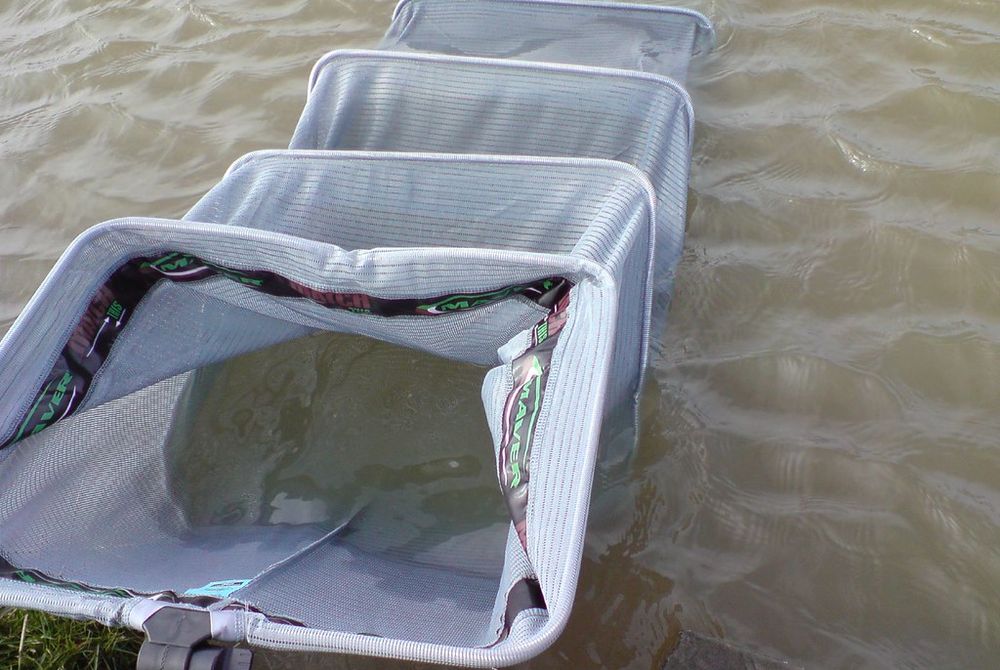
Read the rules before you go and make sure you can follow them. That might mean having a suitable landing net, using barbless hooks or sticking to permitted baits. National byelaws set limits on keeping fish, and local rules can add to them. For a fuller picture, see common fishery rules on hooks, bait and nets.
Access, pegs and facilities
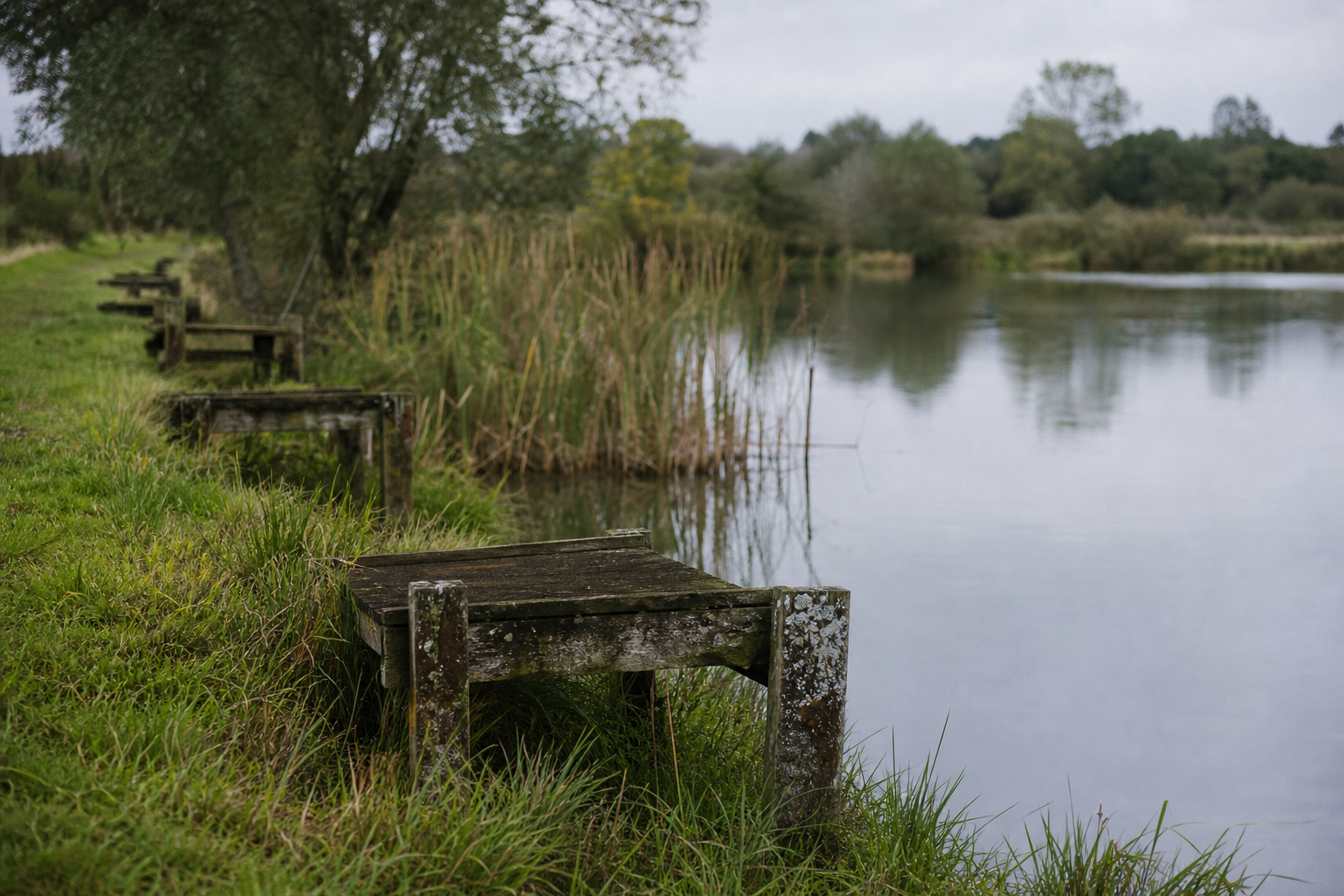
Check parking, paths, platforms and toilets, and step-free access if you need it. Think about how you will get there and whether the water works for an early start or a late finish.
Whether it is open now (close season)
In England the coarse close season runs from 15 March to 15 June inclusive. It applies to all rivers, streams and drains, most stillwater SSSIs (Sites of Special Scientific Interest), some canals (canalised rivers) and most Norfolk and Suffolk Broads waters. There is no close season on the majority of stillwaters and most canals, but clubs and private fisheries may set their own, so check the water's rules.
The detail is in the national rod fishing byelaws for England, and we cover it in the coarse fishing close season explained. Wales, Scotland and Northern Ireland have separate guidance.
Read the rules before you pick the water
A fishery's own rules page often tells you more than any review. If it clearly states the ticket price, the rules on hooks, bait and nets, and where to park, that is usually a sign of a well-run water that is easy for a first session.
Choosing a water for your first sessions
Sort your licence
If you are 13 or over, get the right Environment Agency rod licence before you plan anything else.
Decide what you want from the session
A relaxed few hours with regular bites usually points to a stocked stillwater; flow and wilder banks point to a river later on.
Check who controls the water
Find out whether you need a day ticket, a club permit or membership, and where to buy it.
Read the published rules
Look for rules on hooks, bait, nets and keeping fish, and make sure you can follow them.
Check access and timing
Look at parking, paths and pegs, and whether a close season applies to that water.
Building Up From Your First Water
Your first water does not have to be your only one. Once you are comfortable handling your tackle and looking after the fish, canals and rivers open up different species and conditions. Keep the river close season in mind when you plan, and take the step up gradually. When you are ready for moving water, start with a gentle, easy-access stretch of river.
Club membership can make sense once you fish regularly, since one membership can cover several waters. Until then, a suitable first fishery on a day ticket keeps things simple while you learn.
Ready for Your First Visit
Once you have chosen your water, the next step is the day itself. Arriving, finding the bailiff, booking a peg and what to bring are all covered in our guide to what to expect on your first visit to a commercial fishery.
References and Further Reading
- Canal and River Trust: Canal and river fishing FAQs.
- Broads Authority: Angling requirements and coarse fishing season on the Broads.
- Inland Waterways Association: Fishing, using the waterways.
Frequently asked questions
What is the best type of fishery for a beginner?
There is no single best type, but for most first sessions a well-run day-ticket stillwater with clear rules, good access and a healthy head of fish is usually the most forgiving place to start. Stocks are often good, rules and pegs are usually signposted, and there are no river levels or boat traffic to worry about.
Do I need a rod licence and a day ticket?
Usually, yes. In England and Wales, if you are 13 or over you need an Environment Agency rod licence to fish for freshwater fish with a rod and line. The licence does not give you permission to fish any particular water: you also need a day ticket, permit or membership from whoever controls the fishing.
Can I fish a canal for free?
Not on Canal & River Trust canals. The Trust says there is no free fishing on its canals. The permit you need depends on who manages the stretch: often a local angling club, otherwise a Waterway Wanderers permit. Other canals may be controlled by other bodies, so check who controls the water you want to fish.
Can I fish a lake during the close season?
In England there is no close season on the majority of stillwaters, so many lakes stay open. The coarse close season, 15 March to 15 June inclusive, does apply to most stillwater SSSIs, and clubs and private fisheries may set their own close seasons, so always check the water's rules. Wales, Scotland and Northern Ireland have separate guidance.
Is it worth joining an angling club as a beginner?
It can be, once you fish regularly. Club membership often lowers the cost per session, one membership can cover several waters, and matches and experienced members can help you learn. Against that, there is an up-front fee, sometimes an application process or waiting list, and club rules can be stricter.
Do children need a fishing licence?
In England and Wales, children under 13 do not need a rod licence. Licences for 13 to 16-year-olds are free. Young anglers still need permission to fish the water and must follow its rules.
How do I find out the rules at a fishery?
Look at the water's own information: its website, permit page, notice board or rules sheet. Check the rules on hooks, bait, nets and keeping fish, and make sure you can follow them. National byelaws set limits on keeping fish, and local rules can add to them.
Lake & Lines Editorial Team
Editorial team
The Lake & Lines editorial team brings together freshwater fishing guides and researched tackle advice, helping beginners and returning anglers prepare for better days by the water.