Fishery Rules for Beginners: Hooks, Bait, Nets and Handling
Practical, venue-focused guidance on fishery rules for beginners: hook types, permitted baits, required nets and mats, and safe handling so you fish legally and protect the fish.
At a Glance
- Two layers of rules apply: national byelaws and venue rules, with venue rules often dictating daily practice.
- Use barbless single hooks and check for treble or maximum size bans before you buy tackle.
- Begin with common baits like maggots, worms, sweetcorn and soft pellets and confirm any restrictions on boilies or particles.
- Bring required fish-care kit: a large landing net, a damp unhooking mat, forceps and a weigh sling if weighing fish.
- Always check the fishery website, noticeboard or ask the bailiff to confirm rules before you arrive.
You have your rod licence, you have bought a day ticket, and you have chosen a fishery. The next question most new coarse anglers ask is: what exactly will I be expected to do when I get there? Understanding fishery rules as a beginner is less complicated than it might seem, but there are two layers to get to grips with. The Environment Agency sets national and regional byelaws in England, and Natural Resources Wales sets the angling byelaws in Wales. On top of those, individual fisheries set their own rules that govern everything from the type of hooks you use to what bait you can bring through the gate. This article focuses on those venue-level rules, because they are the ones that shape what happens during a typical session on a commercial stillwater. If you are fishing in Scotland or Northern Ireland, be aware that those jurisdictions operate under different regulatory systems; the guidance here applies to England and Wales.
Two Layers of Rules: National Byelaws and Venue Rules
National byelaws cover things like the river close season (15 March to 15 June on most rivers in England and Wales), the requirement to return certain species alive, and minimum standards for equipment. These apply regardless of where you fish.
Venue rules sit on top of byelaws and are set by the fishery owner or operator. Both sets of rules are binding. If you break a venue rule, you can be asked to leave, even if you have technically complied with national law. On a commercial stillwater, which is where most beginners start, the venue rules are the ones you will encounter most often in practice.
The simplest way to think about it: national byelaws set the floor, and the fishery's own rules build on it.
Always check the venue's rules before you arrive
Fishery rules vary between venues. Many are posted on the fishery's website or printed on the noticeboard at the entrance. Read them before your first visit, not when you get to your peg. If anything is unclear, call or email the fishery in advance.
Hook Rules at Commercial Coarse Fisheries
Barbless hooks: the standard on most venues
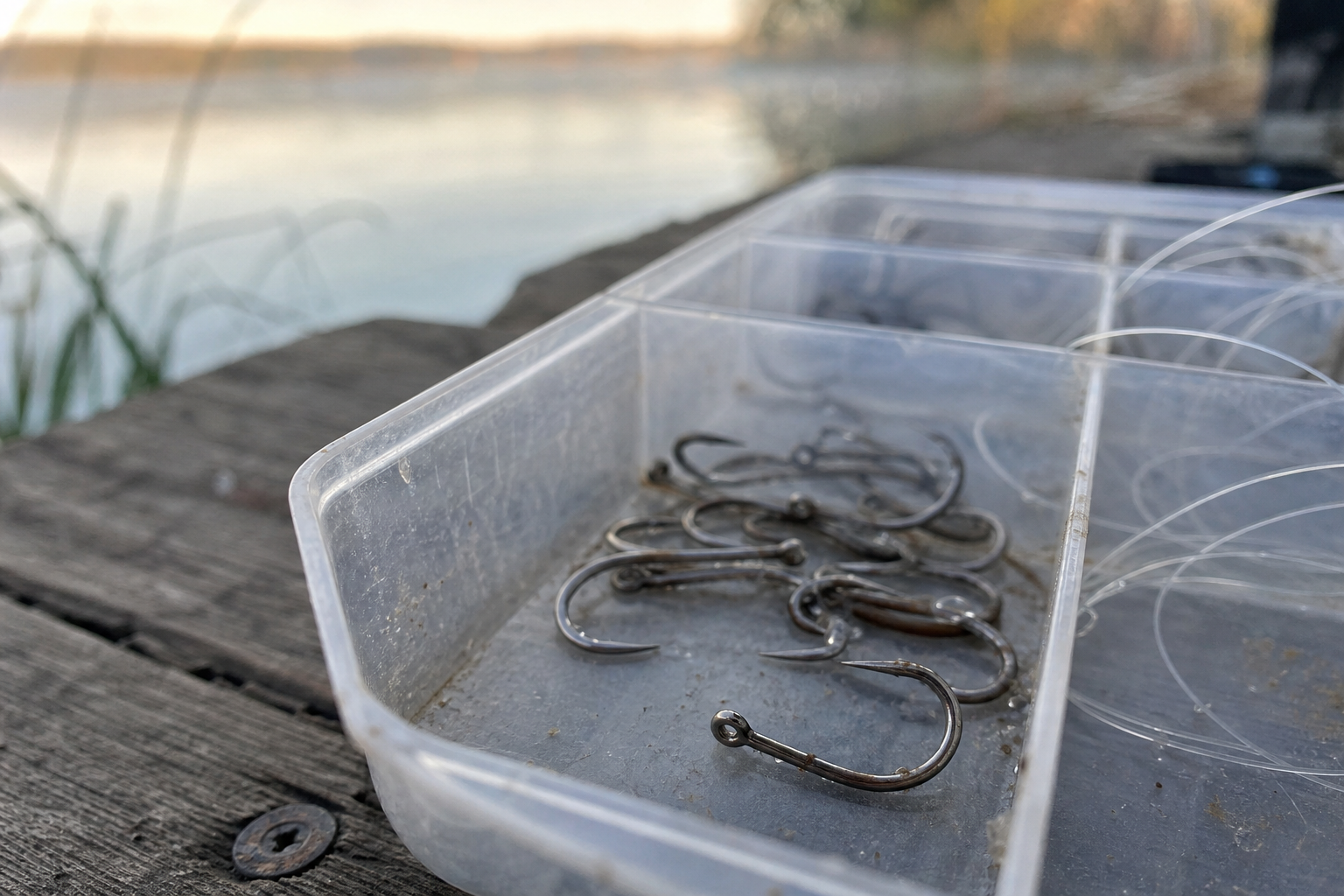
The majority of commercial coarse fisheries in England require barbless or micro-barbed hooks only. A barbless hook has no retaining point behind the tip of the hook; once a fish is brought to the net, the hook comes out cleanly with minimal effort. A micro-barb is a much smaller version of a standard barb, reduced to a tiny ridge rather than a pronounced point. Some venues accept micro-barb; others require fully barbless. The difference matters, so it is worth checking before you buy your hooks.
The reason these rules exist is straightforward: barbless hooks cause less tissue damage inside the fish's mouth, are faster to remove, and reduce the time the fish spends out of the water during unhooking. Across a day when dozens of fish are caught and returned, that adds up to a meaningful improvement in fish welfare.
For a beginner, the practical takeaway is simple: buy barbless hooks as your default. Do not buy barbed hooks and plan to flatten the barb with forceps; that works in principle but is easy to do imperfectly, and some venues check. Purpose-made barbless hooks are widely available and no more expensive.
Hook size and type restrictions
Some venues ban treble hooks for general coarse fishing. Where trebles are permitted at all, it is usually only for dedicated pike fishing with specific rigs. For a beginner targeting carp, tench, bream or roach on a commercial fishery, single hooks are what you need.
Some waters also set a maximum hook size, particularly those managed for smaller species where a large hook would be disproportionate. These rules will be on the fishery noticeboard or website. They are straightforward to follow once you know to look for them.
| Rule | What it means | How to check |
|---|---|---|
| Barbless only | No hooks with a retaining barb; use barbless or flatten the barb | Fishery website or noticeboard |
| Micro-barb permitted | Small barb is allowed; check the specific venue rule | Fishery website or noticeboard |
| No treble hooks | Single hooks only for general coarse fishing | Fishery website or noticeboard |
| Maximum hook size | Often size 8 or smaller; varies by venue | Fishery website or noticeboard |
Bait Rules: What You Can and Cannot Bring
Bait rules exist for two reasons: protecting water quality and keeping fishing fair and sustainable. Unlike hook rules, bait rules vary considerably between venues, so the approach here is to explain the categories rather than give a single list that may not apply to your fishery.
Commonly permitted baits
Maggots, worms, sweetcorn and soft pellets are accepted on the vast majority of commercial coarse fisheries. These are the safest starting point for a first session. Paste and bread are generally acceptable too, though it is worth confirming. If you are fishing a venue for the first time, building your bait selection around these staples means you are unlikely to encounter a problem.
Baits that are often restricted or banned
Once you move beyond the basics, the rules become more venue-specific. Common restrictions include:
- Boilies and hard pellets: Many venues limit pellet diameter, with pellets larger than 8mm not permitted on some waters. Boilies may be banned outright or restricted to a daily allowance.
- Nuts and particles: Hemp, tiger nuts, peanuts and similar particles are banned at many fisheries. The concern is fish health: particles used incorrectly, or in large quantities, can cause serious harm. Do not assume these are permitted unless the venue explicitly says so.
- Livebaits and deadbaits from other waters: Bringing fish or fish-based baits from another water risks introducing disease or invasive species. Most venues prohibit it outright, and for good reason.
- Excessive groundbait: Many venues set a daily limit on the volume of groundbait that may be used, and some ban it entirely on certain pegs or lakes. Check before you mix a full bowl.
- Flavoured or medicated baits: Certain oils and additives can affect water quality or fish health. If you are using anything beyond a standard bait, check the venue's position before you arrive.
When in doubt, ask before you bring it
If you are unsure whether a bait is permitted, contact the fishery before your visit. Taking banned bait to a venue is easily avoided and can result in being asked to leave.
Bringing bait onto the fishery
Some heavily managed commercial fisheries require that bait is purchased on site rather than brought from elsewhere. This is less common than hook or pellet rules, but it is worth checking at the point of booking if you are planning to bring a large quantity of bait with you.
Landing Nets, Unhooking Mats and Other Required Equipment
Most commercial coarse fisheries require specific fish-care equipment as a condition of fishing. These are not suggestions; they are rules in the same way that hook type is a rule.
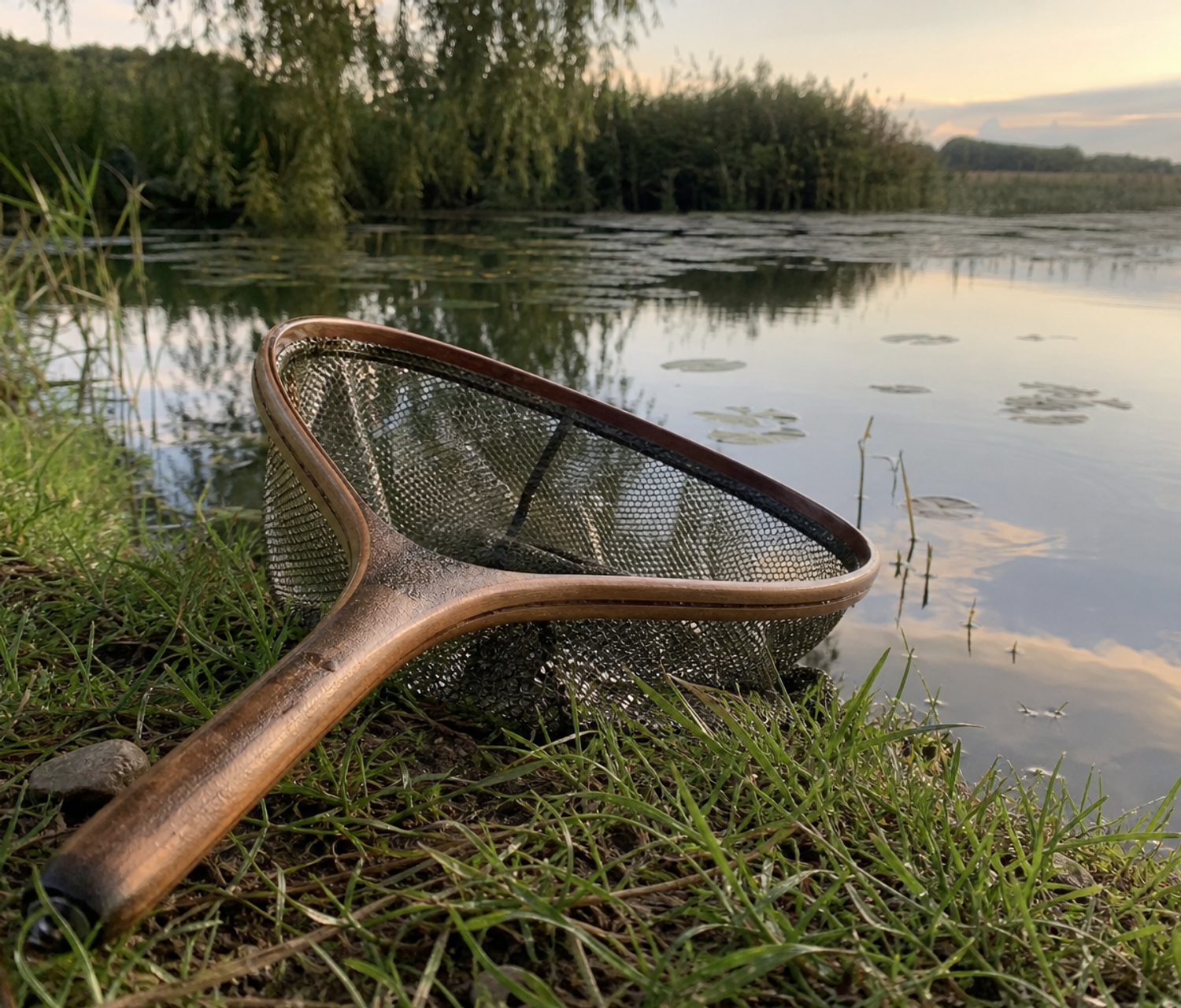
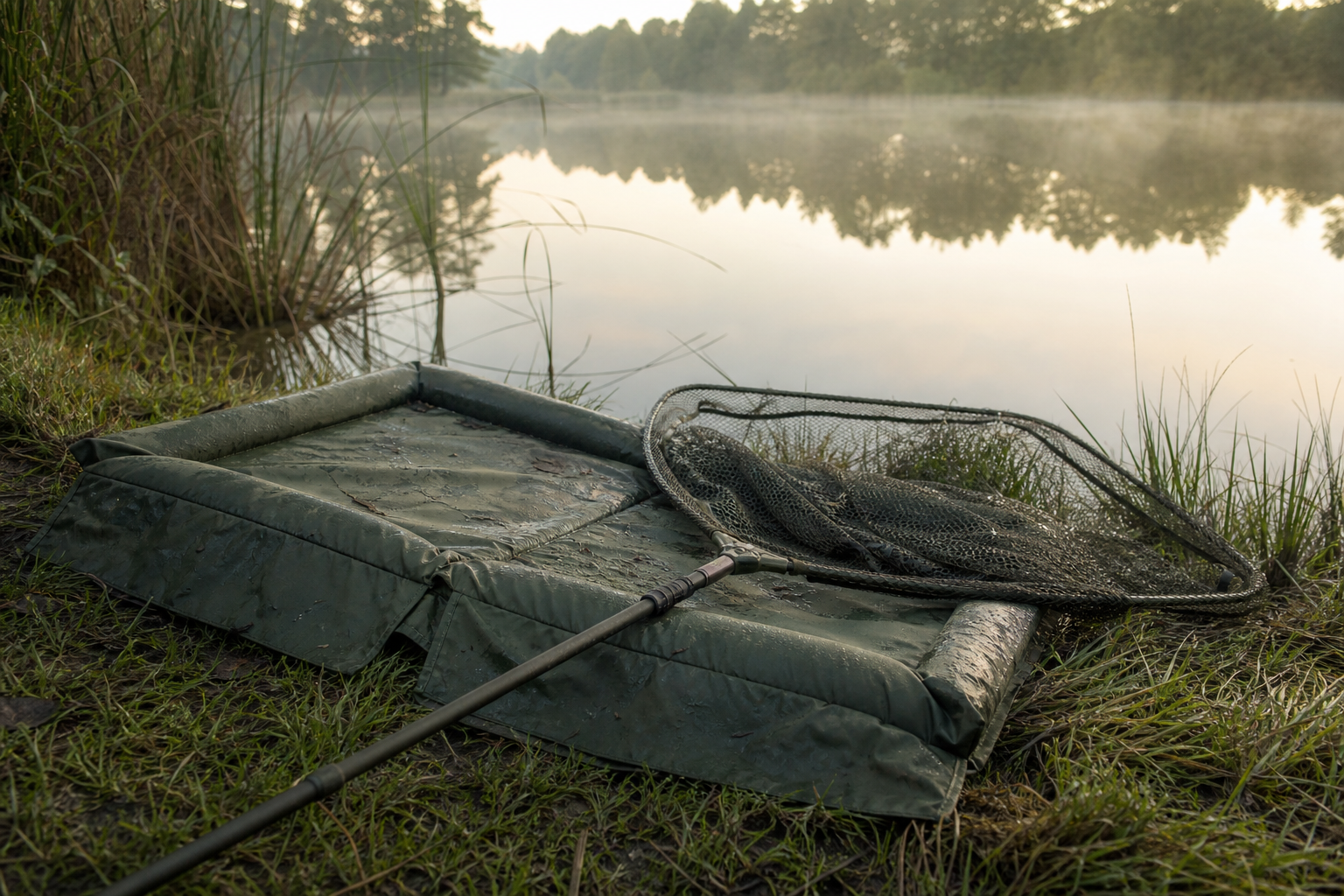
Landing net: Required at virtually all coarse fisheries. The net needs to be large enough to accommodate the fish you are targeting. Some venues specify a minimum mesh size, and some restrict or ban certain types of net (keepnets, for example, on some waters).
Unhooking mat: Required at most commercial fisheries, particularly where carp are present. The mat provides a padded, dampened surface that protects the fish from injury and scale loss while it is out of the water. Some venues require a carp cradle for larger fish, which offers deeper sides and better containment.
Forceps or disgorger: Needed to remove the hook cleanly and quickly without putting your fingers inside the fish's mouth unnecessarily. Barbless hooks make the process faster and easier, which is one of the practical benefits that reinforces why venues require them.
Weigh sling or weigh net: Required if you intend to weigh fish. The sling must be wet and zeroed (tared) on the scales before the fish goes in, so that you are weighing the fish rather than the fish plus the weight of the damp sling.
Set up your fish-care equipment before your first cast
Assemble your landing net, unfold your unhooking mat and dampen it slightly, and keep forceps or a disgorger within reach before you start. Every fish can then go straight to the mat without delay.
Keepnet Rules
Keepnet rules vary more than almost any other rule category, and they catch out more beginners than you might expect. On commercial carp waters, keepnets for carp are often banned outright. On mixed fisheries that also host match fishing, keepnets may be permitted only during organised matches, or only for silver fish (roach, bream, perch and similar species). Some venues specify a minimum keepnet length to prevent overcrowding of fish within the net.
The reasoning behind these rules is about fish welfare. Keeping fish confined in a net causes stress, particularly in warm weather when dissolved oxygen levels drop, or when numbers build up over several hours of match fishing. Venues set keepnet rules to manage that risk.
For a beginner fishing a pleasure session, the practical answer is simple: you do not need a keepnet. Unhooking and returning fish promptly throughout the session is both the correct approach and, on most commercial fisheries, the only approach permitted. Check the venue's keepnet rules before your visit, but do not feel that you are missing out by not using one.
Fish Handling and Return
Many fisheries set explicit rules about how fish are handled, photographed and returned. These rules are part of what the angler agrees to on arrival, and they exist alongside the national requirement to return certain species alive.
Keep fish close to the ground and over the mat
Fish should always be unhooked over a dampened mat, with the angler kneeling or sitting close to the ground. Some venues specify that fish should not be lifted higher than necessary off the mat. The risk is a fall: even a short drop onto hard or stony ground can injure or kill a fish.
Wet hands and equipment
Dry hands, dry slings and dry mats remove the protective slime coat from the fish's skin, which leaves it vulnerable to infection. Wet your hands, your weigh sling and your unhooking mat before they come into contact with any fish. This takes a few seconds and makes a genuine difference to the fish's wellbeing after return.
Photographs
Most venues allow a photograph but expect it to be taken quickly and with the fish held correctly. The general principle is to keep the fish low (over the mat or close to the water's edge), support its body fully with both hands, and return it within a few seconds. Some venues set explicit limits on how long a fish may be out of the water for photography.
Return promptly and support recovery
Hold the fish upright in the water, supporting it gently, until it has recovered and swims away under its own power. Do not push or force it forward. Do not return a fish to a keepnet after it has been handled and stressed by unhooking.
Eels: a legal note
Under national byelaws in England and Wales, eels must be returned alive. They cannot be kept for the table. This is a legal requirement rather than a venue preference, and it applies everywhere in England and Wales regardless of the individual fishery's rules.
How to Find the Rules for Any Venue
The coarse fishery rules that matter most are the ones that apply to the specific water you are visiting. Here is a straightforward process for finding them before every session.
How to check a fishery's rules before your first visit
Check the fishery's website
Look for a "fishery rules", "day ticket" or "venue information" page. Rules are usually listed here, including hook type, bait restrictions and required equipment.
Look for the rules noticeboard on arrival
Most fisheries post their rules at the entrance or near the car park. Read these before you set up. Rules may differ between lakes on the same fishery.
Ask the bailiff or fishery staff
If you are unsure about any rule, ask before you set up, not after. Bailiffs are there to help as well as to check permits.
Check the date of the information you find
Fishery rules change. If you found the rules on a third-party website or forum, verify them directly with the fishery before relying on them.

Treating venue rules as binding conditions of entry (which they are) rather than optional guidelines makes everything simpler. You arrive prepared, you fish without concern, and the fish go back in better condition. That is what the rules are designed to achieve, and following them is straightforward once you know what to look for.
Frequently asked questions
Do I need a rod licence and day ticket to fish at a commercial fishery?
Yes. A rod licence is required by law in England and Wales and most commercial waters also require a day ticket or membership from the fishery.
Are barbless hooks compulsory at commercial fisheries?
Most commercial coarse fisheries require barbless or micro-barbed hooks. Buy purpose-made barbless hooks as your default and check the venue rule before you go.
What bait can I bring to a fishery?
Start with maggots, worms, sweetcorn and soft pellets. Many venues restrict boilies, nuts, particles and live or imported baits, so confirm the fishery's bait policy in advance.
Do I need special fish-care equipment?
Yes. Landing nets, a damp unhooking mat and forceps or a disgorger are required at most venues. A weigh sling is needed if you intend to weigh fish and must be wet and tared first.
Can I use a keepnet on my first visit?
Keepnet rules vary widely. Many carp waters ban keepnets, while some fisheries allow them for match silver fishing. As a beginner on a pleasure session you usually do not need one.

Lake & Lines Editorial Team
Editorial team
The Lake & Lines editorial team brings together freshwater fishing guides and researched tackle advice, helping beginners and returning anglers prepare for better days by the water.