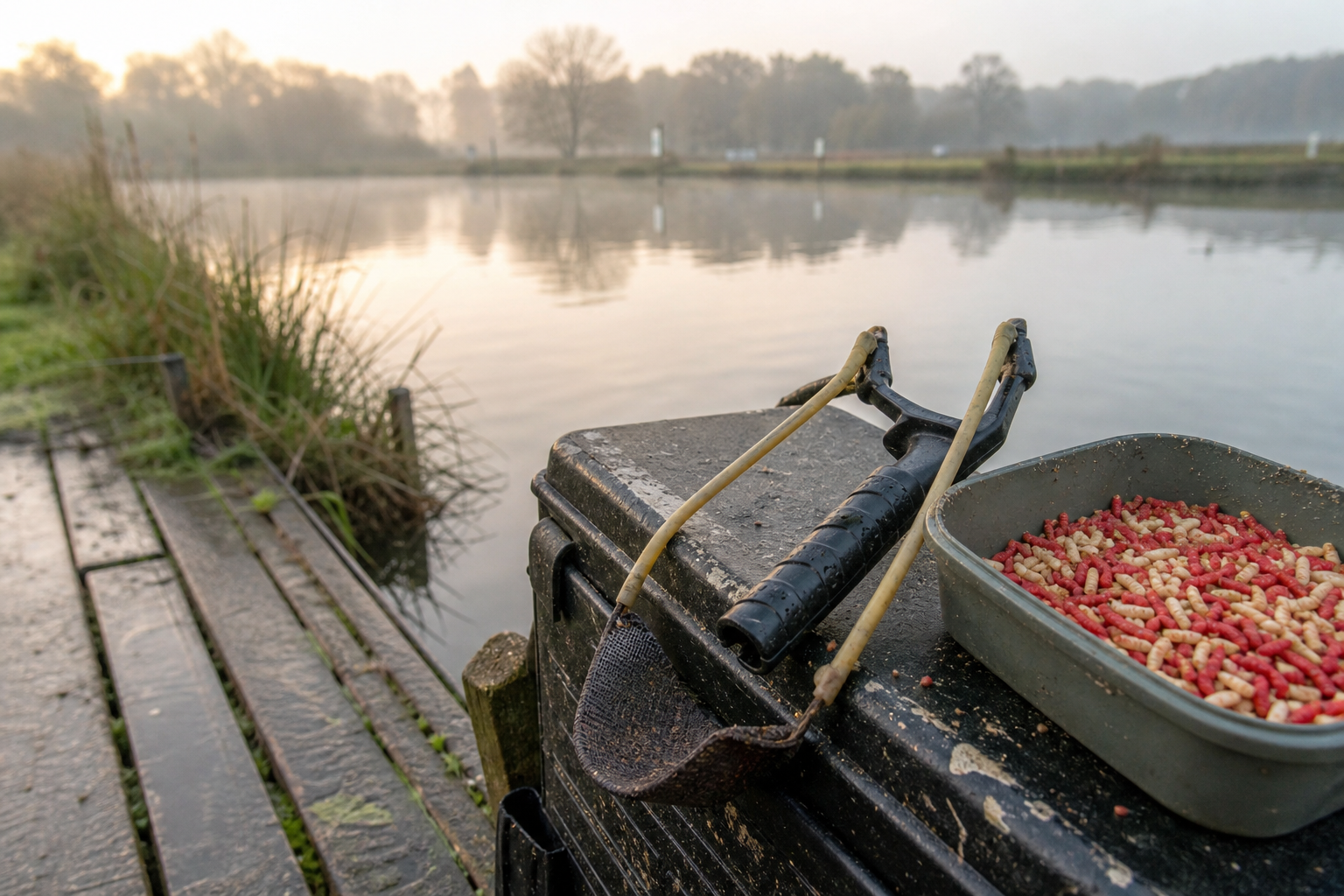
Best Coarse Fishing Catapults: Choosing the Right One for Loose Feed
A researched shortlist of the best coarse fishing catapults by job, from pole line and waggler range catapults to long-range pellet, budget and specialist boilie pults, with how to match elastic and pouch to your bait.
Whether you are feeding a pole line on a commercial, building a waggler swim on a lake or topping up a feeder line, the catapult does the same job: putting the same bait in the same place, cast after cast. Get that right and your swim stays tidy and predictable. Get it wrong and the feed spreads, the fish wander and the session drifts.
The short answer is that most coarse anglers are well served by one versatile catapult, with a second for a specific job. One good all-rounder can cover a lot of situations, but feeding is usually better when you pair the catapult to how you fish. This guide to the best coarse fishing catapults is organised by that job, from short pole lines to long-range pellets.
What a Catapult Does for Coarse Fishing
A catapult is simply an easy way to distribute bait across your swim, and retailers describe them in exactly those terms. For coarse fishing, that usually means maggots, casters, pellets, sweetcorn and small balls of groundbait, fired out in small amounts at regular intervals.
On most coarse waters, accuracy and consistency matter more than distance. A fishing catapult for loose feed earns its place by landing each pouchful close to the last, so the fish settle where your hookbait is rather than across half the lake. Feeding little and often is the general idea; the detail of how much and how frequently depends on the venue, the species and the conditions.
If you are still working out which baits suit your fishing, it is worth reading up on bait and terminal tackle for beginners before choosing a catapult. The bait you feed most often should shape the catapult you buy.
How to Choose a Coarse Fishing Catapult
Catapults look alike at a glance, but the pouch, the elastic and the frame all change what they do well. These are the points worth weighing up.
Bait type and pouch design
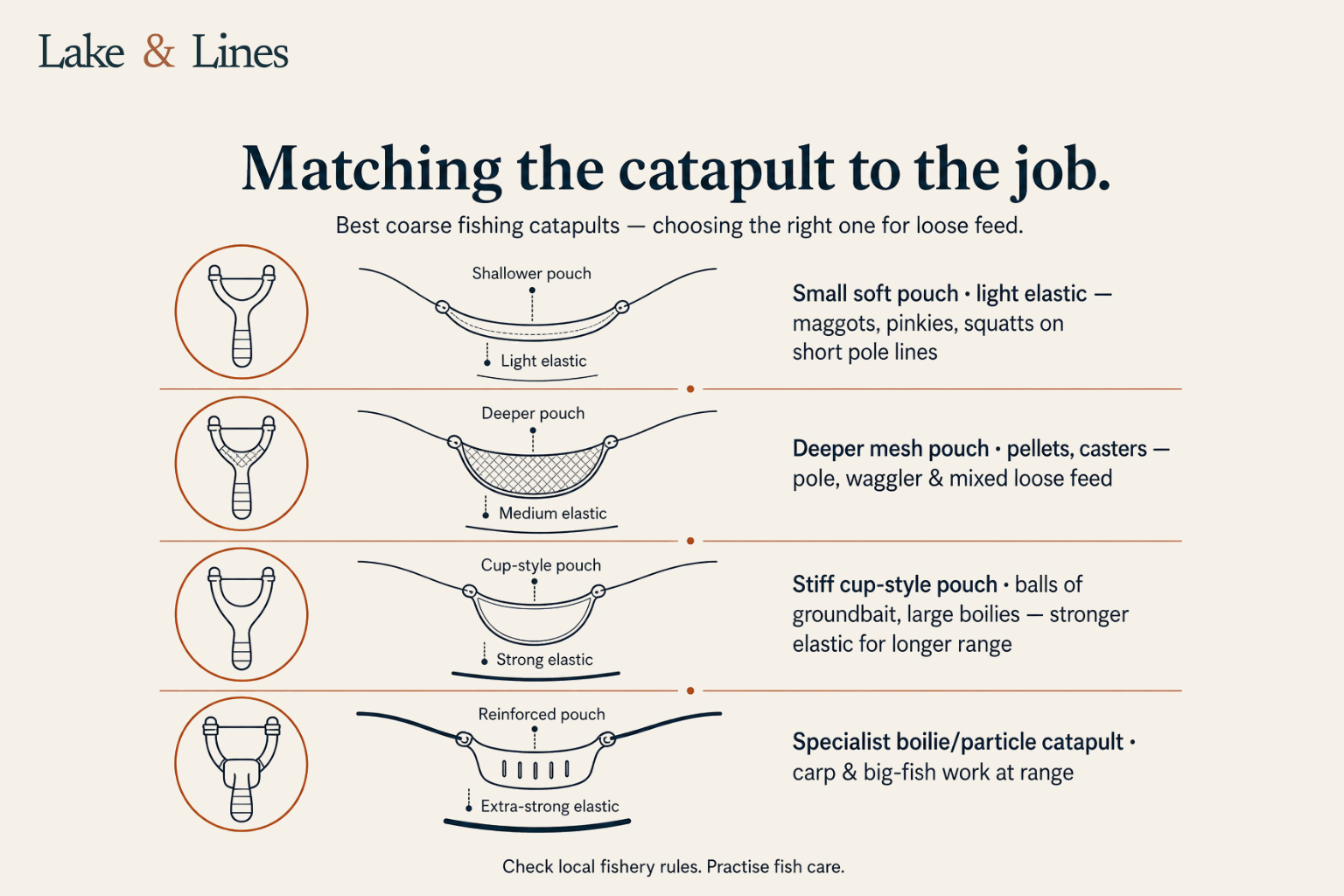
The pouch should match the bait. Small, soft pouches suit maggots, pinkies and squatts. Deeper mesh pouches hold pellets or casters, and help keep a mixed pouchful together. Stiffer or cup-style pouches work better for balls of groundbait or large boilies, which need support as the elastic releases.
If you fish groundbait regularly, a pouch designed for it makes a real difference to how cleanly the ball leaves the pouch. For more on mixing and feeding it, see how to use groundbait for float and pole fishing.
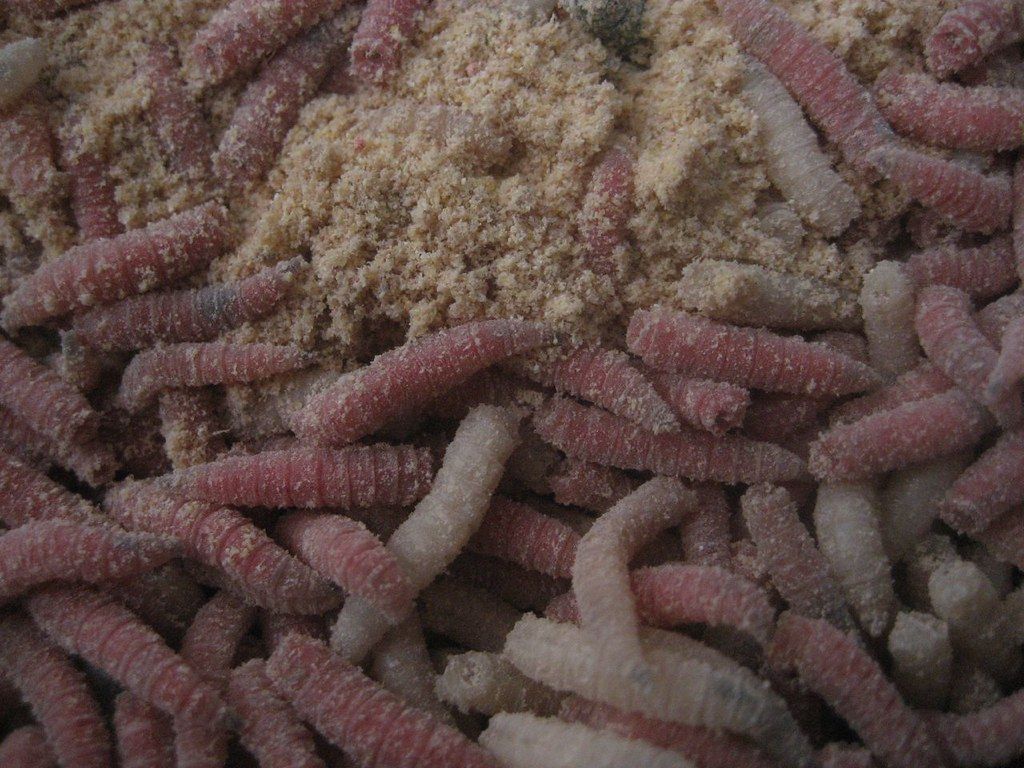
"Maggots" by zimpenfish, Flickr (via Openverse), CC BY 2.0
Elastic strength and range
Elastic is where most catapults differ. Light and medium elastics are ideal for short pole lines and careful feeding. Stronger elastics, usually paired with reinforced frames, are needed for long-range waggler or carp work.
As our own rough guide, light and medium elastics on standard coarse catapults are comfortable up to typical waggler ranges, 20 to 40 metres, depending on bait weight and technique. Heavier baits travel differently from maggots, and your own firing style matters too, so treat that as a starting point rather than a promise.
Anti-tangle features
Twisted and tangled elastics are a common frustration with older designs. Modern catapults often use rotating attachments, PTFE bushes and revised frame shapes to reduce elastic twist. Even so, older or cheaper models can still twist if the elastic is not aligned carefully when fitted.
Comfort and control
If you feed while holding a pole, the handle matters. Some catapults have ergonomic handles designed to be held while gripping a pole, and lightweight frames with a little flex. These features are aimed at consistent, accurate feeding, particularly in match conditions where you may fire hundreds of pouchfuls in a session.
Durability and spare elastics
Elastics perish with UV and use, so they are the part you will replace. Ranges that include spare elastic or use easily replaceable latex, such as the Drennan Match Caty and Drennan Softfeed elastics, tend to be better value over time than a catapult you have to replace whole.
| Pouch or catapult type | Typical baits | Typical use |
|---|---|---|
| Small, soft pouch | Maggots, pinkies, squatts | Short pole lines and careful feeding |
| Deeper mesh pouch | Pellets, casters | Pole, waggler and mixed loose feed |
| Stiffer or cup-style pouch | Balls of groundbait, large boilies | Heavier feed and longer range |
| Specialist boilie or particle pult | Boilies, heavy particle mixes | Carp and big-fish work at range |
Start with the elastic, not the brand
Light and medium elastics suit short pole lines and careful feeding. Stronger elastics are for long-range waggler or carp work. Pick the elastic for the distance you usually feed, then the pouch for your usual bait.
Our Shortlist: The Best Coarse Fishing Catapults by Job
Rather than ranking one bait catapult above all others, we have picked one per job. Each is a mainstream model that UK tackle shops list for coarse and match fishing. For each, you will find what it is, what it suits and its main limitation.
All-Round Loose Feed: Drennan Match Caty
The Match Caty is a versatile catapult range for coarse fishing, with different pouches and a spread of elastics from soft to strong for feeding a variety of particle baits. Drennan describes the design as tangle-free and usable left- or right-handed, and each catapult is supplied with spare elastic.
It suits maggots, casters and pellets on both pole and rod. If you want one main catapult for mixed venues, a strong-elastic Match Caty is a sensible choice to cover most loose feeding. Its main limitation is the same as any latex catapult: the elastics still need replacing from time to time.
Typical UK price: £9 to £11. Available from Angling Direct and Fishing Tackle & Bait.
Pole Line Feeding: Drennan Pole Line and Pole Line Pellet Pult
These are described as ideal for loose feeding a wide range of baits directly onto the pole line, with a version tuned to pellets. They are shaped to be held while you hold a pole, which is the point of a dedicated pole line catapult.
They suit commercials and canals where most of your fishing is on the pole, feeding pellets or maggots regularly. The limitation is range: they are less suitable for very long waggler distances or heavy groundbait. If you are new to the method, our guide to pole fishing for beginners covers the basics of setting up a pole line.
Typical UK price: £10 to £11. Available from Premier Angling and The Tackle Tavern.
Waggler and Medium-Range Rod Work: Drennan Waggler Range Mesh Pouch Catapult
The Waggler Range catapults are described as ideal for loose feeding a wide range of baits within waggler range, with medium and light elastic versions for different distances. The mesh pouch helps hold pellets or a mixed pouchful of loose feed together. The Medium version (TCWRM02) is one of the variants listed by UK retailers, so check which elastic you are buying.
This suits rod and line fishing on commercials and natural lakes, with the waggler or a bomb. Its limitations are that it is less suited to big balls of groundbait, and the mesh can wear over time.
Typical UK price: £10 to £11.50. Available from Angling Direct and Premier Angling.
Long-Range Pellets and Heavy Use: Preston Innovations Large Dura Slip Catapult
The Large Dura Slip is described as ideal for long-range tactics with pellets. It uses a heavier grade of Dura Slip elastic, intended for reliability during continuous use, and a patented PTFE bush anti-tangle design.
It suits matches and sessions where you are feeding pellets often at longer range (as our own rough guide, 25 to 45 metres). The limitation is a heavier pull than light elastics, which can be overkill for short pole lines and tiring if you do not need the distance.
Typical UK price: around £12. Available from Angling Direct and The Tackle Shack.
Budget Pick: Dinsmore's Coarse Catapult
Dinsmore's Coarse Catapult is a simple, low-cost catapult aimed at coarse and match anglers who want an affordable way to fire loose feed. It is fine for occasional use, or as a backup in your tackle bag, and suits close to medium range maggot and pellet feeding.
There is nothing wrong with starting here if you are just getting back into coarse fishing. The limitation is that it has fewer anti-tangle or ergonomic refinements than the premium models.
Typical UK price: around £5.50. Available from Fishing In Tackle.
Accuracy-Focused Pole Option: FEVA Accupoint Catapult
The FEVA Accupoint is described as lightweight, with flexible arms to assist accuracy and distance, and handles designed for easy handling while holding a pole. It comes in Pellet and Squatt/Maggot versions, so you can match the pouch to your bait.
This is a more niche choice than the Drennan or Preston options. It makes most sense for a dedicated pole angler who already owns a general-purpose catapult and wants a second one focused on tight groups of small baits.
Typical UK price: £8 to £9. Available from Nathans of Derby.
Specialist Large Baits: ESP Boilie Pult, ESP Particle Pult and Drennan Boiliepult
These are specialist tools for carp or big baits, included so you know where they fit. The ESP Boilie Pult has a cone-shaped pouch, described as holding around 10 x 18 mm or 16 x 15 mm boilies. The ESP Particle Pult is designed to deliver larger quantities of particles at distance. The Drennan Boiliepult has an extra-strong frame and powerful latex, and retailer descriptions claim that, with practice, single boilies reach about 60 m at 16 mm, 80 m at 18 mm and around 100 m at 20 mm, while a pouchful of five or six 16 mm boilies reaches roughly 40 m.
The limitation is that all three are over-powered for normal coarse loose feeding with maggots or light pellets. Most coarse anglers will still want a lighter catapult for everyday feeding.
Typical UK price: about £13 for the Drennan Boiliepult and £15 to £16 for the ESP Boilie Pult or Particle Pult. Available from Cheam Angling and Nathans of Derby.
Buying a premium catapult versus a budget one
Strengths
- + Anti-tangle designs such as rotating attachments and PTFE bushes aim to reduce elastic twist
- + Ranges supplied with spare elastic or easily replaceable latex can be better long-term value
- + A choice of elastic strengths helps you match the catapult to the distance you feed
Limitations
- - Budget catapults have fewer anti-tangle or ergonomic refinements
- - Stronger elastics have a heavier pull and can be overkill for short pole lines
- - Specialist boilie and particle pults are over-powered for normal coarse loose feeding
How Many Catapults Do You Need?
Fewer than you might think. Most returning and weekend anglers can manage with one or two, chosen for the way they fish most often. These pairings are starting points to consider, not a list to buy in full.
If you mostly fish the pole on commercials or canals
A dedicated pole line catapult, such as the Drennan Pole Line or Pole Line Pellet Pult, is the natural main choice. Optionally, add a light-elastic Match Caty for slightly longer work.
If you mix waggler, feeder and short pole work
On lakes and commercials, consider combining a medium-elastic Match Caty with a Waggler Range Mesh Pouch catapult. Between them, they cover short pole lines up to typical waggler distances.
If you fish matches or do a lot of pellet feeding
A Preston Large Dura Slip suits continuous longer-range feeding. A low-cost Dinsmore catapult makes a sensible backup, or a spare for a friend.
If you sometimes target carp with boilies or heavy particles
Add an ESP Boilie Pult, ESP Particle Pult or Drennan Boiliepult, but treat it as a specialist tool rather than your everyday loose feed catapult.
Whichever pairing you choose, spare elastics and a catapult with easily replaceable latex matter more than chasing small price differences between similar models.
| Your fishing | Main catapult | Optional second |
|---|---|---|
| Pole on commercials or canals | Pole line catapult | Light-elastic Match Caty for slightly longer work |
| Waggler, feeder and short pole on lakes | Medium-elastic Match Caty | Waggler Range Mesh Pouch catapult |
| Matches or regular pellet feeding | Large Dura Slip for long-range feeding | Budget catapult as a backup or for guests |
| Occasional carp with boilies or particles | Your everyday coarse catapult | A boilie or particle pult as a specialist tool |
Making Your Catapult Last: Elastics and Care
A common complaint among anglers is that catapults fall apart. In most cases, the part that fails first is the latex elastic, and its life is shortened by sun, grit and over-stretching.
A few simple habits help. Keep the catapult dry and out of the sun between sessions. Do not overload the pouch, because over-stretching wears the elastic faster. Carry a spare elastic, and when one goes, replace it with the branded spare made for your model, such as Drennan Softfeed elastics for a Drennan catapult. Our guide to drying and checking tackle after each session covers the same routine.
Replacing a worn catapult elastic
Check the elastic
Look for perishing, cracks or loss of stretch, especially where it joins the frame.
Get the matching spare
Use the branded spare elastic made for your catapult model and strength.
Fit and align it
Fit the new elastic so it sits straight, as twisted elastic is a common cause of tangles.
Store it dry
Keep the catapult dry and out of the sun between sessions.
Feeding Responsibly: Bait Rules and the Close Season
A catapult makes it easy to put a lot of bait in, so it is worth feeding with some restraint. The Angling Trust's Best Practice Guide to Freshwater Angling stresses avoiding excessive groundbaiting, especially on rivers, and respecting close seasons and local byelaws. Overfeeding can affect water quality as well as your fishing.
Keep three things separate. National rules: in England and Wales, GOV.UK states that you cannot fish for coarse fish on any river from 15 March to 15 June, while most enclosed stillwaters and canals are open year round, but check local byelaws, which can add to these. Fishery and club rules are set by each water, and many limit the type or quantity of bait you can use, so check them before you start feeding. For the detail, see the coarse fishing close season explained.
Rules to know before you feed
- River close season for coarse fish (England and Wales)
- 15 March to 15 June
Most enclosed stillwaters and canals are open year round, but check local byelaws and fishery rules
SourceFinal Thoughts: Which Catapult Should You Buy?
If you mostly fish the pole on commercials or canals, start with a pole line catapult. If you move between the pole, waggler and feeder, a medium-elastic Match Caty is a flexible first choice, with a Waggler Range catapult as the second. If you feed pellets at range in matches, the Large Dura Slip is built for that work. If you want to keep spending down or need a spare, the Dinsmore's catapult is a reasonable place to begin.
Leave the boilie and particle pults for when you genuinely need the distance with big baits. Whatever you choose, pick the elastic for the distance you feed, the pouch for your bait, and keep a spare elastic in your bag.
Frequently asked questions
How far can you feed with a coarse fishing catapult?
As our own rough guide, light and medium elastics on standard coarse catapults are comfortable up to typical waggler ranges, about 20 to 40 metres, depending on bait weight and technique. Heavier elastics such as the Preston Large Dura Slip are aimed at longer-range pellet feeding, about 25 to 45 metres as our own rough guide. Dedicated boilie catapults can go much farther with large baits.
Can one catapult do everything?
One versatile catapult, such as a Drennan Match Caty with medium elastic, can cover a lot of coarse fishing. Feeding is usually better if you pair the catapult to the job: a light elastic for the pole, a stronger one for the waggler or feeder, and a specialist pult for boilies or heavy groundbait. Most anglers manage well with one or two.
Why does my catapult elastic keep tangling or twisting?
Standard catapults tend to twist where the elastic joins the frame. Modern designs use rotating attachments and PTFE bushes to reduce this, as on Drennan's tangle-free Match Caty and the Preston Dura Slip range. Older or cheaper catapults can still twist if the elastic is not aligned carefully when you fit it.
What wears out first on a catapult, and how do I make it last?
The latex elastic is the main wear part. Sun, grit and over-stretching all shorten its life. Keep the catapult dry and out of the sun, avoid overloading the pouch, carry a spare elastic and replace worn elastics with branded spares made for your model, such as Drennan Softfeed elastics.
What is the difference between a mesh pouch and a groundbait pouch?
Mesh pouches are deeper and hold pellets, casters or a mix of loose feed together. Groundbait needs a stiffer or cup-style pouch that supports the ball as it leaves the catapult. Small, soft pouches suit light baits such as maggots, pinkies and squatts.
Do I need a boilie catapult for coarse fishing?
Usually not. Boilie and particle pults such as the ESP Boilie Pult, ESP Particle Pult and Drennan Boiliepult are specialist tools for carp and big baits at range. They are over-powered for normal coarse loose feeding with maggots or light pellets, so treat them as an optional extra if you sometimes fish for carp.
Are there rules about baiting with a catapult?
Yes. In England and Wales, GOV.UK states you cannot fish for coarse fish on any river from 15 March to 15 June, while most enclosed stillwaters and canals are open year round, but check local byelaws and fishery rules. The Angling Trust's best practice guidance advises against excessive groundbaiting, especially on rivers. Many fisheries and clubs also set their own rules on bait type and quantity, so check before you feed.

Lake & Lines Editorial Team
Editorial team
The Lake & Lines editorial team brings together freshwater fishing guides and researched tackle advice, helping beginners and returning anglers prepare for better days by the water.