Fishing Licences and Day Tickets in England and Wales: What You Need Before You Fish
Two permissions are required to fish in England and Wales: a national rod fishing licence and a local day ticket. Buy your licence online, check fishery rules and carry both before you fish.
At a Glance
- You need two permissions to fish: a national rod licence and a local day ticket for the water you visit.
- Anyone aged 13 and over must hold a rod licence; junior licences (13–16) are free.
- Buy rod licences at gov.uk/fishing-licences and keep your licence number accessible on your phone.
- Day tickets grant local access and set fishery rules but do not replace the national licence.
- Check river close seasons, fishery rules and catch limits before you go and carry both permissions.
Before you fish in England or Wales, you'll need two separate permissions: a fishing licence and a day ticket (or equivalent fishery permit). Most confusion about the system comes from mixing up these two things, or from assuming that one covers what the other actually provides. This guide explains both clearly, so you can get sorted before your session rather than on the bank.
Two permissions, not one
The rod fishing licence and the day ticket are entirely separate. They come from different sources, cover different things and are both required. Neither replaces the other.
The rod fishing licence (national)
The rod fishing licence is a legal requirement issued at national level. In England and Wales it is a single licence sold by the Environment Agency on GOV.UK; Natural Resources Wales does not issue rod licences. It gives you the legal right to fish with a rod and line for salmon, trout, freshwater fish, smelt or eel in England and Wales. It says nothing about where you may fish. It grants access to no water whatsoever.
The day ticket or fishery permit (local)
The day ticket is a local permission. It is issued by the fishery, club or private landowner and grants you access to a specific water for a specific period. It sets out the rules that apply on that water. It does not satisfy your obligation to hold a rod licence.
| Permission | Issued by | Covers | Required for |
|---|---|---|---|
| Rod fishing licence | Environment Agency (England and Wales) | Legal right to fish with rod and line in England and Wales | Every angler aged 13+ fishing for coarse or game fish |
| Day ticket or permit | Individual fishery, club or owner | Access to a specific water and its local rules | Every visit to a paid fishery, regardless of licence status |
Who needs a rod licence, and what the age rules are
Any angler aged 13 or over must hold a valid rod licence to fish in England or Wales. The rules are straightforward.
Under 13: No licence is required, but all fishery rules still apply. A child under 13 fishing at a day-ticket water still needs the fishery's permission to be there.
Ages 13 to 16: A licence is required. Licences for this age group are free of charge. They must still be obtained and held.
17 and over: A licence is required and is subject to standard pricing. Concession rates are available for anglers aged 66 and over and for those in receipt of certain disability benefits, on 12-month licences.
A licence bought for England is valid in Wales, and one bought for Wales is valid in England. The two countries share a single system. If you are fishing venues in both countries on the same trip, one licence covers you throughout. This is worth knowing for anyone planning to visit fisheries across the border, as the licence does not need to change between countries.
Licence types and current prices for 2025 to 2026
For most coarse fishing, you need a trout and coarse licence covering up to two rods. This is the standard choice for anyone fishing for carp, roach, bream, tench, perch, pike or other freshwater species. If you regularly fish with three rods simultaneously, a separate 12-month, three-rod licence is available, though it carries restrictions on fishing for non-migratory trout; for most day-ticket coarse fishing it is not necessary.
If you are targeting salmon, sea trout or migratory trout, you will need the salmon and sea trout licence instead.
For duration, the 1-day and 8-day options suit visitors and those fishing occasional sessions. The 12-month licence makes more sense for anyone planning to fish regularly across the year.
| Licence type | Duration | Full price | Concession (senior/disabled) | Junior (13–16) |
|---|---|---|---|---|
| Trout and coarse (up to 2 rods) | 1 day | £7.30 | – | – |
| Trout and coarse (up to 2 rods) | 8 days | £14.70 | – | – |
| Trout and coarse (up to 2 rods) | 12 months | £36.80 | £24.50 | Free |
| Trout and coarse (up to 3 rods) | 12 months | £55.30 | £36.80 | Free |
| Salmon and sea trout | 1 day | £13.50 | – | – |
| Salmon and sea trout | 8 days | £30.50 | – | – |
| Salmon and sea trout | 12 months | £93.10 | £62.00 | Free |
These prices apply to licences starting on or after 1 April 2025. Verify the current figures at gov.uk/fishing-licences before purchasing, as fees can change.
How to buy your rod licence
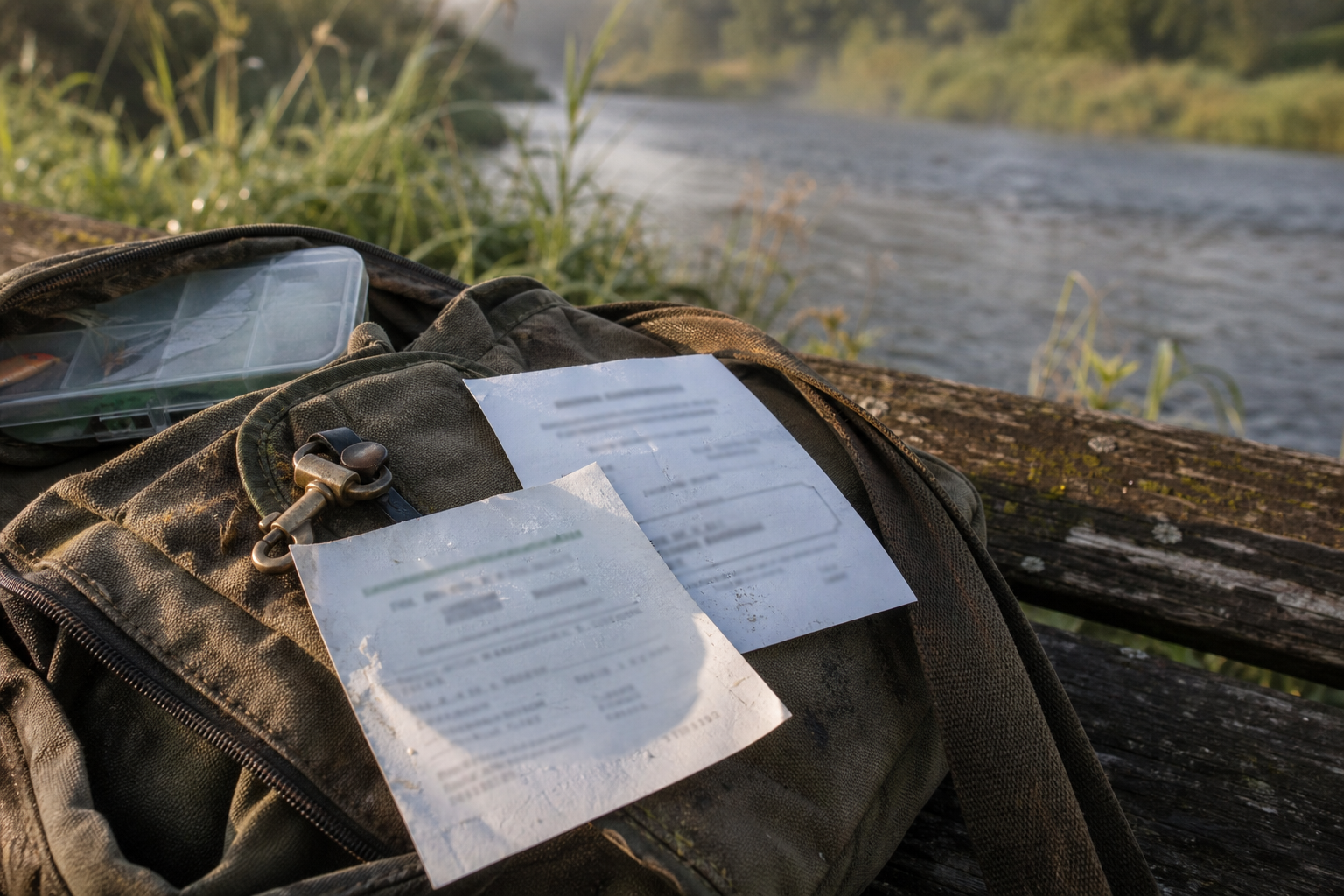
The straightforward route is online via the official government service at gov.uk/fishing-licences. You can buy a licence immediately, choose your start date and duration, and receive confirmation by email. A digital record is acceptable at the water; you do not need a printed copy, but you should have your licence number accessible on your phone or as a printout.
If you prefer not to buy online, licences are also available by phone. Welsh speakers can apply in Welsh through the Welsh-language option on the same service.
Buy your licence before you arrive at the fishery
Enforcement officers and fishery staff can ask to see your licence number at any point. Buy it online before you leave home using the official government service at gov.uk/fishing-licences, and keep your confirmation to hand on your phone or as a printout.
Do you need a fishing licence and day ticket for a private lake or commercial fishery?
Yes. The rod licence applies on every water in England and Wales where you are fishing with a rod and line, without exception. This includes private carp lakes, estate waters, club-controlled rivers and commercial day-ticket stillwaters. There is no category of water that exempts you from the national licence requirement.
This is the point that catches most people out, and it is worth being plain about it: a day ticket does not replace the rod licence, and the phrase "day ticket only" on a fishery's website describes the local access arrangement, not any exemption from national licensing law.
Private carp lakes and estate waters
A private carp lake or estate water may restrict access tightly, require advance booking and operate under its own set of rules. None of that changes the requirement to hold a valid rod licence. The fishery's permission and the national licence are two separate obligations, and both apply from the moment you put a line in the water.
Commercial day-ticket fisheries
Commercial fisheries, the kind where you pay on arrival or book a peg online, operate in exactly the same way. The fishery issues its own day ticket and sets its own rules. The Environment Agency issues the rod licence. Both are checked independently, and both are required.
What day tickets actually cover (and what they don't)
A day ticket gives you permission to fish a specific water during a set period, usually a morning session, an afternoon session or a full day. Beyond that basic access, it comes with the fishery's own rules, which can cover a wide range of things.
Typical day-ticket fishery rules include: barbless hooks only, no keepnets for carp or larger fish, use of a designated unhooking mat and carp-care equipment, restrictions on certain baits (boilies, particles or groundbait may be limited or banned on some waters), and specified opening and closing times for sessions. Some fisheries allocate numbered pegs; others allow you to choose your own.
These rules vary considerably between fisheries. What applies at one commercial lake may be entirely different at the next. Checking the fishery's rules before you arrive saves confusion and means you can bring the right equipment.
Day-ticket rules are set by the fishery and are separate from national byelaws (locally applicable rules set by a relevant authority such as the Environment Agency). Both apply simultaneously. Where a fishery rule is stricter than the national byelaw, the fishery rule takes precedence on that water.
Close seasons, catch limits and coarse fishing rules
Rivers and stillwaters: different close season rules
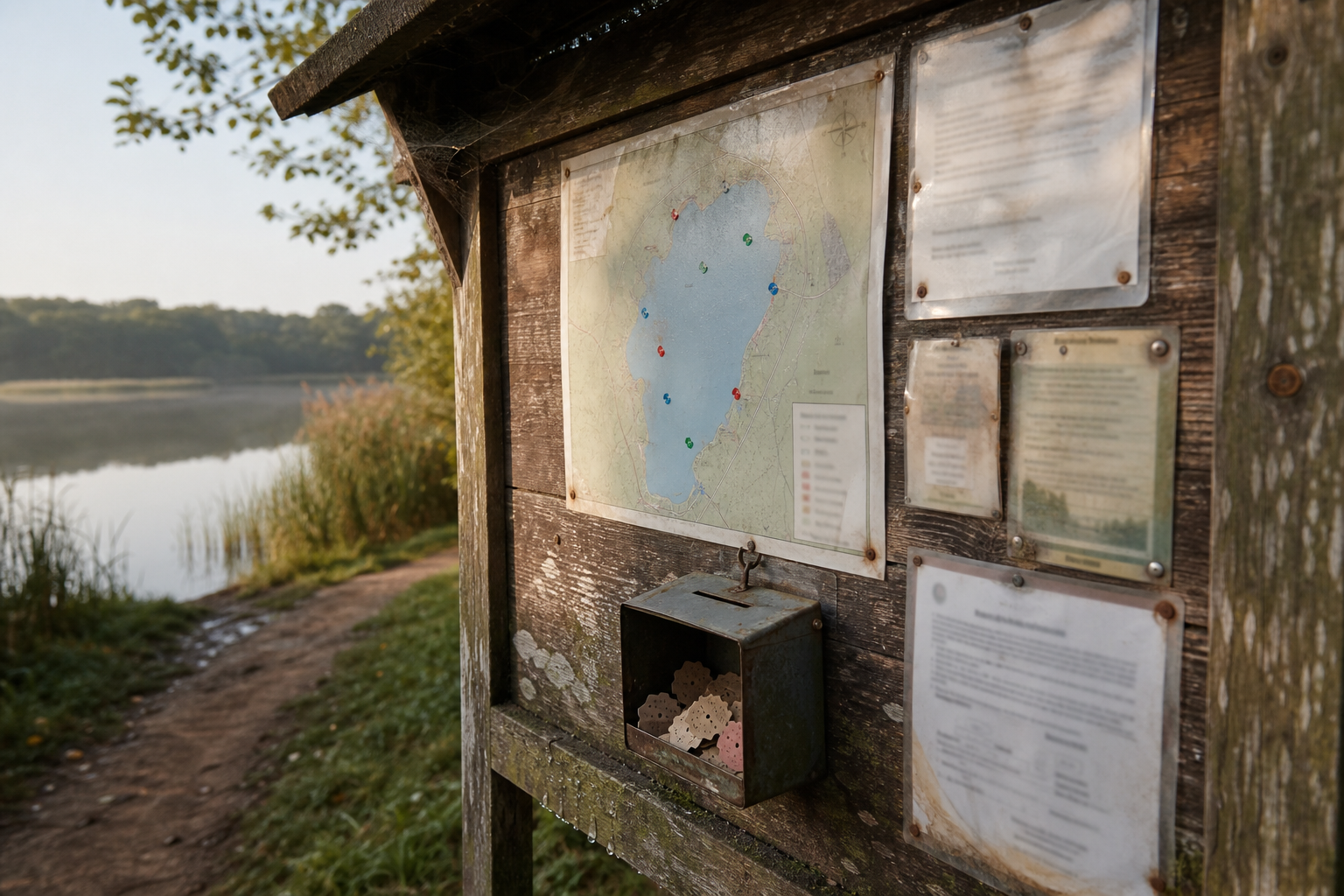
The close season is the period during which fishing for certain species or on certain waters is not permitted. For coarse fish, there is a national close season on rivers in England and Wales, running from 15 March to 15 June inclusive each year. During this period, fishing for coarse fish on rivers is not allowed.
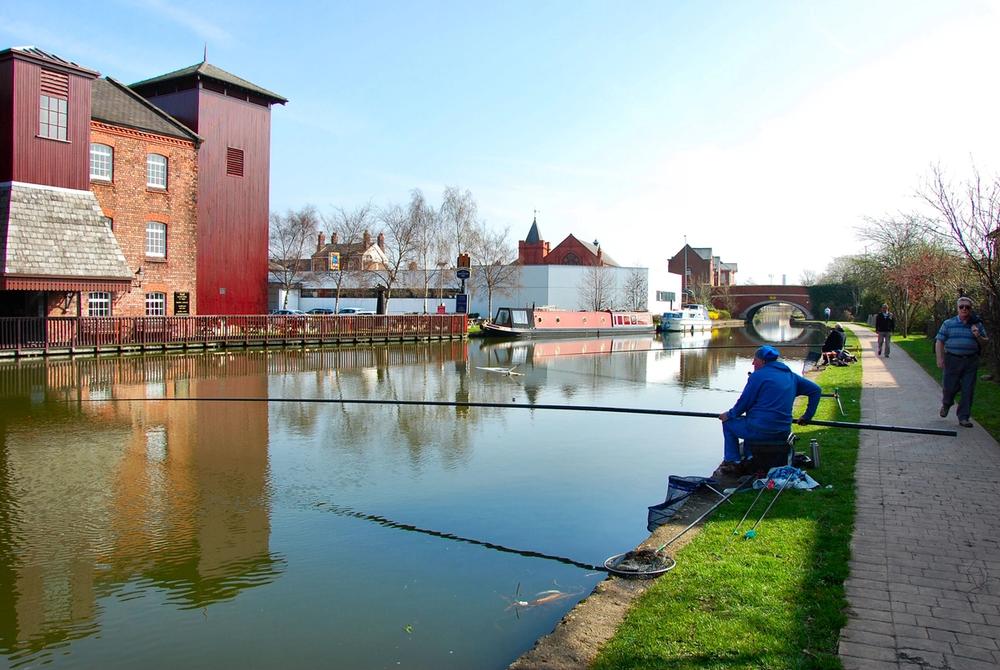
Most stillwaters and canals do not have a statutory close season for coarse fish and can be fished year-round, though individual fisheries may impose their own seasonal closures. Always check with the fishery before planning a session in early spring, as local arrangements vary.
If you are planning a coarse fishing trip to a day-ticket stillwater between March and June and are unsure whether a close season applies, ask the fishery directly. They will tell you whether the water is open and whether any restrictions are in place.
National limits on taking fish from rivers
Most coarse day-ticket fisheries operate on a catch-and-release basis, meaning all fish must be returned alive after being unhooked. This is the standard expectation at commercial stillwaters and many club waters.
National rules do permit anglers to take a small number of coarse fish from rivers under certain conditions: for example, up to 15 small coarse fish not exceeding 20 cm in length, or one pike not exceeding 65 cm. These national limits do not override stricter fishery rules. If the fishery you are visiting requires all fish to be returned, that rule applies regardless of what the national byelaw would otherwise allow.
Most coarse fisheries expect all fish to be returned
Even where national rules permit taking a small number of coarse fish from rivers, most commercial stillwater fisheries and many club waters require all fish to be returned alive. Check the fishery's rules when you buy your ticket.
Getting ready for your session: a quick checklist
Before you fish in England or Wales
Choose your target species
Coarse fish (carp, roach, bream, tench, pike) need a trout and coarse licence. Game fish (trout, salmon, sea trout) need a salmon and sea trout licence.
Buy your rod licence
Purchase online at gov.uk/fishing-licences or by phone. Select 1-day, 8-day or 12-month to match your trip. Junior licences (13–16) are free.
Book your day ticket or permit
Contact the fishery or club in advance. Confirm bait rules, opening times and any carp-care requirements before you arrive.
Check the close season and local byelaws
Rivers have a national coarse close season running from 15 March to 15 June. Most stillwaters fish year-round, but always verify with the fishery.
Carry both permissions
Keep your licence number and day ticket accessible. Enforcement officers or fishery staff may ask to see both.
The system is straightforward once you see it clearly. Two permissions, obtained in the right order, from the right sources. Get both before you leave home, check the fishery's rules in advance, and you can concentrate on the fishing when you arrive.
Frequently asked questions
Do I need both a rod fishing licence and a day ticket?
Yes. The rod fishing licence is a national legal requirement to fish with a rod and line, while the day ticket is local permission to fish at a specific water. You must have both where required.
Who must hold a rod licence and are there age rules?
Anyone aged 13 or over must hold a valid rod licence. Licences are free for 13 to 16 year olds. Concession rates apply for seniors and some disabled anglers on 12 month licences.
Where can I buy a rod fishing licence?
Buy online at gov.uk/fishing-licences for immediate confirmation, or by phone. A digital licence is acceptable; keep your licence number accessible on your phone or as a printout.
Does a day ticket exempt me from needing a rod licence?
No. A day ticket only grants access to a specific water and sets local rules. It does not replace the national rod fishing licence, which is required on all waters.
Are there seasonal restrictions or catch limits I should know about?
Yes. Rivers have a national coarse close season from 15 March to 15 June. Many stillwaters fish year round but fisheries often expect catch and release and may set stricter limits than national byelaws.
Lake & Lines Editorial Team
Editorial team
The Lake & Lines editorial team brings together freshwater fishing guides and researched tackle advice, helping beginners and returning anglers prepare for better days by the water.