How to Use Groundbait for Float and Pole Fishing
Simple, practical advice on mixing and introducing groundbait for float and pole fishing: get the right consistency, feed little and often, use a pole cup for accuracy and check fishery rules.
At a Glance
- Groundbait attracts and holds fish on or near the bottom so hookbait can be found.
- Mix gradually and use the squeeze and drop test; rest the mix and add hookbait samples last.
- Float fishing: hand-throw two or three small balls or use a catapult for distance and accuracy.
- Pole fishing: use a cupping kit to ship and tip groundbait quietly and accurately over your rig.
- Feed little and often, adjust by species, and always check the fishery rules before you start.
You have your float or pole rig set up, you know roughly where you want to fish, and now you are wondering whether groundbait fits into the plan. It does, and using groundbait for float and pole fishing is simpler than it might look at the waterside. In short: groundbait draws fish into your swim and gives them a reason to stay there long enough to find your hookbait. This guide walks through how to mix it, how to introduce it with either a float rod or a pole, and how much to use across a session on a UK stillwater.
What groundbait does in a float or pole session
When you introduce groundbait, you are placing a food source on or near the bottom that releases particles, scent and movement as it breaks apart. Fish that come to investigate tend to linger, which gives your hookbait a much better chance of being found.
Groundbait is different from loose feeding, which involves introducing free hookbait samples such as maggots, casters or pellets directly into the swim. Loose feeding for float fishing is covered separately on this site. In practice, many anglers use both together: groundbait to draw fish in and hold them on the bottom, and loose feed to keep them competing for individual morsels. This article is about the groundbait side of that: forming and introducing mixed balls by hand or by pole cup alongside a float or pole rig, not in a feeder or method feeder, which are different techniques entirely.
It is also worth saying that not every session needs groundbait. On some waters, or in some conditions, loose feed alone is enough to bring fish to the hookbait. Groundbait earns its place when you want to hold fish on a specific spot for a sustained period.
Choosing a groundbait mix
General coarse mixes
For a first session using groundbait, a bag labelled as a general coarse or commercial mix is a practical starting point. Many mixes available in UK tackle shops in 2026 are marketed as suitable across feeders and float fishing, so one bag can cover several approaches without buying multiple products. Look for something described as suitable for stillwaters and mixed coarse fish.
The mix should be fine enough to break down fairly quickly once it reaches the bottom, releasing particles that attract fish without leaving a heavy lump they will avoid.
Matching the mix to the fish you expect
What you are likely to catch will influence the type of groundbait worth choosing:
- Roach and rudd respond well to finer, lighter mixes. A dark, fine-particle groundbait used sparingly alongside maggots or casters is a reliable combination.
- Bream suit a slightly heavier, sweeter mix that sinks confidently and holds particles such as sweetcorn, chopped worm or small pellets. Bream are naturally bottom feeders and tend to respond well to a more substantial feed on the deck.
- Carp and F1s on commercial stillwaters suit a carp-oriented mix introduced as loose balls around the float or pole line.
In all cases, adding a small amount of your hookbait into the groundbait itself helps fish associate the two. A pinch of maggots worked through the mix just before you start fishing is one of the simplest and most effective things you can do.
How to mix groundbait properly
Getting the consistency right is where most beginners go wrong. A mix that is too wet will never break down and will sit on the bottom as a dense lump that fish tend to avoid. A mix that is too dry will crumble in mid-water and never reach the bottom as a cohesive ball. Neither is what you want.
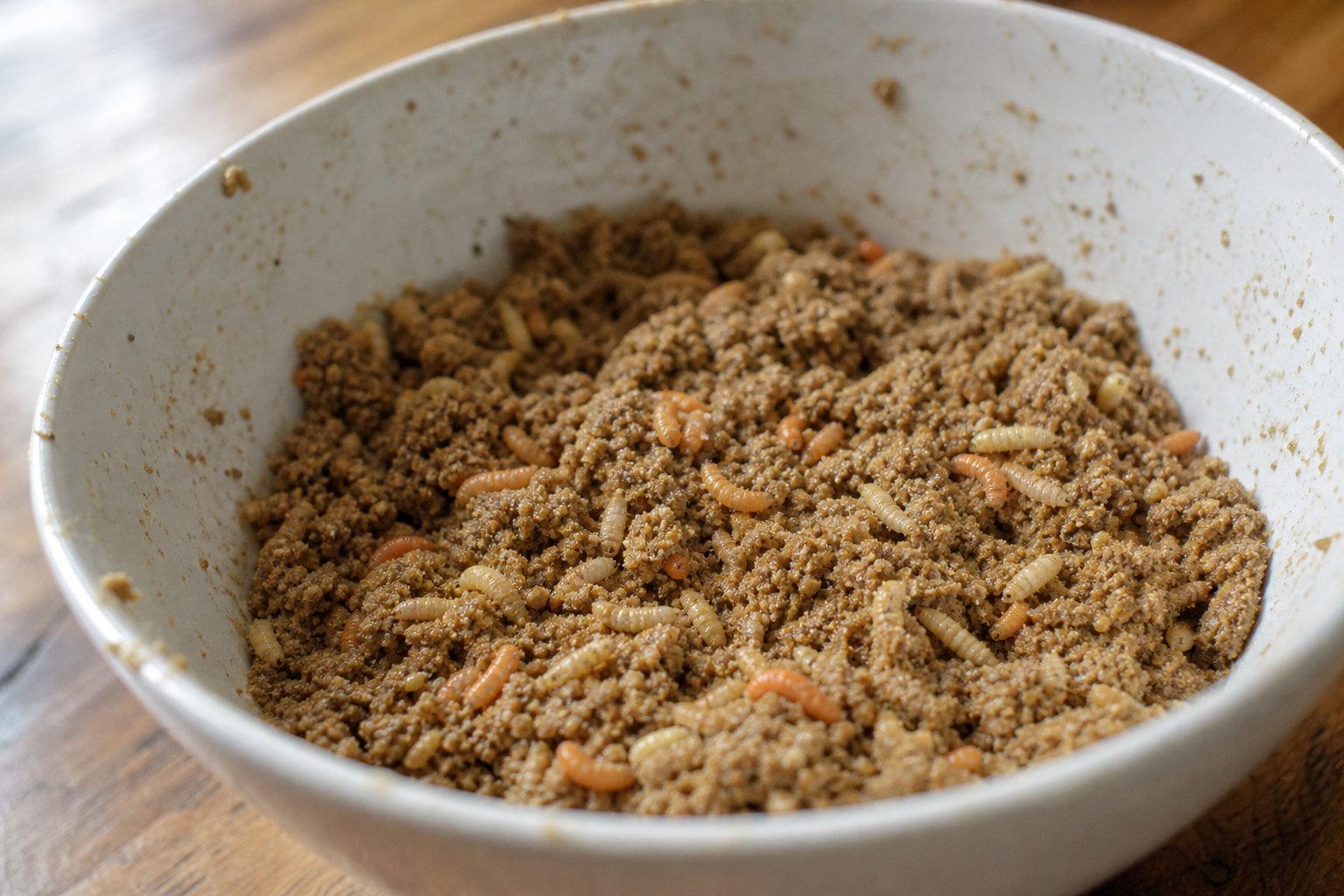
Mixing groundbait step by step
Start dry
Measure out the dry groundbait into a clean, wide mixing bowl or bucket.
Add water gradually
Pour a small amount of water in, stir thoroughly, then wait a minute before adding more. Rushing this stage is the most common cause of a mix that is too wet to use.
Test the consistency
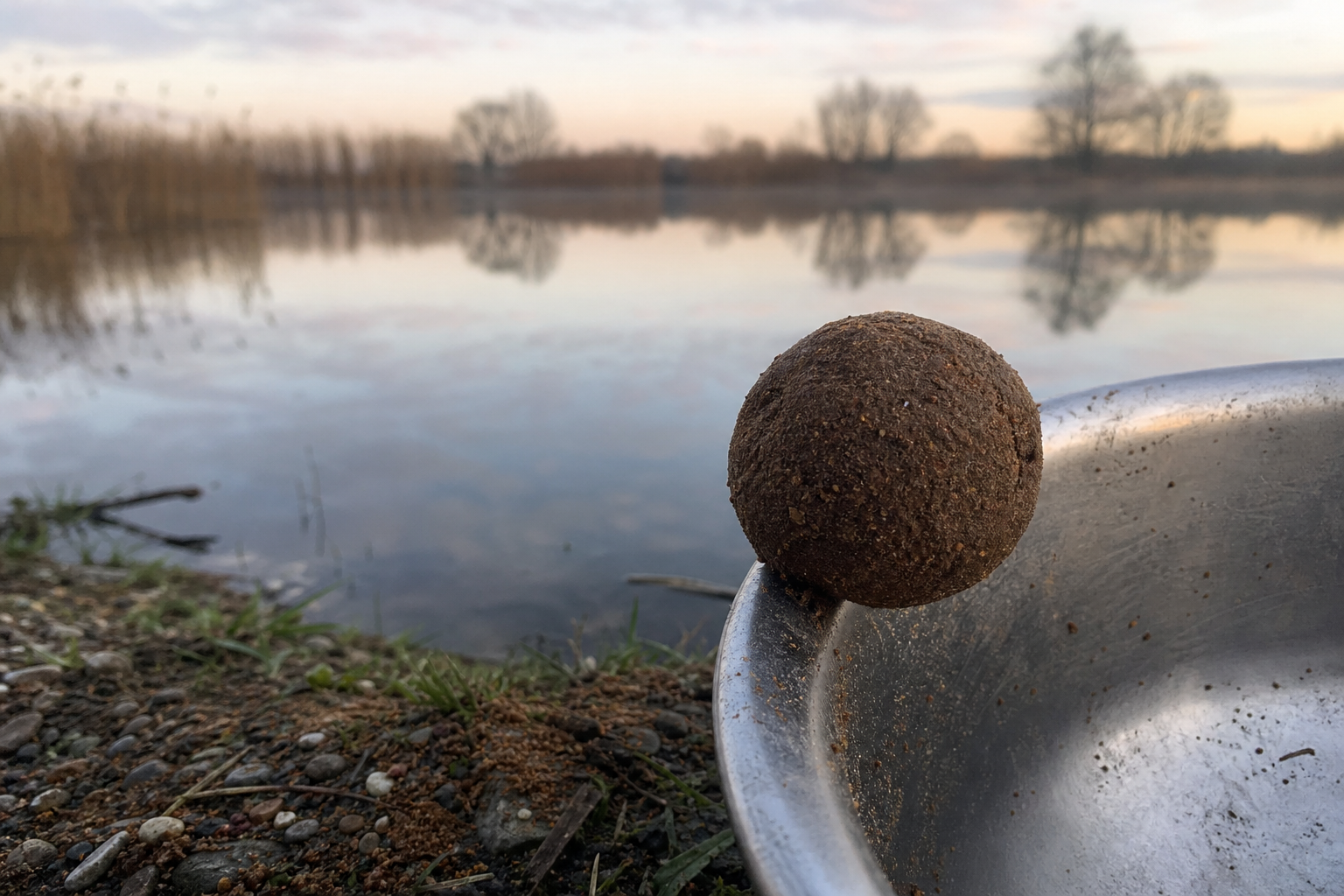
Squeeze a handful firmly into a ball. It should hold its shape when pressed but crumble when dropped onto a hard surface or released from a short height into the water.
Rest the mix
Leave the mixed groundbait for five minutes before use. The mix will absorb the moisture evenly and the consistency will settle.
Add hookbait samples last
Mix in a small amount of your chosen hookbait such as maggots or chopped worm just before fishing, so they are lively and fresh when you start.
The squeeze-and-drop test is the most useful check at the waterside: if the ball holds together when pressed but falls apart on contact with a surface, the consistency is about right. For the initial feed, balls roughly the size of a tangerine are a practical guide, though you can make them smaller as the session progresses.
Introducing groundbait for float fishing with a rod
When you are float fishing, the standard approach is to hand-throw a small number of groundbait balls onto your float line before you start. Two or three balls is a sensible opening feed on most UK stillwaters. The goal is to place them where your hookbait will be fishing, which usually means aiming slightly beyond the float so the balls settle just in front of and below it as they sink.
Keep the introduction quiet. A heavy splash can push fish out of the swim before you have even made a cast, so lower your wrist and aim to release the ball with a smooth underarm motion rather than a hard throw.
On wider or windier waters where hand-throwing lacks accuracy, a catapult can help. A small groundbait pouch on a catapult allows you to reach a float line at distance and keep your feed landing in the same area. Accuracy matters more than quantity: a few balls on the right spot will always outperform a larger number scattered around the swim.
Introducing groundbait with a pole and pole cup
A pole cup, sometimes called a cupping kit, is a small container that attaches to a dedicated top section of the pole and allows you to ship the feed out over your rig and lower it directly into the swim. This is the key advantage over hand-throwing: there is no splash, no disturbance and no guesswork about where the feed has landed. Pole cup groundbait introduction is one of the most accurate ways to feed a tight area.
The cupping kit is a separate top section that you fit to your pole in place of the tip section while feeding. Once you have loaded the cup, you ship the pole out to your fishing depth, lower the cup until it is just above or touching the surface, and tilt the pole gently to tip the contents in. You then ship the pole back, swap the cupping kit for your normal tip section, and begin fishing.
UK pole cup systems fall into a few practical categories:
- Screw-thread cups attach via a brass-thread adaptor. They are a common and reliable option that suits groundbait feeding well.
- Rapid-release connectors allow you to swap cup sizes quickly without unscrewing anything. This is useful when you want to switch between a larger cup for groundbait and a smaller one for loose feed during the same session.
- Soft cups slide over the pole tip and are particularly popular on commercial stillwaters where pellets or paste are the main hookbait.
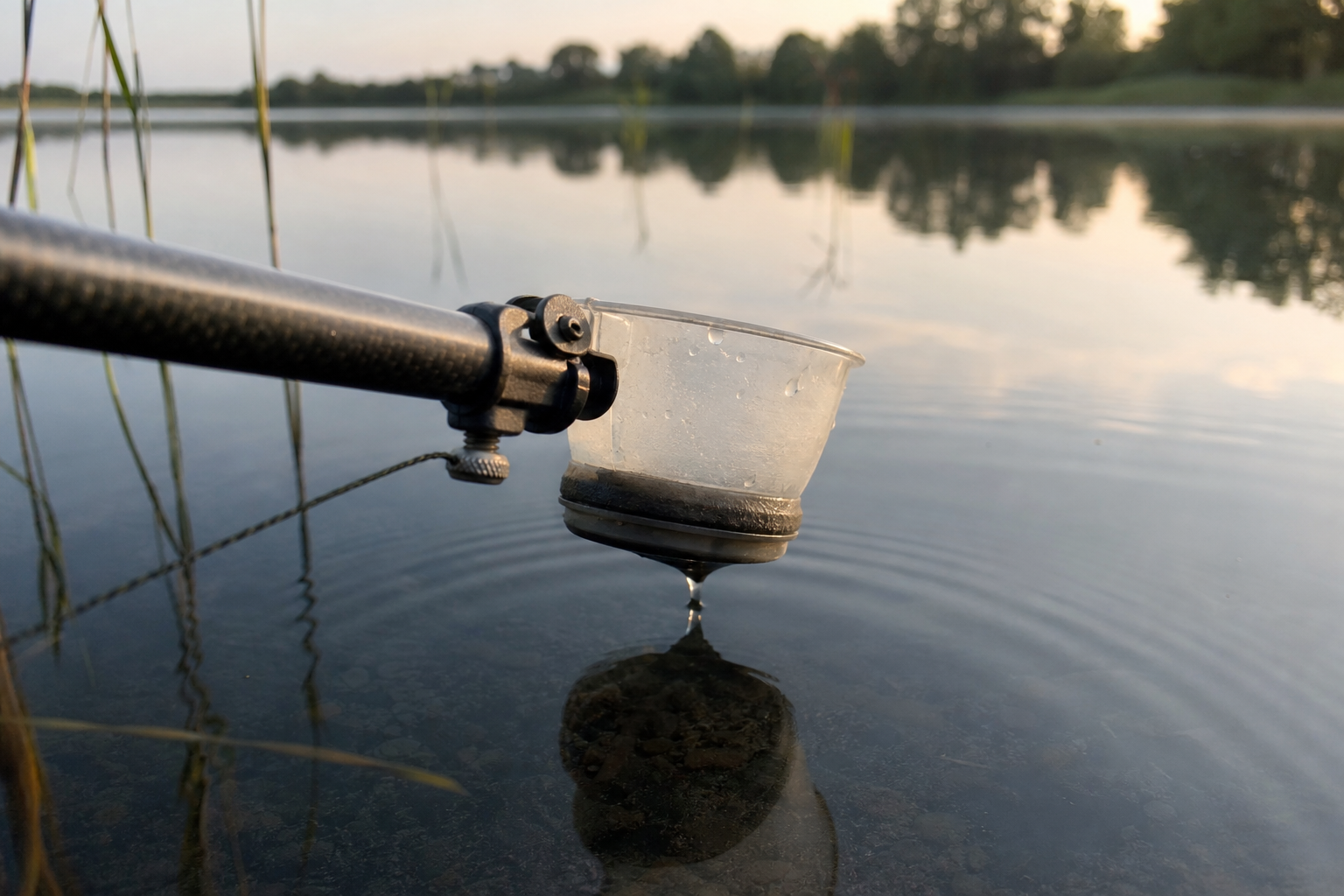
Don't overload the cup
A cup that is too full is harder to lower quietly to the surface and more likely to disturb the swim when you tip it. Fill the cup to around three-quarters and lower it slowly before releasing.
Choosing between a larger pole cup and a smaller toss pot
The size of the cup you use depends on what you are trying to do. Larger cups handle groundbait balls well; smaller toss pots or kinder cups (the terms are used interchangeably in most UK tackle shops) are better suited to topping up with loose feed or a small pinch of groundbait once fish are already in the swim.
If you are new to the pole, the pole fishing for beginners section of this site explains how the pole and its different top sections work together before you commit to a cupping kit setup.
| Type | Typical use | When to choose it |
|---|---|---|
| Larger pole cup (cupping kit) | Opening feed of groundbait at the start of a session | When you need to introduce a meaningful ball of groundbait accurately on your pole line |
| Small toss pot or kinder cup | Topping up with loose feed or a small pinch of groundbait during a session | When you want to trickle a little bait over the rig without disturbing fish already in the swim |
How much groundbait to introduce, and when
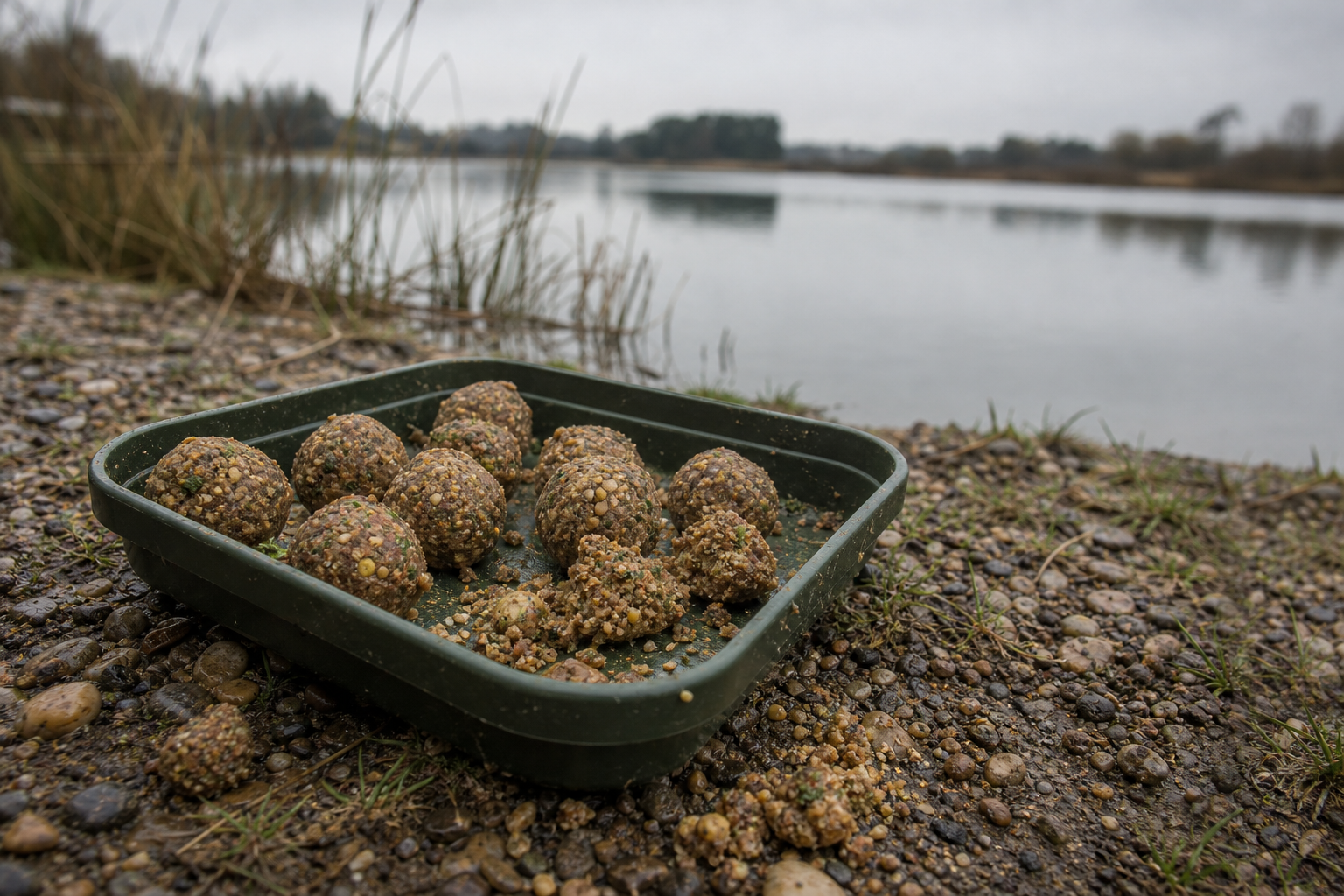
The principle that most experienced UK coarse anglers follow is little and often. A few small balls or a single cup to open the session, then modest top-ups as bites develop. Heavy feeding at the start can saturate fish quickly or push them out of the swim altogether, particularly on commercial stillwaters where fish are often well-fed throughout the season.
The opening sequence on most sessions looks like this: introduce two or three small balls before you start fishing, then leave the swim alone and let fish find the feed. When bites slow, add a small top-up, either a single ball or a small toss pot of groundbait and loose feed together. Repeat as needed rather than committing to a fixed schedule.
On bream-dominated waters, a slightly more generous initial feed can be appropriate. Bream often respond well to a bit more bait on the bottom, and once a shoal moves in, they tend to settle and feed steadily. Even then, avoid heavy introductions once fish are actively biting: disturbing a feeding shoal of bream with a sudden large ball of groundbait is one of the most reliable ways to end a good spell of sport.
Let the fish tell you
If bites come quickly after introducing groundbait, you are getting something right. If bites dry up after a heavy introduction, scale back on the next top-up. Fish behaviour is a more reliable guide than a fixed feeding schedule.
Adjusting your approach for different fish
Roach and rudd are best served by a fine, light mix fed sparingly and little and often. A pinch of maggots or casters in the groundbait and small, frequent top-ups will keep them active in the swim without overfeeding them.
Bream benefit from a sweeter, heavier mix with particles such as corn, worms or small pellets. A slightly more confident opening feed is reasonable, but top up only in small amounts once the shoal is feeding.
Carp and F1s on commercial fisheries tend to respond well to a carp-oriented groundbait mix introduced in loose balls alongside the float or pole line. Commercial fishery carp are often highly responsive to groundbait, so keep quantities modest and adjust based on how quickly fish are moving through the swim.
Fishery rules and groundbait
This is one of the most practical things to check before your session and one of the things most anglers only discover at the water. Many UK day-ticket and club stillwaters have rules covering the quantity of groundbait allowed per session, the types of groundbait permitted, or specific additives that are banned.
Some waters ban groundbait entirely. Others allow it only in a feeder, which would make the techniques in this article off-limits regardless of the rig you are fishing with. Do not assume that the rules at one venue apply to the next one down the road.
Check the fishery's website before you go, or ask at the lodge when you arrive. Most fishery staff are happy to explain what is and is not allowed, and a quick conversation at the start of the day will save you from having to change your approach mid-session.
This is also a fish welfare consideration. Responsible quantities of groundbait help maintain water quality and fish condition, particularly on smaller commercial stillwaters that receive heavy angling pressure throughout the season.
For clarity: these fishery rules are separate from your rod licence obligation. The rod licence required in England and Wales is sold by the Environment Agency on GOV.UK and does not govern what bait you can use. Scotland and Northern Ireland have their own separate licensing arrangements. What you can and cannot put in the water is determined by the fishery's own rules, not the licence.
A simple session plan to get started
A basic groundbait session with a float or pole
Plumb the depth
Set your float or pole rig so the hookbait will fish just off the bottom in the spot you plan to feed.
Mix your groundbait
Add water gradually and test the consistency before fishing. Add hookbait samples last.
Introduce your opening feed
Float rod: hand-throw two or three small balls onto your float line. Pole: ship out with the cupping kit and lower the cup quietly before tipping in.
Fish with a simple rig
A straightforward float setup with a small hook and a live bait such as maggots or worms is a reliable starting point.
Top up little and often
Add a small cup or a single ball when bites slow. Avoid sudden heavy feeding once fish are in the swim.
Adjust as you go
If bites are slow after feeding, reduce the amount or switch to loose feed only for a while. If fish are moving off the bottom, check whether groundbait is drawing them up through the water.
If you are not sure how to plumb the depth accurately before you start, plumbing a swim correctly is something worth getting comfortable with before your first session using groundbait, since placing feed at the right depth makes a real difference to how many fish you will find it.
Groundbait does not need to be complicated. Start with a general coarse mix, get the consistency right, introduce it modestly and let the fish guide your top-ups. That approach will serve you well on the vast majority of UK stillwaters, whatever rig you are fishing with.
References and Further Reading
- Wikipedia: Coarse fishing overview and tackle, including groundbait use.
- A Monk Anglers Association: Coarse Fish Species and groundbaiting advice.
- Peche Landes: Discover fishing, float and groundbait step-by-step guide.
Frequently asked questions
What does groundbait do in a float or pole session?
Groundbait places a food source on or near the bottom that releases particles, scent and movement. Fish that come to investigate tend to linger, giving your hookbait a better chance of being found.
How should I mix groundbait for float or pole fishing?
Start dry, add water gradually, then test by squeezing a handful. It should hold shape when pressed but crumble when dropped. Rest the mix for about five minutes and add hookbait samples last.
How do I introduce groundbait when float fishing?
Hand-throw two or three small balls onto your float line, aiming slightly beyond the float so they settle in front of it. Use a catapult for wider or windier waters and keep the delivery quiet and accurate.
How do I use a pole cup to introduce groundbait?
Fit a cupping kit to the pole, ship out to your fishing depth, lower the cup to the surface and tilt it to tip the contents in. Swap back to the normal tip section before you begin fishing.
How much groundbait should I use and how often should I feed?
Follow the little and often principle: an opening two or three small balls or a single cup, then modest top ups when bites slow. On bream waters a slightly more generous opening feed can help, but avoid heavy introductions once fish are feeding.

Lake & Lines Editorial Team
Editorial team
The Lake & Lines editorial team brings together freshwater fishing guides and researched tackle advice, helping beginners and returning anglers prepare for better days by the water.