Landing Nets for Coarse Fishing: What to Choose as a Beginner
A practical guide to choosing a coarse fishing landing net for beginners: why soft knotless mesh, a 40-50cm spoon head and a 2.7-3m telescopic handle are the best start.
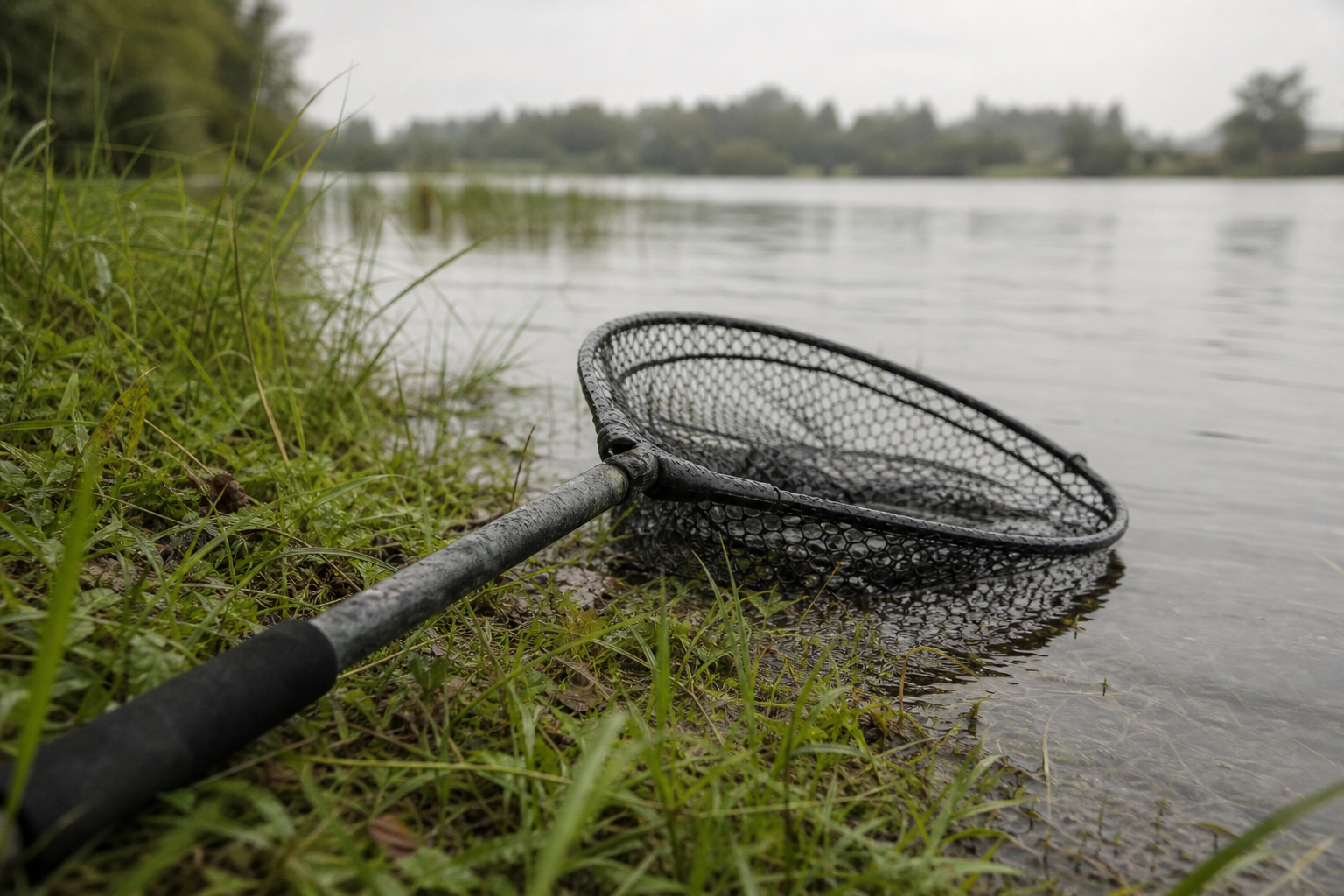
If you're putting together your first coarse fishing setup and want to know what landing net to buy, the answer is more straightforward than it might seem. For most beginners, a spoon-headed net with a 40–50cm head, mounted on a 2.7–3m telescopic handle, with soft knotless mesh, is the right starting point. You can find a solid setup in that configuration for around £20–£40. This article explains what those numbers mean, why they matter for a coarse fishing landing net for beginners, and when you might want to adjust them based on where you're fishing and what you're likely to catch.
Why the Landing Net Matters for Fish Care
A landing net is standard equipment in UK coarse fishing, and it's an important part of handling fish responsibly. Trying to lift a fish clear of the water by the line, or swinging it directly to hand, risks injuring the fish and can damage your hook arrangement too. A net lets you bring the fish close, scoop it safely from the water and keep it supported while you unhook it.
The material of the net matters here. Soft, knotless mesh is now the accepted norm across coarse fishing because it protects a fish's scales and fins on contact. Coarser mesh or knotted construction can strip protective slime and cause abrasions. For more detail on looking after the fish you catch, including unhooking and returning them safely, see the Lake & Lines guide to handling and unhooking fish safely.
It's also worth knowing that national rod fishing byelaws in England and Wales set specific legal requirements for keepnets, including bans on knotted and metallic mesh, and minimum length rules. The same byelaws also ban knotted and metallic mesh in landing nets, so soft knotless mesh is a legal requirement as well as the right choice for fish welfare.
What to Look for in a Coarse Fishing Landing Net for Beginners
There are three decisions worth understanding before you buy: head size, mesh and shape, and handle length. Get these right and everything else is detail.
Landing Net Size for Coarse Fish
The most important factor in choosing a landing net is matching the head size to the largest fish you're likely to encounter. A net that's too small leaves you trying to fold a fish into a space it won't fit, which is stressful for the fish and frustrating for you.
| Target fish | Recommended head size | Typical venues |
|---|---|---|
| Small silver fish (roach, perch, skimmers) | 35–40cm (14–16in) | Canals, small ponds |
| Mixed coarse (roach, bream, small carp to low doubles) | 40–50cm (16–20in) | Day-ticket lakes, club stillwaters |
| Carp, pike or catfish | 42in (107cm) or larger | Commercial carp lakes, reservoirs |
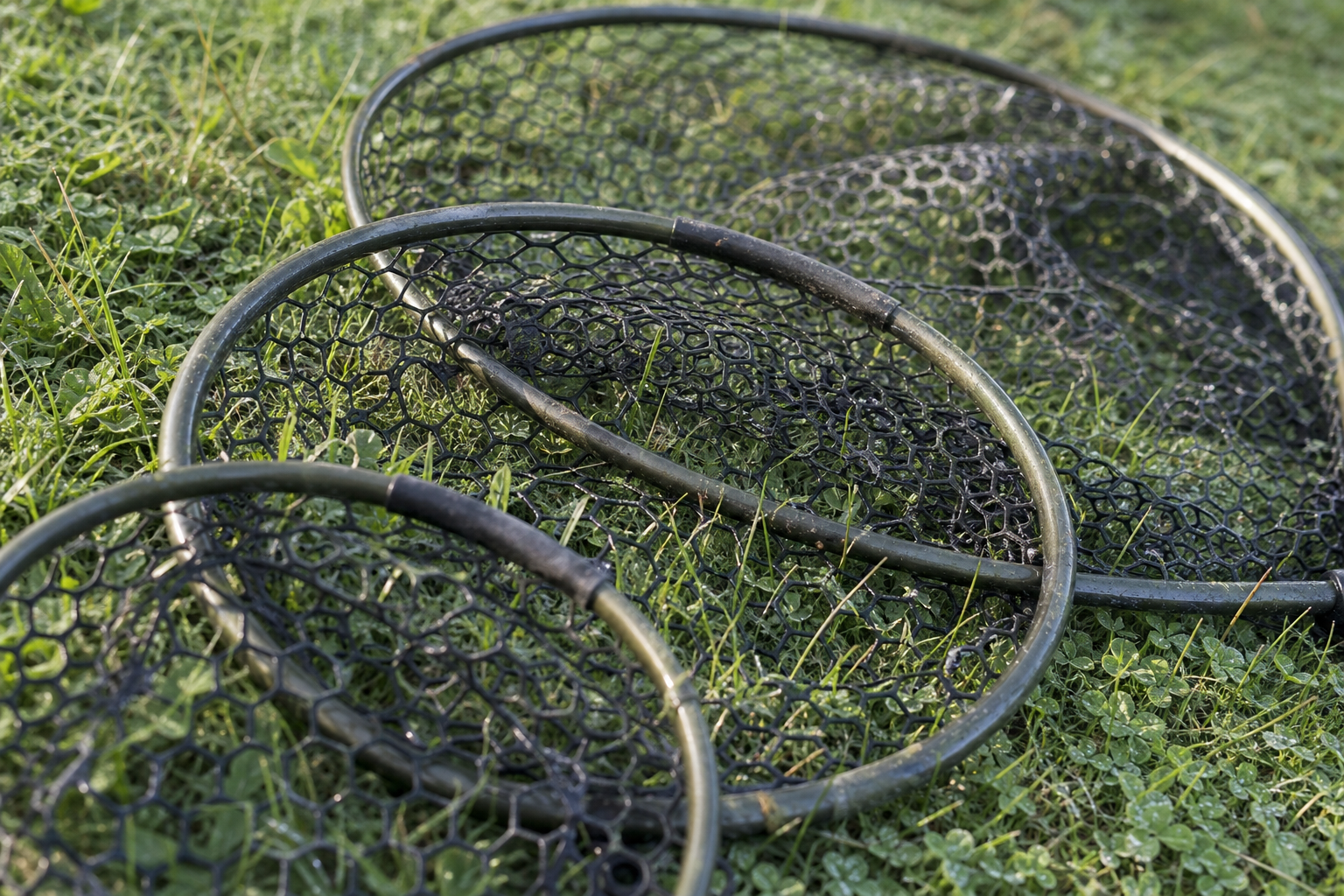
For most beginners, a 40–50cm head is the right call. It handles the widest range of fish without being awkward to carry or deploy, and it covers the typical mix of species you'll encounter on day-ticket lakes and club stillwaters: roach, bream, tench, skimmers and carp into the low double figures.
The most common mistake beginners make is going too small. A 35cm net looks fine in the shop, but if you're fishing a commercial lake that holds carp to double figures, you'll quickly find out why size matters. Specialist retailers consistently recommend nets of 42 inches or larger for carp and pike fishing. If you know from the start that you'll be targeting bigger fish, size up accordingly. If you're genuinely unsure, the 40–50cm range gives you room to grow.
Net Shape and Mesh
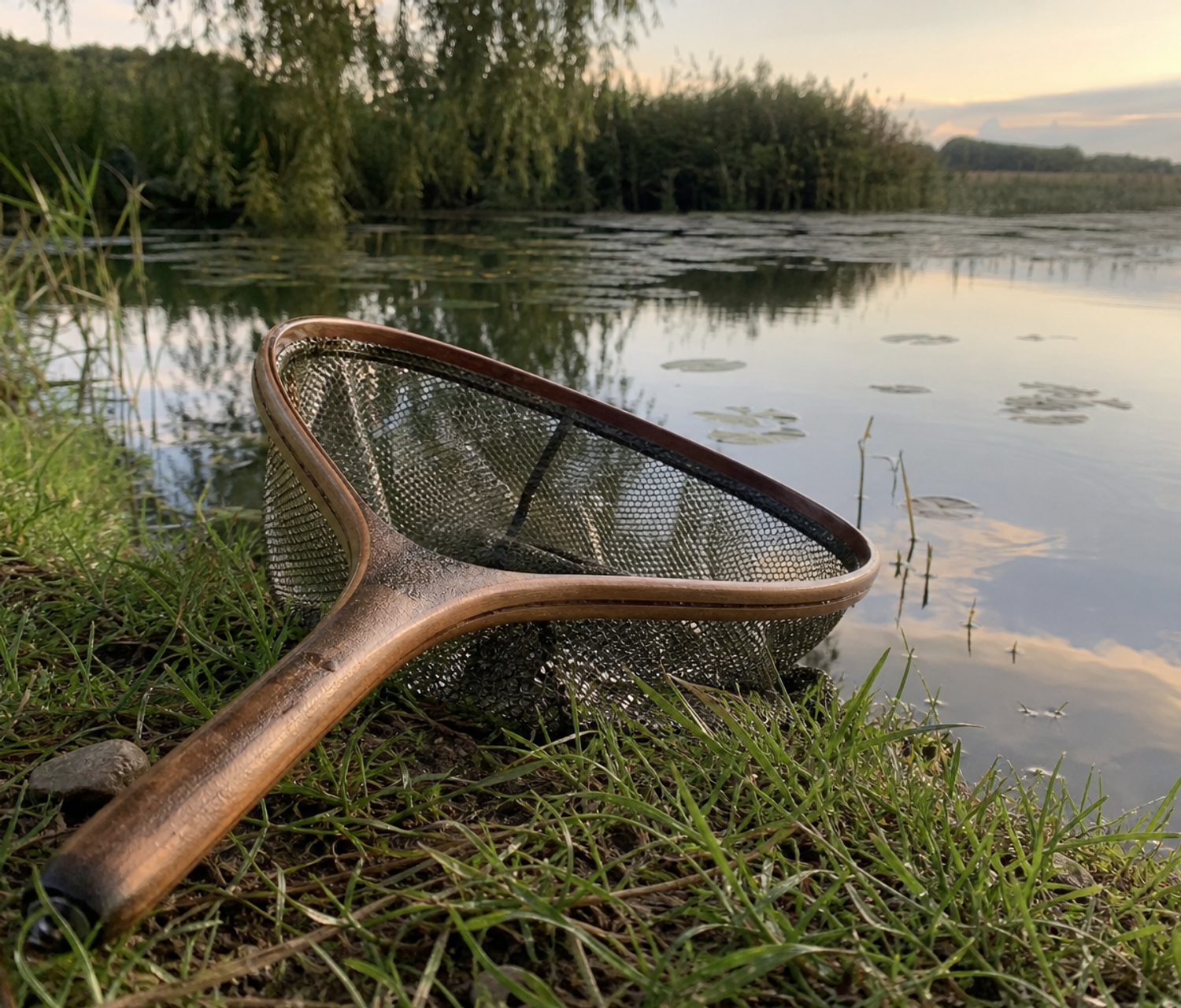
Shape: For coarse fishing, a spoon-shaped head is the standard choice. The rounded scoop profile makes it straightforward to slide the net under a fish at the surface, which is the moment when most beginners fumble. Pan-shaped (flat-bottomed) heads are used in some match fishing scenarios, but you don't need to think about those yet. A spoon head will serve you well across almost every venue and species you'll encounter in your first season.
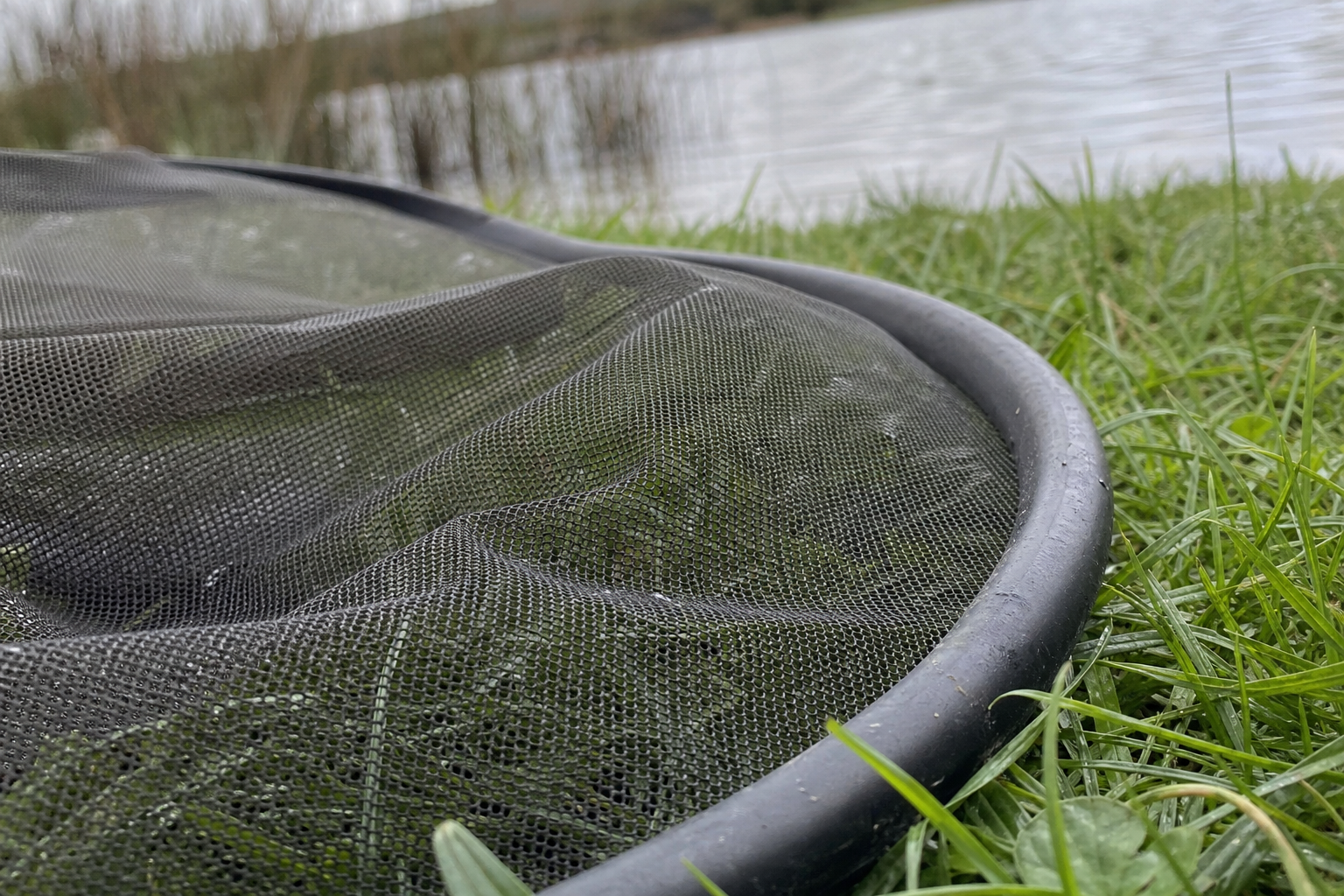
Mesh: Stick with soft, knotless mesh. It's widely available even in the most affordable nets, and it's the right choice on welfare grounds. The byelaws in England and Wales that ban knotted and metallic mesh in keepnets apply to landing nets too, and softer material on contact with a fish means less chance of removing protective slime or catching on fins. Look for mesh described as "fish-friendly" or "knotless" when you're buying.
Coarse Landing Net Handle Length and Type
The handle is at least as important as the head, and it's the part beginners most often underestimate. A net head that's perfectly sized is useless if you can't reach the fish with it.
Length: A 2.7m (9ft) handle is workable for close-range fishing on a narrow canal or small pond where you're sitting right at the edge. For most other situations, 3m (10ft) is the better general starting point. It gives you enough reach over marginal vegetation, platform edges and shallow margins, without becoming difficult to handle once a fish is in the net. If you're fishing from a platform or raised bank, you may appreciate every centimetre of that length.
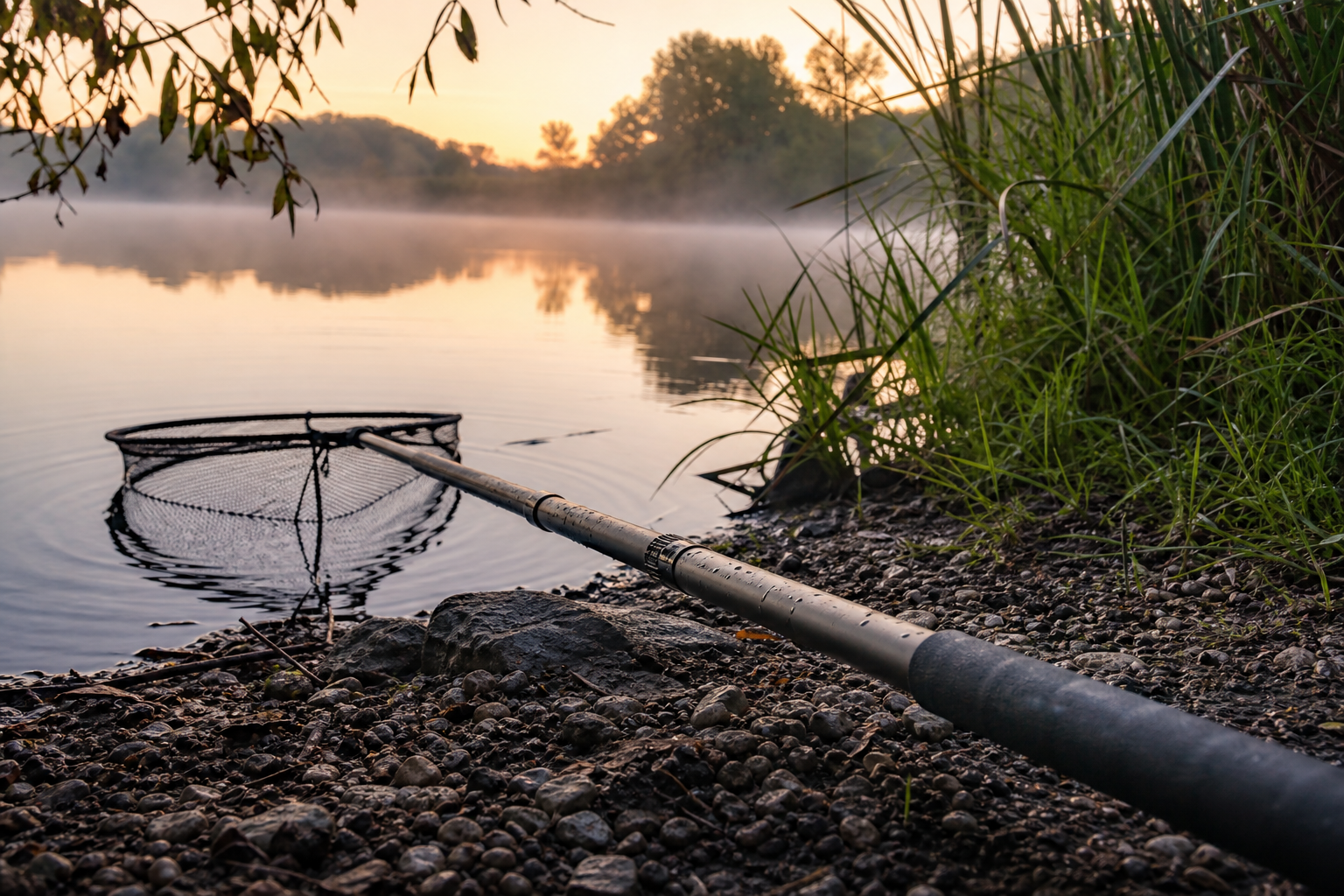
Type: Telescopic handles are the practical choice for beginners. They collapse down for easy transport, extend in seconds and require no assembly at the bankside. Sectioned (put-over) handles appear in match and specialist ranges and tend to be stiffer, which matters at longer lengths, but telescopic handles are perfectly adequate for starting out and will handle most situations you're likely to encounter.
Fit: Most coarse landing net heads use a standard 3/8in BSF thread fitting. That means heads and handles from different brands are generally interchangeable. You're not locked into buying a matching set from one manufacturer, which is useful if you want to upgrade just the head or handle later.
Stiffness and grip: When you extend a telescopic handle fully, it should feel reasonably rigid rather than whippy. A handle that bends and flexes under load is harder to use when you're trying to steer a fish into the net. A rubberised grip section also makes a real difference when your hands are wet. If you're buying in a tackle shop, extend the handle fully and check how it feels before you hand over your money.
Three Setups to Consider, from Budget to Specialist
Rather than naming specific products, it's more useful to understand what each category of setup offers and where it falls short. Your starting point should be the fish you're likely to catch, not the price point.
Budget Telescopic Combo (around £15–£25)
High-street fishing retailers and general sports shops sell all-in-one telescopic landing net combos aimed at casual coarse anglers. These typically include a telescopic aluminium or composite handle and a medium spoon head (around 40–50cm) with soft mesh. They're sold as a complete set, ready to use straight from the box.
Budget telescopic combo
Strengths
- + Affordable entry point, often under £25
- + Sold as a complete set: no need to match components
- + Widely available online and in store across the UK
Limitations
- - Handles can flex under the weight of larger carp or pike
- - Components tend to be basic and may need replacing after a season or two
- - Limited choice of head sizes
Best for: Adults starting on canals, ponds and day-ticket lakes where silver fish and modest carp are the main catch.
Specialist Tackle Shop Combo or Separate Head and Handle (around £20–£40)
Independent angling shops and dedicated online tackle retailers offer a wider range of coarse and match landing nets, with more considered designs and better build quality than general-retail starter kits. Entry-level nets from these sources often start around £18–£21 for the head alone, with handles priced separately from around £10–£20. The advantage is flexibility: you choose the head size that matches your fishing and pair it with the handle length you need.
Specialist tackle shop combo
Strengths
- + Better build quality and more targeted designs
- + Wider choice of head sizes and handle lengths
- + Staff can advise on matching components to your venues
Limitations
- - Slightly higher cost, especially when buying head and handle separately
- - More options can feel overwhelming for an absolute beginner
Best for: Anglers who expect to fish regularly from the start and want gear built to last a season or two without an immediate upgrade.
Branded Coarse or Carp Net (around £30–£60 and above)
Specialist coarse and carp brands including Drennan, Preston Innovations and Korum produce nets designed specifically for bigger fish and frequent use. These typically feature reinforced frames, spreader blocks, deeper mesh and handles rated for heavier loads. Head sizes of 42 inches or above are common in these ranges.
Branded coarse or carp net
Strengths
- + Designed for safe, reliable landing of bigger carp and pike
- + Durable: a sound long-term choice if you progress quickly to regular carp fishing
- + Specialist handles offer more stiffness and reach
Limitations
- - Expensive relative to beginner needs
- - Larger heads are cumbersome in tight or overgrown swims
- - Overkill for canal or silver-fish sessions
Best for: New anglers who are fishing well-stocked commercial carp lakes from the outset and expect to catch carp into double figures early on.
Matching Your Net to Your Venue and Target Fish
The right net for a narrow canal is not necessarily the right net for a commercial carp lake. This table helps you match head size and handle length to the water you're most likely to be fishing.
| Venue type | Head size | Handle length |
|---|---|---|
| Narrow canal or small stream | 35–45cm | 2.4–2.7m |
| Small mixed stillwater or club lake | 40–50cm | 2.7–3m |
| Commercial carp lake or reservoir | 42in (107cm) or larger | 3m or longer |
If you're not sure what fish the water holds
Ask the fishery when you buy your day ticket. Most commercial fisheries will tell you the average size and species present, and many have rules about minimum net sizes. Checking before you go saves an awkward conversation at the bank.
One final practical point: if a fully extended handle feels too heavy or awkward to hold comfortably in one hand, it will feel worse when a fish is pulling against it. Going slightly shorter is a perfectly reasonable choice. The right net is one you can use with confidence, not one that looks impressive in the car.
What First-Time Anglers Often Get Wrong
Buying a net that is too small. Many beginners pick the smallest or cheapest net without thinking about what's actually in their local water. A 35cm net will not safely land a 10lb carp or a large pike. Match the net to the fish you're likely to catch, not to the lowest price on the shelf.
Treating the landing net and keepnet as the same thing. They're different pieces of equipment with different purposes. You use a landing net to bring a fish to the bank; a keepnet retains fish during a session for weigh-in and has its own minimum length rules in England and Wales. The ban on knotted and metallic mesh applies to both. A landing net is what most pleasure anglers need. A keepnet is optional and mainly relevant to match fishing. For a full picture of what you need to get started, including how these pieces of equipment fit into a complete beginner's setup, the full beginners' kit checklist is worth working through.
Ignoring fishery rules on net size. Some commercial lakes specify a minimum net size, particularly where carp fishing is the main draw. These rules exist to protect the fish, and failing to follow them can mean being asked to stop fishing. Check the fishery's rules before your visit; the information is usually on their website or available when you book your ticket.
What You Should Expect to Spend
There's no need to overspend on a landing net at the start. Here's a practical summary of what different budgets will get you in the UK:
- Around £20–£40: A complete beginner setup (head plus handle) from a mainstream UK retailer. This covers the all-in-one telescopic combos and lower-end tackle shop combinations. It's genuinely enough to get started across most venues.
- Around £18–£21 (head only): Entry-level nets from specialist tackle shops, with handles priced separately from roughly £10–£20. Buying separately gives you more control over head size and handle length.
- Around £30–£60 and above: Branded specialist nets designed for carp and pike, from manufacturers such as Drennan, Preston Innovations and Korum. Worth considering only if you know from day one that bigger fish are the target.
A medium all-rounder in the £20–£35 bracket will serve most beginners well across multiple venues and species. If, after your first season, you find yourself regularly fishing for larger carp or pike, stepping up to a proper carp-sized net makes sense. That's a decision you can make with experience behind you, not a purchase you need to rush before your first session.
Frequently asked questions
What size coarse fishing landing net for beginners should I buy?
Aim for a 40-50cm spoon-shaped head and a 2.7-3m handle as a general starting point. Size up for carp, pike or known big-fish venues.
Is knotless mesh necessary?
Yes. Soft, knotless mesh protects fish slime and fins and is the recommended choice for fish welfare and practical use.
Should I choose a telescopic or sectioned handle?
Telescopic handles are the practical choice for beginners because they collapse for transport and are quick to use. Sectioned handles are stiffer but not essential at the start.
Can I buy a complete combo or should I buy head and handle separately?
Both work. Combos are ready to use and affordable. Buying head and handle separately gives more choice and is easy because most heads use a standard 3/8in BSF thread.
How much will a beginner landing net cost?
Expect around £20-40 for a good beginner setup. Entry heads start near £18-21 and branded carp nets usually cost £30-60 or more.
Lake & Lines Editorial Team
Editorial team
The Lake & Lines editorial team brings together freshwater fishing guides and researched tackle advice, helping beginners and returning anglers prepare for better days by the water.