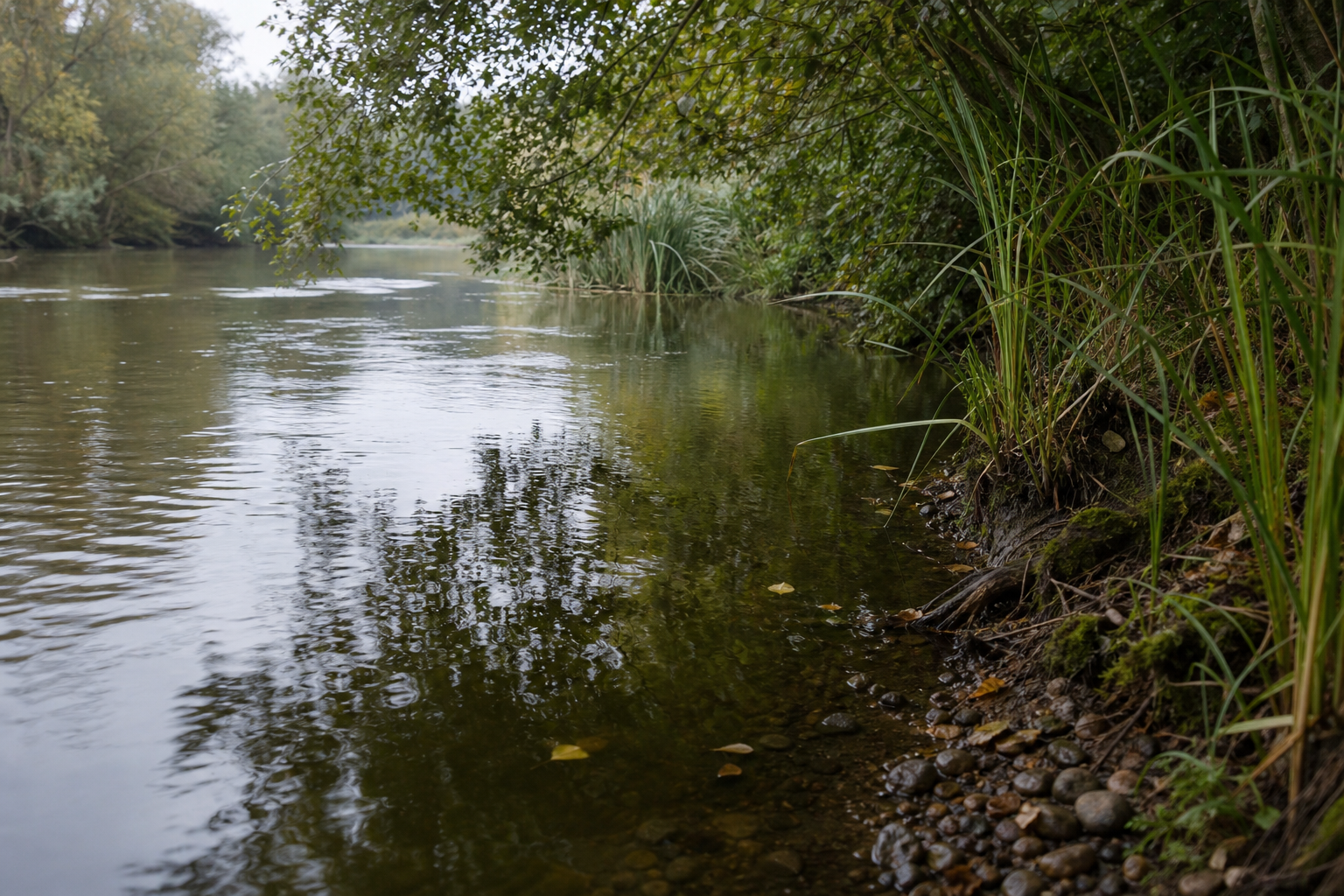
A Beginner's Guide to River Coarse Fishing in England
Practical guidance for river coarse fishing in England: understand the close season (15 March to 15 June), obtain a rod licence and permission, pick accessible water and start with simple float or feeder methods.
At a Glance
- Rivers in England have a statutory coarse close season from 15 March to 15 June; the open season runs 16 June to 14 March.
- You must have both a rod licence and permission to fish a particular stretch of river.
- For a first session choose club-controlled or managed venues and fish in settled conditions.
- Look for flow lanes, cover and depth changes; start with simple float or feeder tactics and modest loose feeding.
- Observe bank safety, respect other anglers and practise careful fish handling to protect river stocks.
River coarse fishing is one of the most rewarding ways to spend a day at the water, and English rivers offer plenty of opportunity for anyone starting out. Before you plan a session, though, there is one thing you need to know: rivers in England have a statutory close season during which fishing for coarse fish is not permitted. Understanding when you can and cannot fish is the single most important thing a beginner can sort out first, and this guide covers that clearly before moving on to what a first river session actually involves.
What "Coarse Fishing" Means on a River
Coarse fish are freshwater species other than salmon, trout and char. On a typical English river, beginners are most likely to encounter roach, dace, chub, perch and bream. These species are forgiving targets for anyone learning, and they can be caught on simple tackle and traditional baits. Barbel are present in many rivers too, but they are more demanding in terms of tackle and technique, and are generally better approached once you have a few river sessions behind you.
Coarse fish and game fish
Coarse fish are freshwater species other than salmon, trout and char. On a typical British river, beginners are most likely to encounter roach, dace, chub, perch and bream. More demanding species such as barbel require more experience and tackle suited to the fish.
Rivers differ from stillwaters and canals in several practical ways. Flow changes everything: where you place your bait, how your tackle behaves and where fish are likely to be feeding. Features such as bends, weed beds and depth changes become much more relevant when water is moving. And unlike most stillwaters, rivers in England carry a statutory close season, which means there are months of the year when you simply cannot fish them for coarse species. Knowing those dates before anything else saves you a wasted trip.
The River Close Season: What It Is and Why It Matters
Dates and Waters Covered
The statutory coarse fish close season on rivers, streams and drains in England runs from 15 March to 15 June inclusive every year. During this period, fishing for coarse fish on those waters is not permitted. The river open season therefore runs from 16 June to 14 March.
This close season is set by statutory byelaw. The dates come from GOV.UK guidance on freshwater rod fishing rules, and they apply each year without exception on all rivers, streams and drains covered by the byelaw.
It is worth knowing that the close season does not apply universally to all freshwater. Most canals and stillwaters have no statutory coarse close season and remain open year-round, subject to the rules of the individual fishery or club. However, some specified canals and certain Sites of Special Scientific Interest (SSSI) designated stillwaters are also subject to a close season. Which waters fall into that category is set out in local byelaws, so it is always worth checking before you visit somewhere new.
| Water type | Close season | Notes |
|---|---|---|
| Rivers, streams and drains | 15 March – 15 June inclusive | Statutory; applies each year |
| Specified canals and some SSSI stillwaters | 15 March – 15 June inclusive | Check local byelaws; not all canals affected |
| Most canals and stillwaters | No statutory close season | Subject to fishery and club rules |
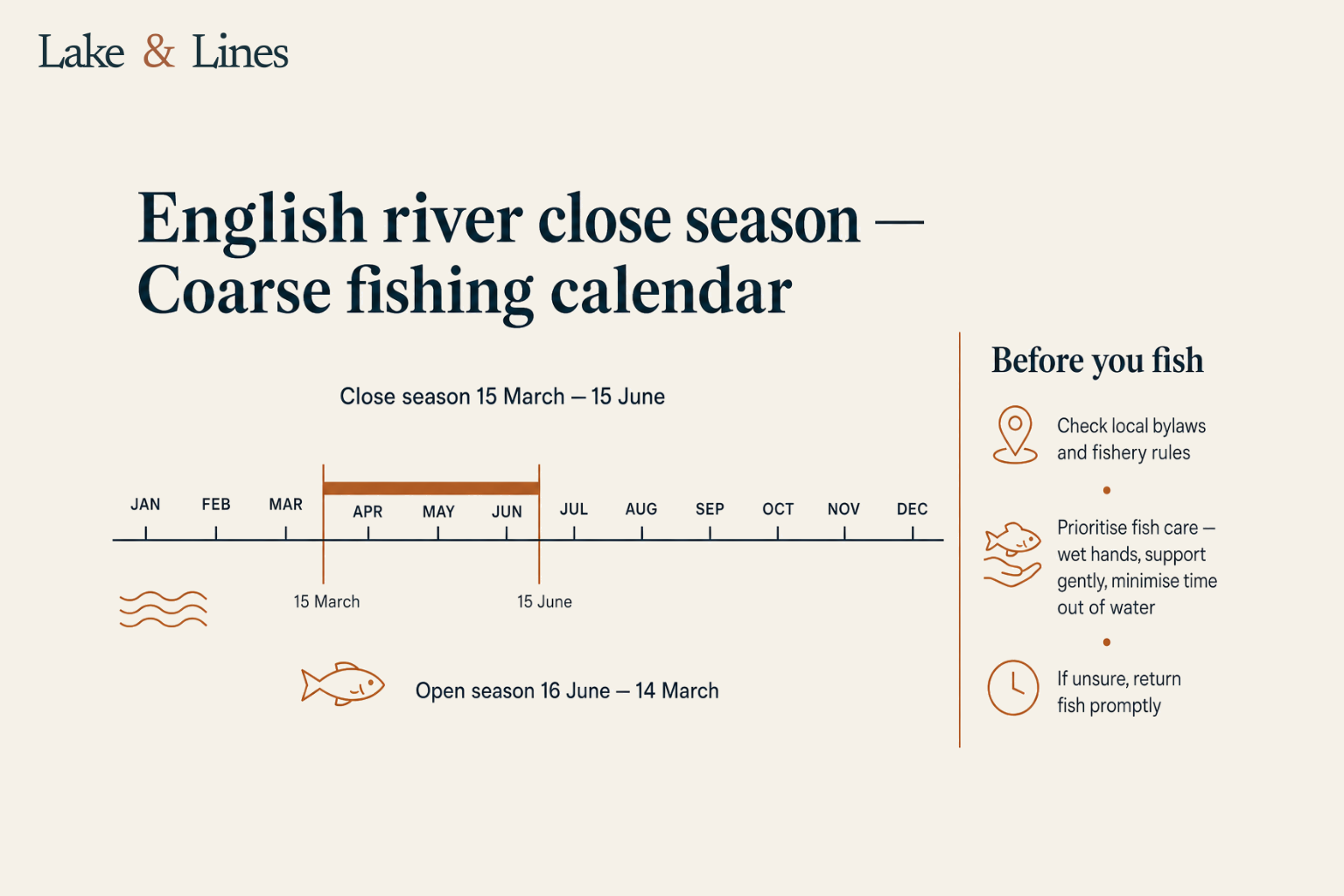
Always check your specific water
National rules tell you the default position, but navigation authorities and local managers can overlay their own requirements. Canal & River Trust lists specific rivers and canals where its close season applies. Check venue-specific information before you go.
Why the Close Season Exists
The close season is a conservation measure, not an administrative inconvenience. It protects coarse fish during their peak spawning period, reducing disturbance at the time when fish are most vulnerable and when the next generation is being produced. The Environment Agency reviewed the river close season and explicitly retained it, on the basis that removing it would put some coarse fish species at risk during spawning. As an angler, respecting the close season is one of the most straightforward things you can do to support healthy fish populations in the rivers you want to fish for years to come.
Rules in Wales, Scotland and Northern Ireland
The close season dates described above apply in England. Wales broadly aligns with England on close season arrangements, but byelaws for Wales are set by Natural Resources Wales, not the Environment Agency. If you are planning to fish in Wales, you must consult Natural Resources Wales guidance directly rather than assuming England's rules apply.
Scotland and Northern Ireland operate under entirely different licensing and regulatory regimes. This guide does not cover those jurisdictions; anglers planning to fish in either country should check with the relevant authorities before booking a session.
Licences and Permission: The Two Things You Need Before You Fish
These are separate requirements. Confusing them is one of the most common mistakes beginners make, and getting both wrong carries real consequences.
Your Rod Licence
A valid rod licence is required for freshwater fishing in England and Wales, including rivers, canals, club waters and stillwaters such as private fishing lakes. Licences for England and Wales are sold by the Environment Agency via GOV.UK. You need one before you fish; enforcement is active and fishing without a valid licence can result in a substantial fine.
There are different licence types depending on your age and how you intend to fish. Full details are covered in a dedicated licences guide rather than repeated here, but the key point is straightforward: sort your rod licence before your first session.
Permission to Fish the Water
A rod licence does not give you the right to fish any particular river stretch. That is a separate matter entirely.
River fishing typically requires permission from the riparian landowner (the person who owns the bank and, in most cases, the fishing rights) or from an angling club that controls that stretch. Some stretches are available as day ticket waters, where you pay a fee at the venue or in advance. Others require club membership.
Public access to a riverbank does not automatically mean you have the right to fish there. This is a common and consequential misunderstanding: a footpath alongside a river gives you the right to walk; it does not give you fishing rights. For a first river session, the simplest approach is to look for a club-controlled stretch or a managed river venue where the access arrangements are clearly set out and easy to follow.
Choosing Where to Go for Your First River Session
Timing Your Session
Plan sessions within the open season, which runs from 16 June to 14 March in England. The 16 June is traditionally treated as opening day on rivers after the close season, and many anglers mark it as an occasion in itself.
Beyond the dates, use some common sense about conditions. Fishing during or shortly after significant flooding can be unsafe and unproductive. Extended drought can leave rivers low and fish under stress. A day of moderate, settled conditions will almost always give you a better experience than pushing out in poor weather.
Picking a Suitable Stretch
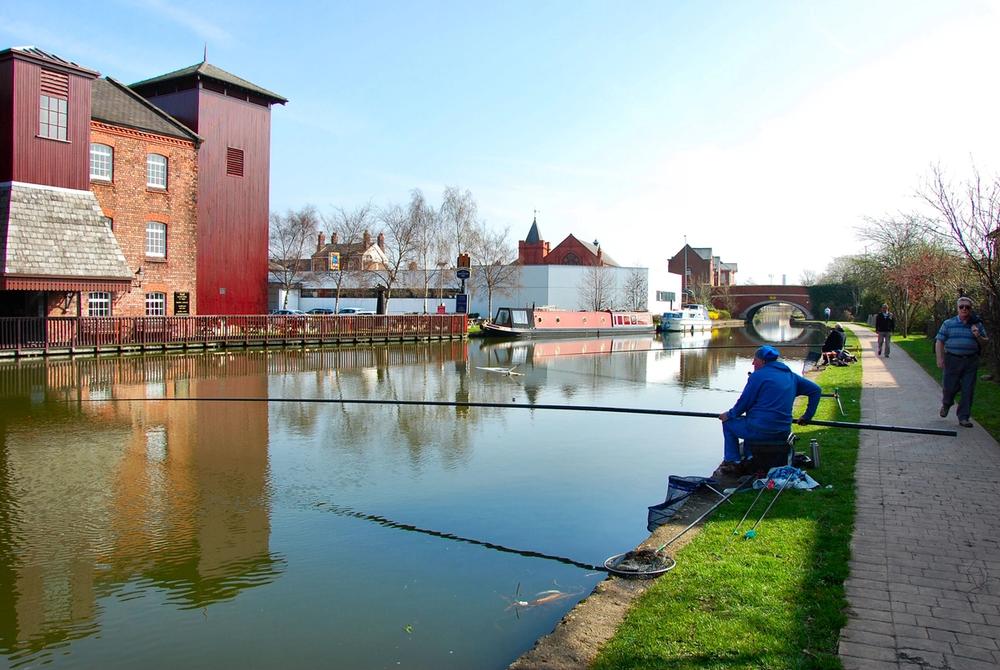
For a first river coarse session, look for club-controlled stretches or managed river venues rather than remote or unfamiliar sections. Club rivers often have marked pegs, clear rules and some local knowledge available, which makes navigating access and compliance much simpler. You are not looking for the most picturesque stretch of river in the country; you are looking for somewhere legal, safe and accessible, with a reasonable chance of finding fish.
Reading the River: Features Worth Understanding
You do not need to become an expert at reading water before your first trip. You do, however, need enough of an eye for it to avoid setting up somewhere obviously unpromising. Three things are worth looking for:
- Flow lanes and crease lines. Where fast water meets slower water, you get a crease. Food carried downstream tends to collect along these lines, and fish patrol them as a result. A crease is usually a more productive place to fish than open, uniform current.
- Cover. Overhanging trees, weed beds, reed margins and undercut banks offer shelter and food for species such as chub and perch. These are natural holding spots and worth fishing near, though not always directly under.
- Depth changes. Deeper runs, glides and holes tend to hold shoals of roach and bream, particularly as the water cools through autumn and into winter.
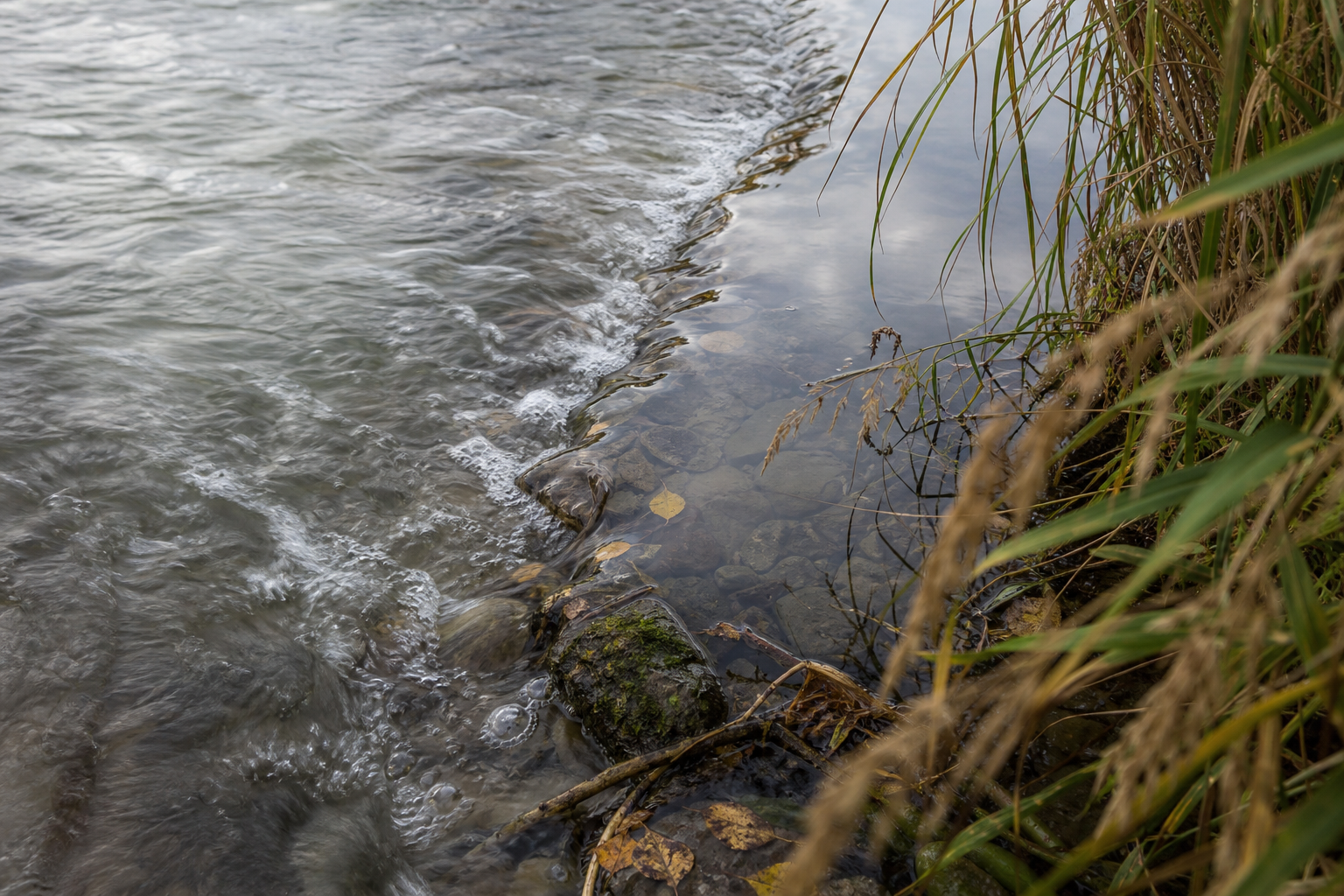
Start simple
You don't need to find the perfect swim on your first visit. Look for moderate flow, comfortable bank access and some visible feature, such as a fallen tree, a weed bed or a crease where fast and slow water meet. Fish the water in front of you and adjust from there.
What a Basic River Coarse Setup Looks Like
This section is about orientation, not a buying list. If you already have tackle from a commercial fishery, it may well work on a river, and there is no reason to buy new equipment before your first session.
A light to medium float or feeder rod of around 10 to 12 feet, paired with a small fixed-spool reel and monofilament line, is the standard starting point for general river coarse fishing. Line strengths in the range of roughly 3 to 6 lb cover most beginner river situations: lighter for roach and dace in clearer water, a little heavier if you are likely to encounter chub or perch around snags.
Float fishing on rivers uses patterns suited to running water. Stick floats and bodied waggler-style floats are commonly used, and the technique involves allowing the float to travel naturally with the current while the bait follows at a similar pace just above or on the riverbed. This is called trotting, and it is one of the most enjoyable ways to fish a river once you have the basics in place.
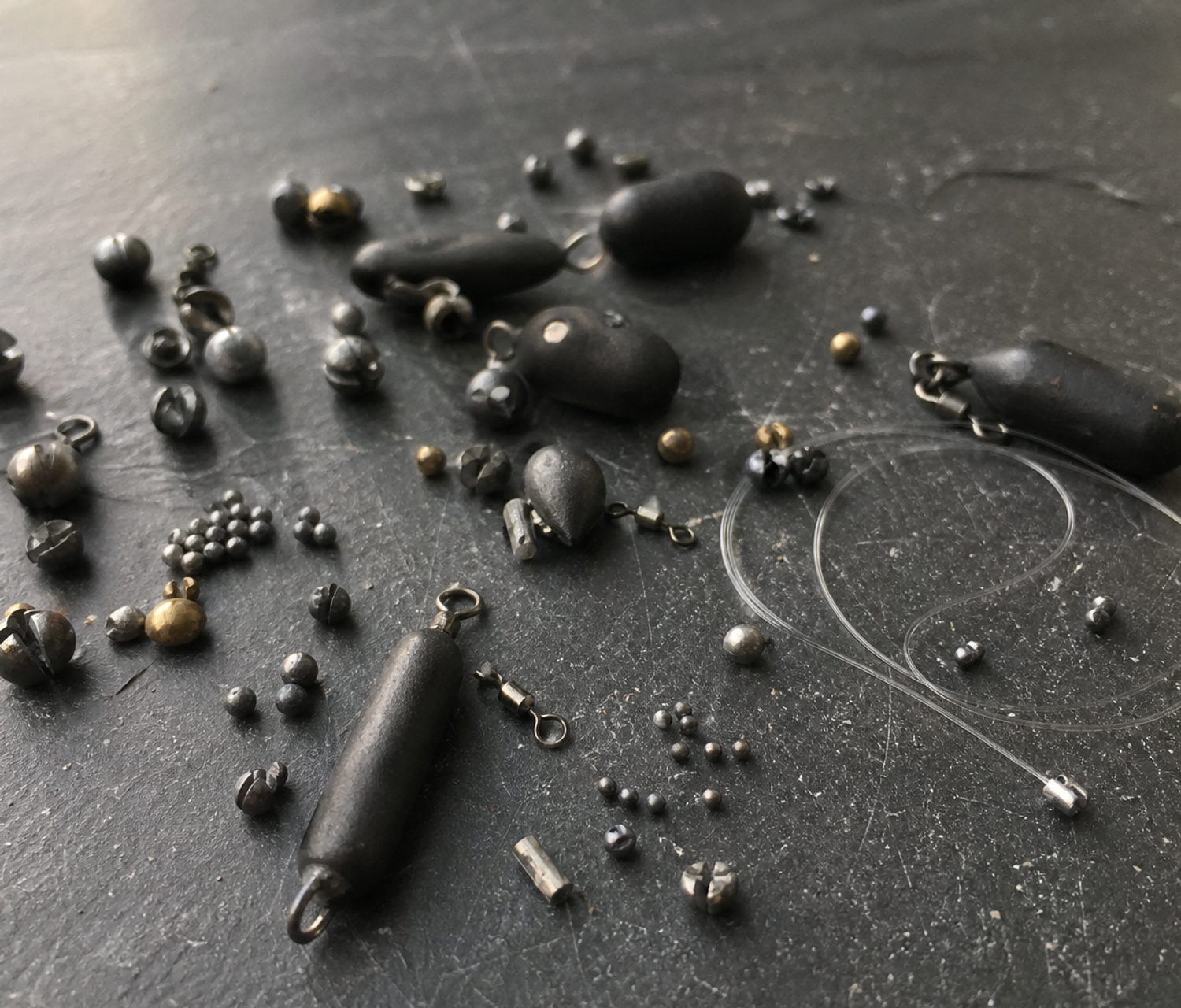
Feeder and leger fishing offers an alternative that beginners often find easier to start with. A small bomb or open-end feeder is used to anchor the bait on the riverbed, and the rod tip (a quivertip) registers bites by bending or tapping. It is a more static method, but it is effective for bream, chub and perch and requires less adjustment to current speed than float fishing.
For bait, traditional choices cover most situations: maggots, worms, bread and sweetcorn are all effective for general coarse species on rivers. Regular but modest loose feeding, introducing a few offerings at a time rather than large quantities all at once, helps hold fish in the swim without pushing them off it.
If you already have stillwater tackle
Tackle bought for a commercial fishery lake will often work on a river, particularly for feeder fishing. A float rod and a box of maggots will cover most beginner river situations. You don't necessarily need new equipment for a first session.
A Few Practical Notes on Safety and Etiquette
River banks are not always stable. Avoid steep, undercut or slippery margins, particularly after rain, and keep back from the edge in areas where the ground is soft or eroded. On navigable rivers, be aware of boat traffic and position yourself where you can be seen and where craft have room to pass.
Respect other anglers on the bank. Fish can be sensitive to vibration and noise, and keeping movement and disturbance to a minimum is good practice as much as common courtesy.
Handle fish carefully throughout. Damp your hands before touching a fish, carry a suitable unhooking mat and return fish promptly. Fish care is not a separate discipline from fishing competently; it is part of it. A fish returned in good condition is one that someone else can catch, and one that contributes to the health of the river you are fishing.
Getting this right from the beginning, rather than picking it up as an afterthought, marks you out as an angler who understands what they are doing.
The practical steps from here are straightforward. If you do not yet hold a rod licence, that is the first thing to sort, via GOV.UK, before you do anything else. Once that is in place, look for a club stretch or day ticket river venue within the open season dates, check that the water you have in mind is not subject to any additional byelaw restrictions, and plan a session in settled conditions. The rules are manageable once you know them, and the river will still be there when you are ready.
References and Further Reading
- Environment Agency: Helping our fish to thrive: why the close season is so important.
- Environment Agency: Protecting our freshwater fish species: why the close season is so important.
- Canal & River Trust: Coarse fishing close season.
- Canal & River Trust: Canal and river fishing FAQs.
- Broads Authority: Angling on the Broads.
Frequently asked questions
When is the statutory river close season in England?
The statutory coarse fish close season on rivers, streams and drains in England runs from 15 March to 15 June inclusive; rivers are open from 16 June to 14 March.
Does the close season apply to canals and stillwaters?
Most canals and stillwaters have no statutory coarse close season, but some specified canals and certain SSSI stillwaters are covered. Check local byelaws and venue rules before you go.
Do I need a rod licence to fish rivers?
Yes. A valid rod licence is required for freshwater fishing in England and Wales and must be obtained via GOV.UK before you fish; enforcement is active.
Does public access to a riverbank mean I can fish there?
No. Public access or a footpath does not automatically grant fishing rights. You need permission from the riparian owner, an angling club or a day ticket venue.
What basic tackle and methods should a beginner use?
A light to medium 10–12 ft float or feeder rod with a small fixed-spool reel and 3–6 lb line is typical. Float trotting or simple feeder/leger rigs and baits such as maggots, worms, bread or sweetcorn work well.
Lake & Lines Editorial Team
Editorial team
The Lake & Lines editorial team brings together freshwater fishing guides and researched tackle advice, helping beginners and returning anglers prepare for better days by the water.