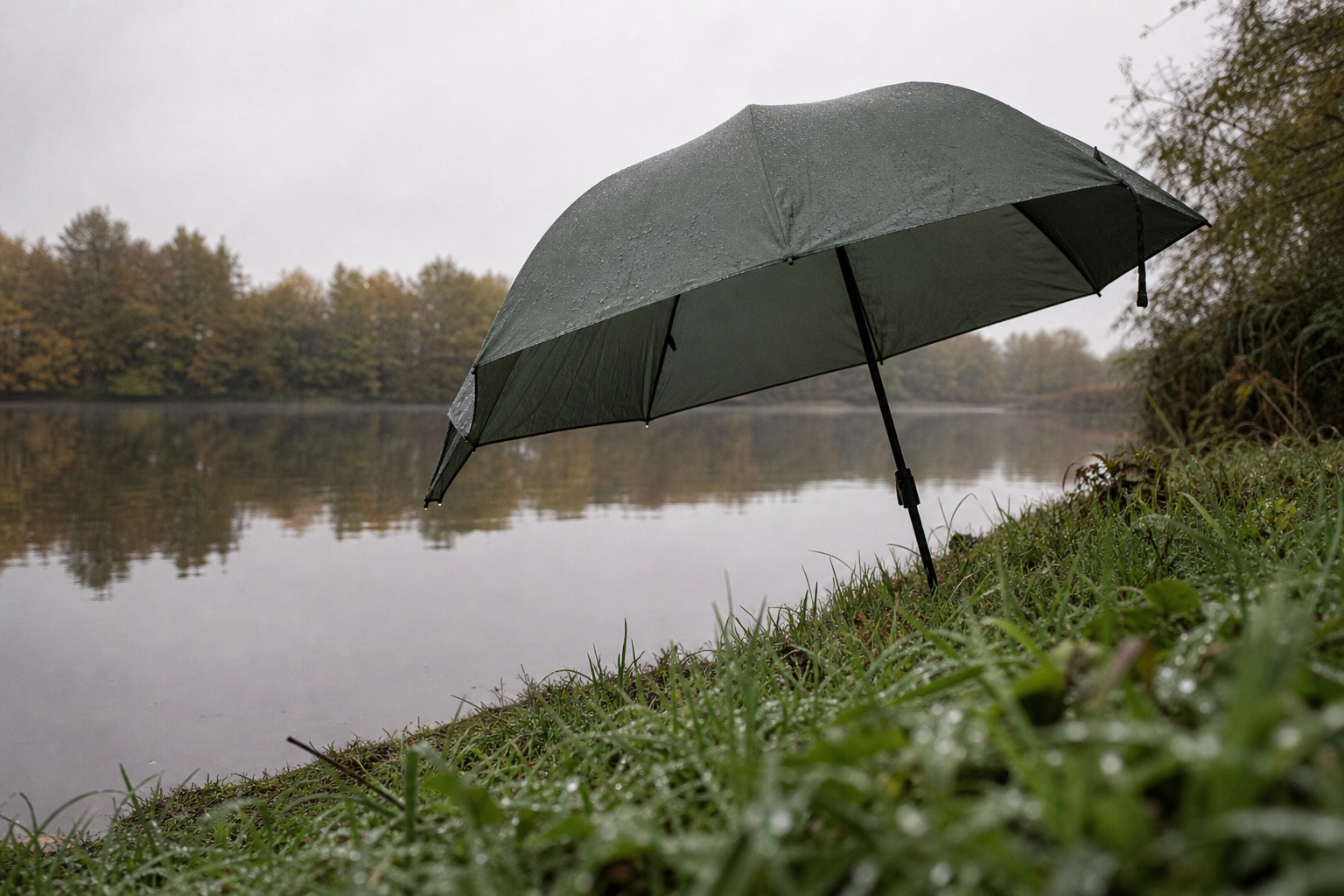
Fishing Umbrellas and Day Shelters: A Practical Guide for Weekend Anglers
Start in the middle: a brolly with storm sides usually gives more usable protection than a basic umbrella without the bulk or cost of an oval shelter.
There's a particular kind of misery that comes from watching rain darken your sleeves while you debate whether to pack up and head home an hour into a session. A decent fishing umbrella or day shelter changes that calculation entirely. This article covers the main types of fishing umbrella and day shelter suited to single-day sessions on UK still waters and commercial fisheries, explains how they differ in practice and offers a researched shortlist at different budgets. It does not cover overnight bivvies or camping shelters: that's a different category of kit for a different kind of session, and the distinction matters more than most product pages let on.
What counts as a fishing umbrella or day shelter?
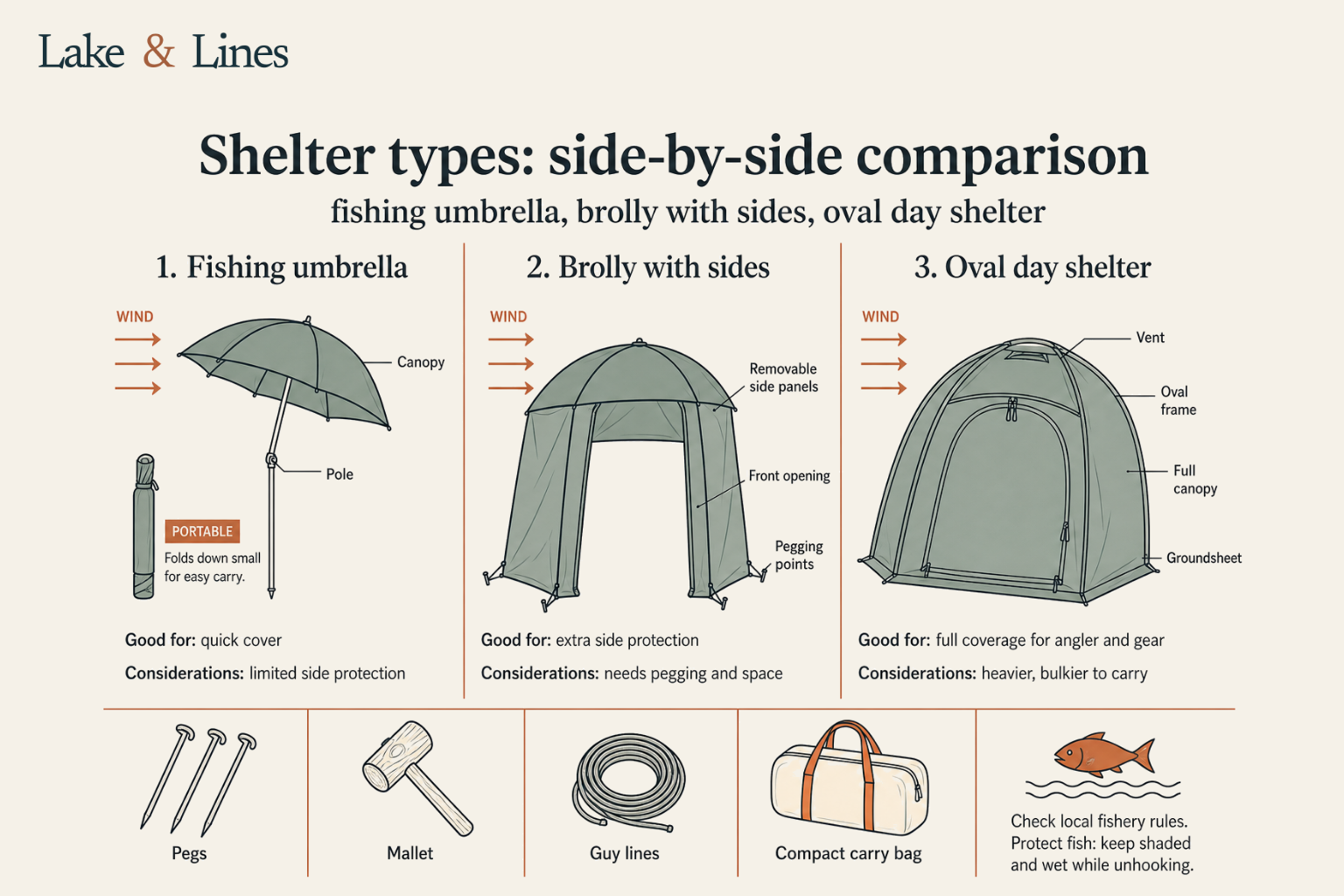
The terms "umbrella", "brolly" and "day shelter" get used loosely in UK fishing, sometimes interchangeably, sometimes not. Before buying anything, it helps to understand what the main types actually offer.
| Type | What it is | Best for |
|---|---|---|
| Fishing umbrella | A large tilt umbrella, typically 50–60" or 2.5 m, with no integral sides | Light rain cover; quick sessions; mobile fishing |
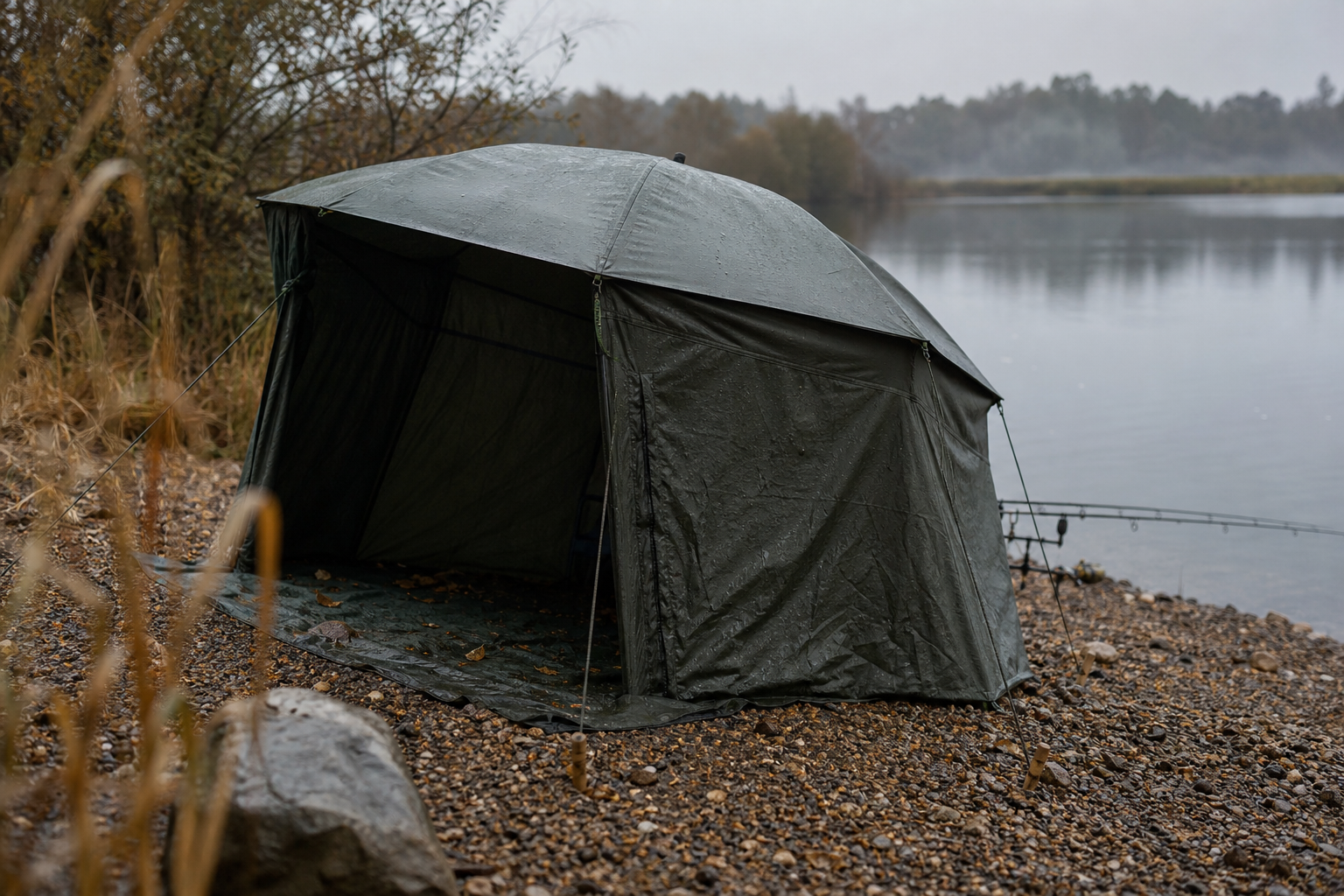
| Brolly system / day shelter | An umbrella or shelter frame with storm sides and poles | Better wind and rain protection; sitting in one peg; longer days |
| Oval / space-maker brolly | A shaped brolly designed to fit behind a chair or seatbox with more headroom | Match-style and carp day sessions; all-weather comfort without a bivvy |
Full carp bivvies sit outside the scope of this article, and that boundary is worth taking seriously. Most UK day-ticket waters are comfortable with umbrellas and compact day shelters, but some smaller commercial fisheries take a dim view of large bivvies on tight pegs, either informally or through posted rules. The products covered here are the kind of bankside shelter that fits neatly into a day-fishing context without raising eyebrows or taking up half the bank.
How to choose a day-session shelter
Size and coverage
A 50" umbrella and a 60" or 2.5 m umbrella are not interchangeable, and the difference shows most in heavy rain. A 50" canopy covers the angler and their immediate kit reasonably well in a light shower, but at an angle it may not extend far enough to keep your chair, bag and reel fully dry when the rain is driving in. A 60" or 2.5 m canopy gives noticeably more coverage and headroom, which matters less on a dry summer afternoon and considerably more on a grey October day when the rain is coming sideways.
The practical trade-off is portability. A larger umbrella is heavier to carry, takes up more space in a bag and can be genuinely awkward on a walk to a distant peg. On a small commercial fishery where you park and walk twenty metres to the bank, that's rarely a problem. On a club lake where the best peg is half a mile along a narrow path, it becomes a real consideration.
Umbrella or shelter system?
A plain tilt umbrella is quick to set up, light to carry and inexpensive. For a shower that passes in twenty minutes, it does exactly what you need. The limitation is that it offers essentially no side protection. In steady, persistent rain accompanied by any wind, you'll find the rain coming in from the side no matter how you angle the canopy.
A brolly system with storm sides and poles addresses this directly. The sides wrap around the front or sides of the shelter, creating much better protection in wind and rain. Setup takes a little longer, the whole unit is heavier and bulkier, and the cost is higher. But for typical UK coarse and carp day sessions fished from a chair in one peg, a brolly with at least some storm side coverage is generally the more versatile option. You can remove the sides on a calm day; you can't add them when the weather turns if they're not there.
Stability and weather performance
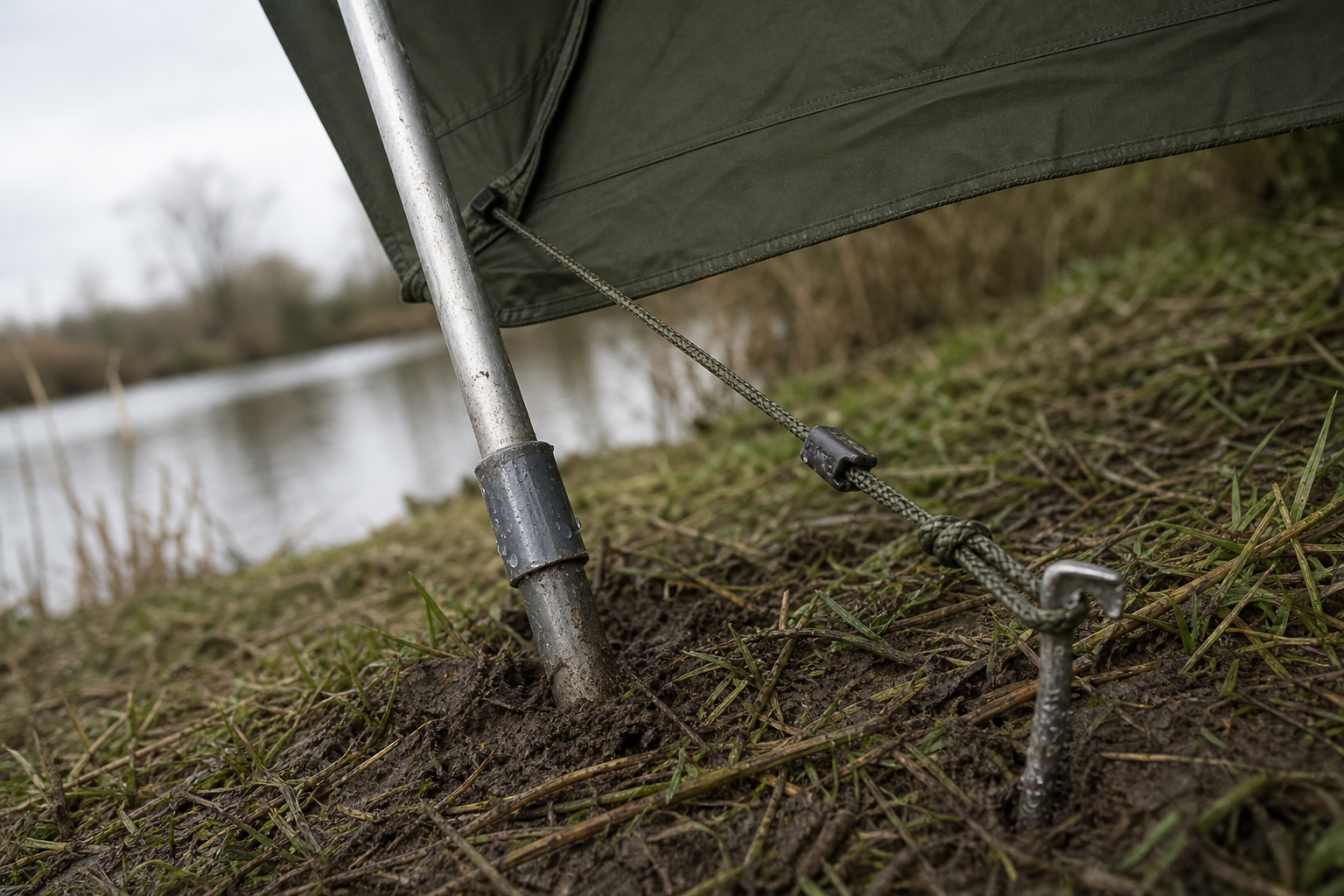
How well a shelter stays put in wind depends on several factors working together. Storm poles brace the canopy against lateral movement and prevent the familiar inside-out collapse that hits plain umbrellas in gusts. Guy ropes anchor the whole structure to the ground, especially important on soft or uneven banks. Flat-back and oval designs tend to sit closer to the bank and present less of a sail to the wind than a fully round canopy.
A plain umbrella handles light showers well when positioned carefully: angled into the wind with the back of the canopy facing the weather and staked into the ground. Where it struggles is in gusty or persistent sideways rain, where there's simply no way to angle a round canopy to cover everything at once. Pop-up shelter designs approach stability differently: their structural rigidity comes from the frame rather than from guy ropes and storm poles, which can make them more reliable in variable conditions but often larger to carry and store.
Venue rules and peg size
Many UK day-ticket fisheries, particularly smaller commercial still waters, have informal expectations or posted rules about bankside shelters. These rarely ban umbrellas or modest day shelters outright, but they often discourage large overnight bivvies, which take up more space, require more time to pitch and can feel out of place on a twelve-peg commercial lake designed around pleasure and match fishing.
If you're new to a water, a quick call or a look at the fishery's website before you turn up is worthwhile. For wider guidance on what to expect when visiting a day-ticket water for the first time, the guide to your first commercial fishery visit covers the practical details.
On peg size specifically: tight pegs on commercial fisheries may simply not accommodate the footprint of a large oval or 60" umbrella without encroaching on the angler next to you or sitting awkwardly close to the water. If you fish waters where pegs are known to be tight, a 50" option or a compact pop-up shelter may be a better fit than the most capable product on paper. Most products in this category come in neutral green or brown tones, which suits the expectations of virtually every UK water.
Day-session shelters worth considering
The following options are drawn from UK retail listings available as of autumn 2026. Prices are sourced from specific retailer pages and are noted with the dates those pages were checked: treat them as approximate reference points rather than current figures, and check the retailer directly before buying. The recommendations below are based on product specifications and listings, not personal testing.
Around £35 to £50
Westlake Nubrolli Umbrella, 50" (available at GO Outdoors): A compact 50" brolly at the budget end of the market. GO Outdoors lists different prices for members and non-members, so the price you pay will depend on whether you hold a membership. It's a practical option for mobile anglers or anyone who wants a basic rain cover for shorter sessions. The 50" span gives less coverage than larger models, and there are no storm sides included, so it relies on positioning for wind protection.
DNA Leisure 50" Waterproof Brolly with Storm Sides and Poles (available via UK price comparison sites, listed at £34.95 including VAT as of 21 September 2026): Getting storm sides and poles at this price point represents genuine value for a budget buy. DNA Leisure is a lesser-known brand in the UK fishing market, and it's fair to say that build quality and longevity are harder to assess for a less-established name than for a brand with a long track record. That said, for an angler wanting to try a brolly system before committing more money, this is a reasonable starting point.
Kingcarp 2.5 m Fishing Umbrella (Argos, listed at £45.00 as of 5 September 2026): A large 2.5 m canopy gives good coverage for the money, and this type of straightforward umbrella is quick to pitch and light to carry relative to shelter systems. It comes with a detachable zip-on wraparound sheet with clear PVC windows, so you can add side protection when the wind picks up, and guy ropes and pegs are included. Well suited to anglers who fish in relatively sheltered spots or who mainly need cover from overhead rain rather than driving weather.
Kingcarp Day Shelter with PVC Windows (Argos, listed at £45.00): A more enclosed option than the umbrella above, with PVC windows that let you keep an eye on the water without fully opening the shelter. The enclosed design and zipped front door keep wind off better than a bare umbrella, but the 500mm-rated fabric is sold as suitable for light showers only, so it suits changeable days rather than a prolonged wet day. It is heavier and bulkier than a plain brolly, and the PVC window panels can limit ventilation in milder weather.
On budget shelters
A plain umbrella around £45 works well for light rain and quick sessions. If you regularly fish through heavier weather, spending a little more on a model with storm sides usually makes a bigger difference than buying a larger canopy alone.
Around £69 to £90
Westlake LC Day Shelter Pop Up (GO Outdoors, with member and standard prices differing; page dated 22 February 2026): The pop-up frame design pitches and packs down very quickly, which is its most obvious practical advantage. It offers good depth for sitting out a prolonged shower in reasonable comfort, with more structural rigidity than a plain tilt umbrella. The main limitation is bulk in transit: pop-up shelters tend to compress into a wide, flat carry bag rather than the slimmer tube of a standard brolly, which can make them less convenient to carry on foot. Some tighter commercial pegs may find the footprint of this type of shelter a close fit. For a stillwater pleasure angler who arrives by car, settles into one peg and stays there for most of the day, it's a practical option at this price.
Preston Space Maker Multi 60" Brolly (listed at £88.78 on UK price comparison pages as of 15 October 2026): The space-maker design is built around anglers fishing from a seatbox or chair and is shaped to sit efficiently behind the angler rather than taking up unnecessary space to the sides. The geometry is likely to be flat-backed, which improves stability and reduces the footprint compared with a standard round umbrella of the same span. It's an open-fronted design, meaning that exposed swims can still let in wind and rain from the front. This is more of a specialist product suited to a particular style of fishing than a general-purpose umbrella, and the price reflects that. Anglers who fish match-style from a seatbox will find it more useful than those who fish from a reclining carp chair with a lot of kit spread around them.
Around £130 to £160
Sonik Opti-Cam 60" Oval Brolly Fishing Shelter (listed on UK price comparison sites at prices ranging from around £134.99 to £159.99 as of early October 2026): The oval design gives a noticeably larger usable floor area than a round umbrella of equivalent span, and the extended sides wrap further around the angler for better protection in rain and wind. Sonik is a well-regarded name in UK carp fishing, which gives more confidence about build quality and longevity than a lesser-known brand at a similar price. The camouflage finish suits most UK waters without standing out.
The main caveat for day fishing is that an oval brolly of this size is approaching bivvy territory in terms of bulk, weight and visual presence on the bank. It is well suited to long all-weather day sessions where comfort over an eight-hour stretch matters. For anglers who fish a few hours at a time or who visit fisheries with tight pegs or informal limits on large shelters, it may be more than the session demands. Worth checking with the fishery if you're unsure whether this size of shelter is welcome.
Is this bracket worth it for day fishing?
Oval and space-maker brollies in this range suit long, all-weather day sessions. If you mostly fish a few hours at a time or move between pegs, the extra bulk and cost are harder to justify. Most weekend pleasure anglers will find a mid-range day shelter does the job.
Matching a shelter to your session
The right shelter for your fishing depends more on how you fish than on any single specification. Three scenarios illustrate the practical choices clearly.
Mobile or walking-light fishing: If you move pegs during a session or carry your kit any distance to the water, a compact 50" umbrella or small brolly system is worth prioritising over a larger, more capable shelter. The difference in coverage matters less than the difference in what you're willing to carry. Low weight and quick setup are the useful qualities here.
Day-ticket stillwater, fishing one peg all session: Once you're settled into a peg for the day, the extra setup time and bulk of a day shelter with sides or a pop-up shelter become worth it. You're not moving the kit once it's pitched. Balance the shelter's footprint against what the peg can realistically accommodate, and consider how much space you need around your chair and gear before choosing between a 50" and a 60" option.
Long all-weather days or mixed conditions: For the kind of session where you arrive at first light and stay until late afternoon regardless of what the weather does, an oval or space-maker brolly gives near-bivvy protection without committing to overnight kit. These shelters are heavier to transport and more visible on the bank, but over a long wet day the comfort difference is real. For advice on staying warm in cold or wet conditions beyond the shelter itself, the guide to staying warm while fishing covers layering and session preparation in more detail.
| Session style | Shelter type | Approximate price range (as of October 2026) |
|---|---|---|
| Mobile or short sessions | 50" tilt umbrella | £35–£50 |
| Day-ticket still water, one peg | Day shelter with sides or pop-up | £45–£95 |
| Long all-weather days | Oval or space-maker brolly | £90–£160 |
The straightforward answer for most weekend pleasure anglers just starting to think about bankside comfort is to start somewhere in the middle: a brolly with storm sides at a sensible budget gives you far more usable protection than a basic umbrella, without the bulk or cost of a full oval shelter. From there, you'll know quickly enough whether you want more space or more portability, and you'll be making that decision with experience rather than guesswork.
Frequently asked questions
What is the difference between a fishing umbrella, a brolly system and an oval brolly?
A fishing umbrella is a large tilt canopy with no integral sides, best for light rain and mobile fishing. A brolly system adds storm sides and poles for better wind and rain protection. An oval or space-maker brolly is shaped to sit behind a chair with more headroom and usable floor area, suited to match and carp day sessions.
Do I need storm sides on a day shelter?
Storm sides wrap around the front or sides and give much better protection in wind and driving rain. They add weight, bulk and setup time, but you can remove them on calm days; you cannot add them later if the shelter does not include them.
Should I choose a 50" or a 60" (2.5 m) canopy?
A 50" canopy covers you and immediate kit in light showers and is easier to carry. A 60" or 2.5 m canopy provides noticeably more coverage and headroom in heavy or angled rain but is heavier and less portable, so consider how far you carry kit to the peg.
Are large shelters allowed at commercial fisheries?
Many day-ticket waters accept umbrellas and modest day shelters, but some smaller commercial fisheries discourage large bivvies or bulky shelters and tight pegs may not accommodate them. Check the venue rules or call ahead if unsure.
Which shelter suits different session styles?
For mobile or walking-light fishing a compact 50" umbrella is sensible. For a day-ticket stillwater where you stay on one peg a brolly with sides or a pop-up shelter is practical. For long all-weather days an oval or space-maker brolly gives near-bivvy comfort.
Lake & Lines Editorial Team
Editorial team
The Lake & Lines editorial team brings together freshwater fishing guides and researched tackle advice, helping beginners and returning anglers prepare for better days by the water.