How to Unhook Coarse Fish Safely: Landing, Handling and Returning Them Well
Step-by-step guidance on how to unhook coarse fish safely: prepare a knotless net, wet hands, use forceps or a disgorger for deep hooks, and support fish until it swims away.
At a Glance
- Prepare gear before you cast: knotless net, wetted unhooking mat, forceps, disgorger and wet hands.
- Land fish with a steady, controlled retrieve and lift the net smoothly while keeping the fish in the water.
- For shallow hooks use the push then reverse technique; for deep hooks use a disgorger or cut the line if removal is unsafe.
- Move larger fish to a wetted mat on soft ground and keep handling times very short.
- Return fish gently, support until breathing steadily, and face them into the current where appropriate.
You've got a fish in the net and you want to do right by it. That instinct is exactly the right one. Knowing how to unhook coarse fish safely is one of the most important practical skills in fishing, and the good news is that it is straightforward once you understand the sequence and have the right tools within reach. This guide walks you through everything from landing and returning coarse fish to the details of what to do when something doesn't go to plan, covering current UK best practice at every stage.
What you need before you start fishing
The single most common mistake beginners make is scrambling for their tools while a fish is already on the bank. Everything you need should be ready before your first cast. Think of this as part of your setup, not an afterthought.
Here is what you need at the waterside:
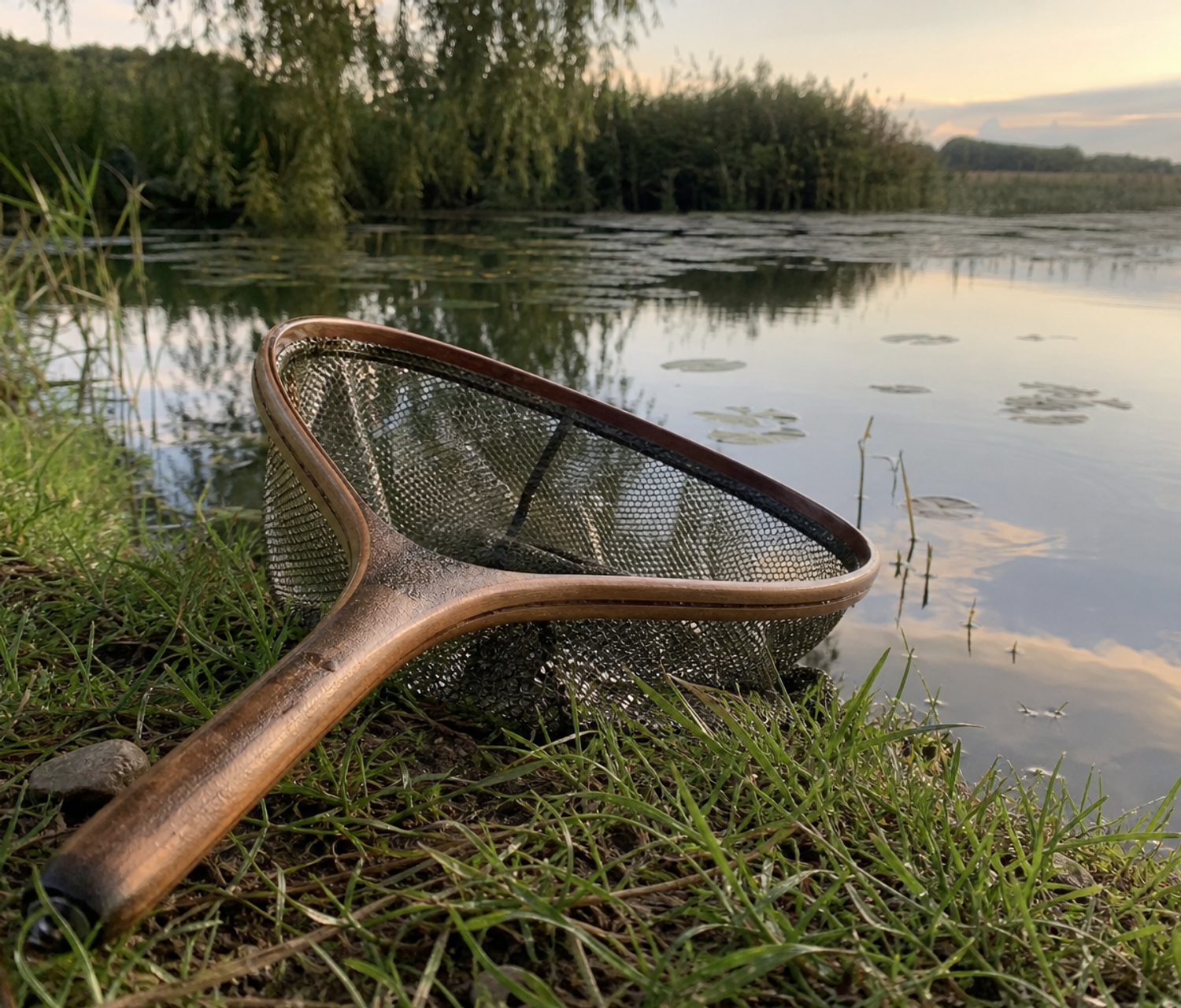
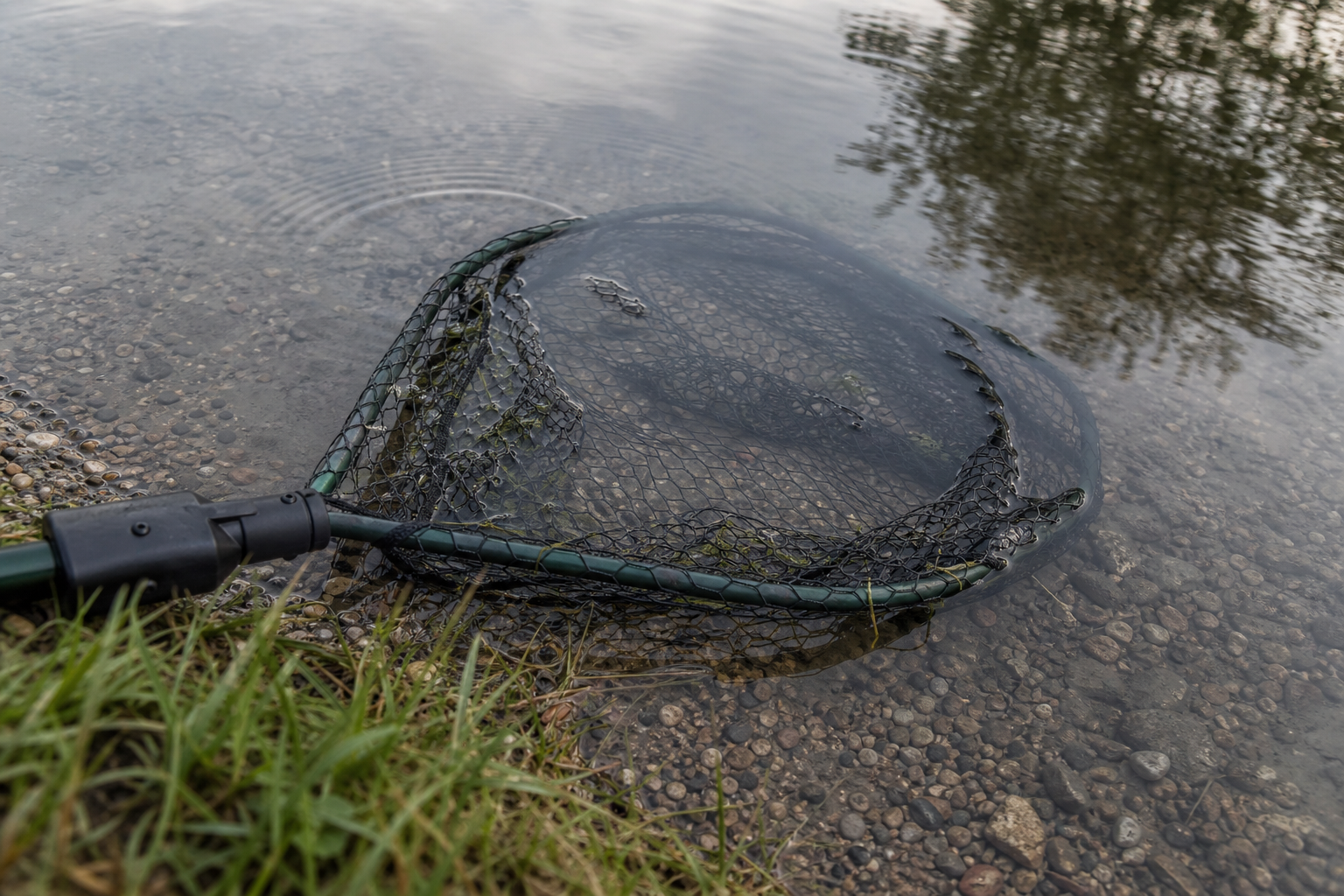
- Knotless landing net: A net with a knotless mesh is essential. Knotted nets damage the slime coat that protects fish from infection. A 42-inch net suits most fish you are likely to encounter on a commercial stillwater. Smaller nets restrict how you can position the fish and make landing more difficult than it needs to be.
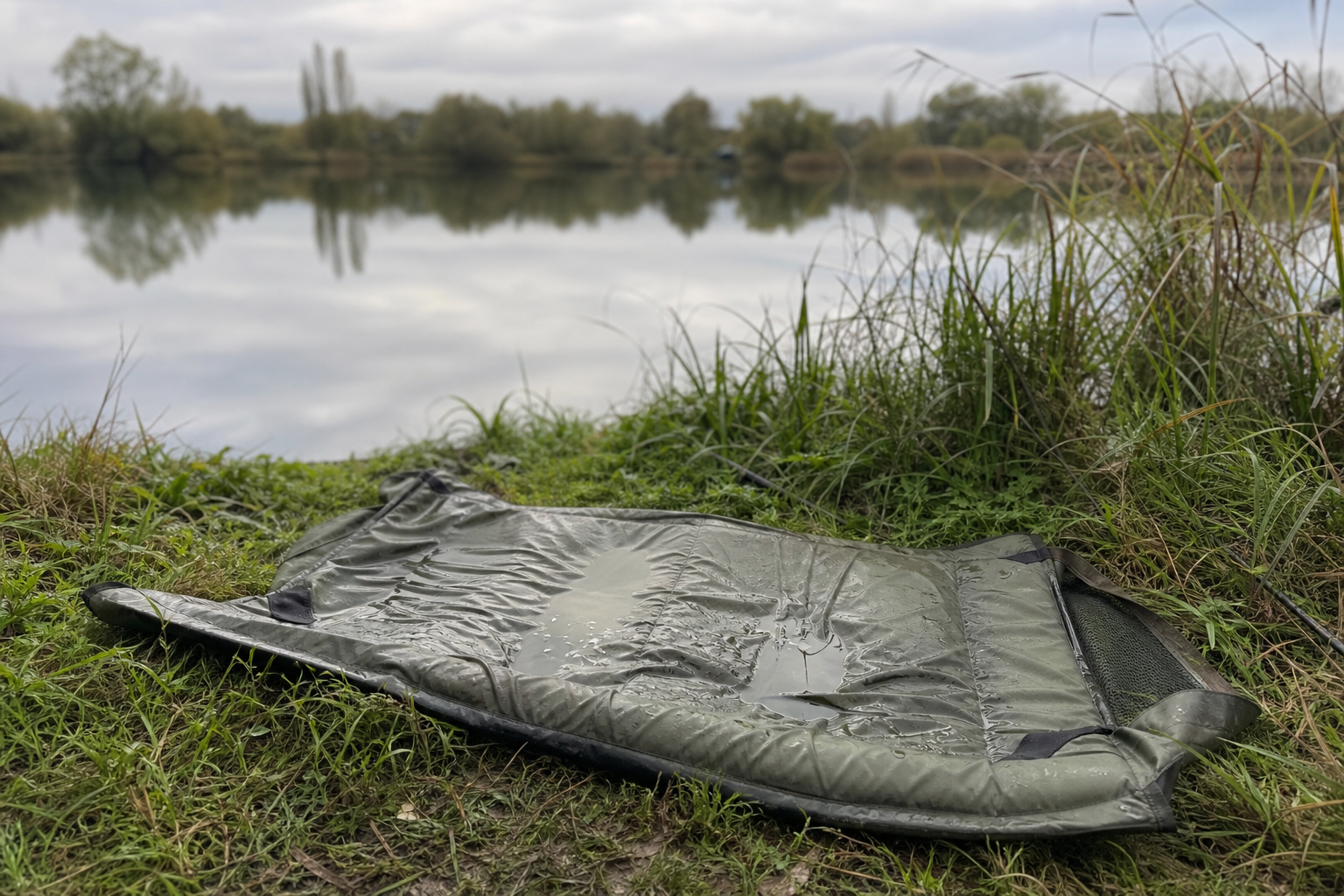
- Unhooking mat or cradle: A padded mat (sometimes called a fish mat or unhooking cradle) protects larger fish from injury when they need to be placed on the bank for unhooking. Wet it thoroughly before any fish goes on it. Many UK commercial fisheries now require you to have one.
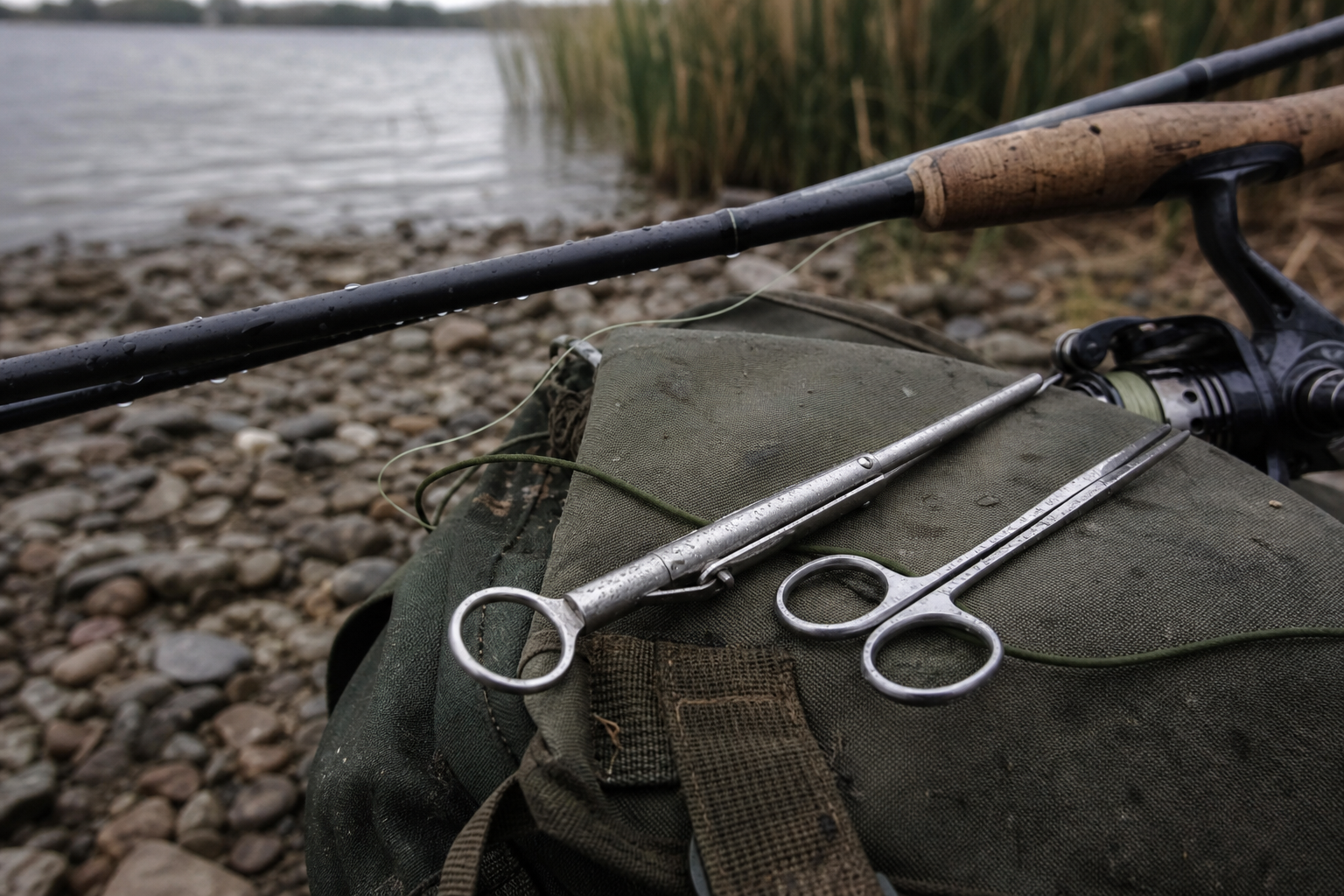
- Disgorger: A disgorger is a small, notched tool used to remove hooks that have been taken further back into the mouth or throat. Slide it down the line to contact the hook bend, then use it to free the hook without your fingers needing to reach deep into the fish's mouth.
- Forceps: Forceps (sometimes called artery forceps or haemostats) give you a firm, precise grip on a hook bend and are particularly useful for removing hooks from awkward angles in the lip or mouth. They are the preferred tool of many experienced anglers for general unhooking.
- Wet hands: This is non-negotiable. Dry hands strip the mucus coat that protects fish from bacterial infection. Wet your hands in the water before you touch any fish, every time. Do not dry them on a towel and then handle a fish.
- Fish-safe antiseptic solution (optional): Products such as Klinik or similar fish-safe solutions can be dabbed onto minor wounds or areas of scale damage. Not essential for every session, but worth keeping in your bag.
Prepare before you cast
Get your net in the water, your mat laid out and your disgorger or forceps within reach before you start fishing. Having to find your tools while a fish is on the bank wastes time and adds unnecessary stress.
How to land a coarse fish properly
Landing and returning coarse fish well begins the moment you feel the fish on the line. Playing a fish too aggressively causes unnecessary stress and can injure it. Playing it too gently and drawing out the fight is no better. The aim is a steady, controlled retrieve that brings the fish to the net without exhausting it more than necessary.
Keep the rod tip up to maintain pressure and guide the fish rather than forcing it. When the fish tires and comes close to the surface, it is ready for netting. Do not jab the net at it from behind.
Landing a fish step by step
Submerge the net
Lower the net into the water before you need it. Keep the frame and mesh fully below the surface.
Draw the fish over the net
Guide the fish over the rim, head first. Let it settle above the mesh before lifting.
Lift steadily
Raise the net in one smooth movement, supporting the frame. Keep the fish close to the water's surface.
Leave the fish in the net
Rest the net in the water while you prepare your mat, disgorger or forceps. Do not lift the fish onto dry ground.
That last step is where many beginners rush. Once the fish is in the net and the net is resting in the water, you have a moment to compose yourself. Use it. Get your mat wetted, your forceps or disgorger in hand, and only then bring the fish to the bank.
How to unhook coarse fish
This is the core skill. The approach varies slightly depending on where the hook is sitting, so it helps to identify that before you do anything else. Look carefully at the fish in the net before you lift it out.
Unhooking a shallow-hooked fish
Most small to medium coarse fish caught on float or feeder rigs will be hooked in the lip or the edge of the mouth. This is the easiest situation to deal with and can often be managed at the water's edge without the fish leaving the water at all.
Wet your hands first. If the fish is small enough (roach, small perch, small bream), cradle it lightly in your palm with its head towards your wrist and its body fully supported. Do not squeeze. Keep it low, close to the net or the water surface.
Identify where the hook is sitting before you touch it. With forceps or your fingers, grip the bend of the hook firmly. The key motion is to push the hook very slightly forward along the angle it entered the flesh, then reverse it back out along the same path. This is sometimes called the push-then-reverse technique. The push releases the hook point from the tissue before the reversal draws it clear.
Do not yank, twist randomly or pull the hook straight back without that initial push. Any of those will tear tissue unnecessarily. A calm, deliberate motion is quicker and less harmful than a hurried one.
Return the fish immediately once the hook is free.
Unhooking a deep-hooked fish with a disgorger
When a fish has taken the hook further back into its mouth or throat, you will need a disgorger. This is a narrow tool with a notch or slot at the tip that engages the hook bend.
Keep the line taut between the rod and the fish. Slide the disgorger down the line until you feel it contact the hook bend. The motion here is push-then-lift: push the disgorger gently forward to seat it against the bend, then use a small lifting action to free the hook from the tissue. This is more effective and less damaging than pulling the hook straight back.
If the hook will not come free with gentle, controlled effort, stop. Do not force it. A deeply embedded hook that cannot be removed safely should be cut as close to the bend as possible. The fish's body is generally able to deal with a small hook remnant, especially if it is a modern wire hook. Forcing a hook out through flesh and tissue causes far more damage than leaving a trimmed hook in place.
If you are unsure, ask a nearby experienced angler or the fishery bailiff. There is no shame in it, and most anglers will help.
Barbless hooks make unhooking much easier
Many commercial fisheries in the UK require barbless or micro-barbed hooks. Even where they are not compulsory, they make unhooking faster and safer for the fish. Check your fishery's rules before you go.
Moving a larger fish to an unhooking mat
For bigger fish (larger bream, tench, carp) where you need both hands free and cannot comfortably unhook at the water's edge, you will need to transfer the fish to a wetted unhooking mat.
Wet the mat thoroughly before any fish goes onto it. Position it on flat, soft ground. Avoid concrete, gravel or hard edges. With wet hands, cradle the fish horizontally in the net and transfer it as smoothly as you can onto the mat. Keep it close to the ground throughout. Never lift a fish high in the air.
Fish can flap suddenly, which is alarming the first time it happens. Laying a damp section of net mesh lightly over the fish's head can calm it significantly. Work quickly, unhook the fish, and return it without delay. Every second on the mat is time the fish is not breathing properly.
How to return coarse fish safely
Returning the fish is not simply dropping it back. A few seconds of care at this stage makes a real difference to whether the fish swims away in good shape.
Returning a fish step by step
Lower the fish to the water
Hold the fish close to the surface and lower it gently. Do not drop it from height.
Support it until it is ready
Keep your hands beneath the fish in the water. Wait until it is breathing steadily and holding its position without leaning.
Let it swim away on its terms
Open your hands gently. A fish that is ready will kick away. One that rolls or lists needs more time in supported recovery.
In flowing water, face it upstream
Hold the fish facing into the current so water passes through the gills. This speeds recovery. Do not pump it back and forth.
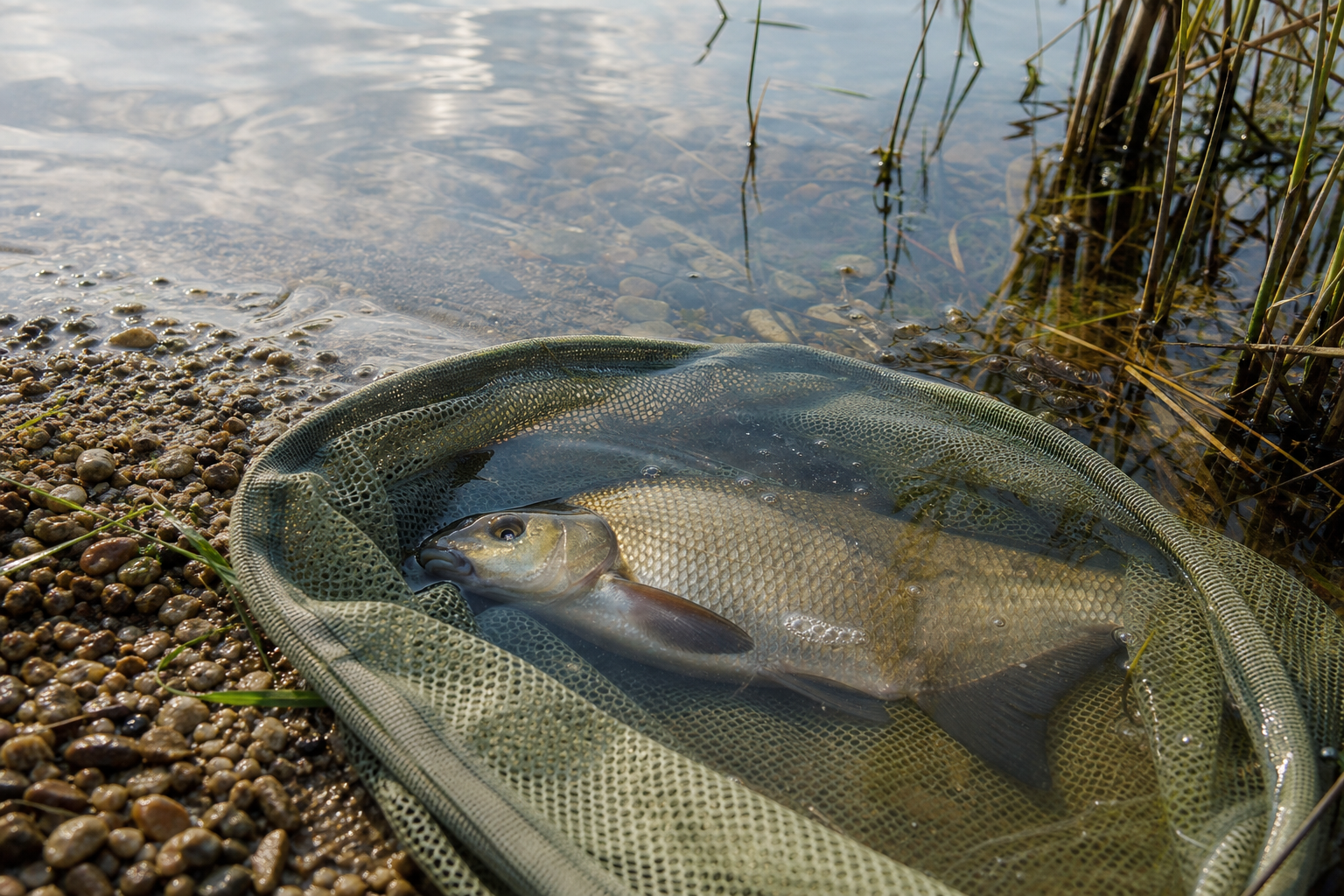
A fish that swims away strongly is a good sign. One that drifts sideways or sinks nose-down needs more time. Keep it supported, upright and in the water until it is clearly stable.
When something goes wrong
Most sessions go smoothly, and most fish are returned without incident. But it is worth knowing what to do in the situations that do occasionally arise.
If a fish is bleeding: Minor bleeding from the lip after a hook removal is not unusual and is not automatically cause for alarm. Return the fish promptly and support it during recovery. Significant bleeding from deeper in the mouth is more serious; get the fish back into the water as quickly as possible and hold it upright until it stabilises.
If a fish is lethargic or cannot right itself: This is more common in warm weather when oxygen levels in the water are lower. Keep the fish in the water, support it upright with both hands, and hold it until it recovers on its own terms. Do not give up after a few seconds. Some fish need a minute or two of supported recovery before they are ready to swim. If the fish does not recover, speak to the fishery bailiff.
If you cannot remove the hook safely: As described above, cut the line close to the bend and return the fish. Seek help from an experienced angler or bailiff if you are unsure what to do.
If you see distressed or dying fish that are not yours: This can indicate a pollution incident or dangerously low oxygen levels. Report it immediately to the Environment Agency's 24-hour incident hotline: 0800 80 70 60. This line covers England and handles pollution, fish kills and illegal fishing reports.
A note on UK rules and when they affect fish handling
On rivers, streams and drains in England and Wales, there is a statutory coarse fish close season running from 15 March to 15 June inclusive. Fishing for coarse fish during this period is not permitted. The close season exists to protect fish during spawning, when they are at their most vulnerable to disturbance. Most stillwaters, including commercial fisheries and private lakes, are generally exempt from the close season, but check directly with the fishery before you go.
The same principle that underpins fish care applies to the close season: reducing stress and disturbance on fish at sensitive times is part of responsible angling.
Warm weather brings its own considerations. During summer heat, fish are already under physiological stress from low dissolved oxygen in the water. Keep handling times as short as possible. Be alert to fish that are unusually slow to recover after unhooking, and avoid sessions during the hottest part of the day if you have concerns about conditions.
You also need a valid rod licence to fish in England and Wales. The licence is issued by the Environment Agency, is separate from any day ticket or club membership that gives you permission to fish a specific water, and covers you wherever you fish legally. Coarse fishing fish care obligations apply regardless of venue, but individual fisheries may layer their own requirements on top: mandatory barbless hooks, minimum net sizes, compulsory unhooking mats and similar rules are now standard at many UK commercial fisheries. Check the rules for your chosen water before you arrive, not when you get there.
Frequently asked questions
What basic tools should I have ready before a session?
Have a knotless landing net, a wetted unhooking mat for bigger fish, forceps and a disgorger, and wet your hands. Keep everything within reach before you cast.
How do I unhook a fish that is hooked in the lip?
Wet your hands, cradle the fish close to the water, grip the hook bend and use a gentle push then reverse motion to ease the hook out. Do not yank or twist.
What should I do if the hook is deep in the throat?
Use a disgorger with the line taut, slide it down to the bend, then push and lift gently to free the hook. If it will not come free, cut the line close to the bend and return the fish.
How do I return a fish so it has the best chance to recover?
Lower the fish into the water, support it upright until it breathes steadily, face it into the current in flowing water, and release when it kicks away on its own.
What if a fish is bleeding or appears lethargic after unhooking?
Minor lip bleeding is common; return and support the fish until it stabilises. For heavy bleeding or prolonged lethargy, get the fish back in the water quickly and seek help from the bailiff.
Lake & Lines Editorial Team
Editorial team
The Lake & Lines editorial team brings together freshwater fishing guides and researched tackle advice, helping beginners and returning anglers prepare for better days by the water.