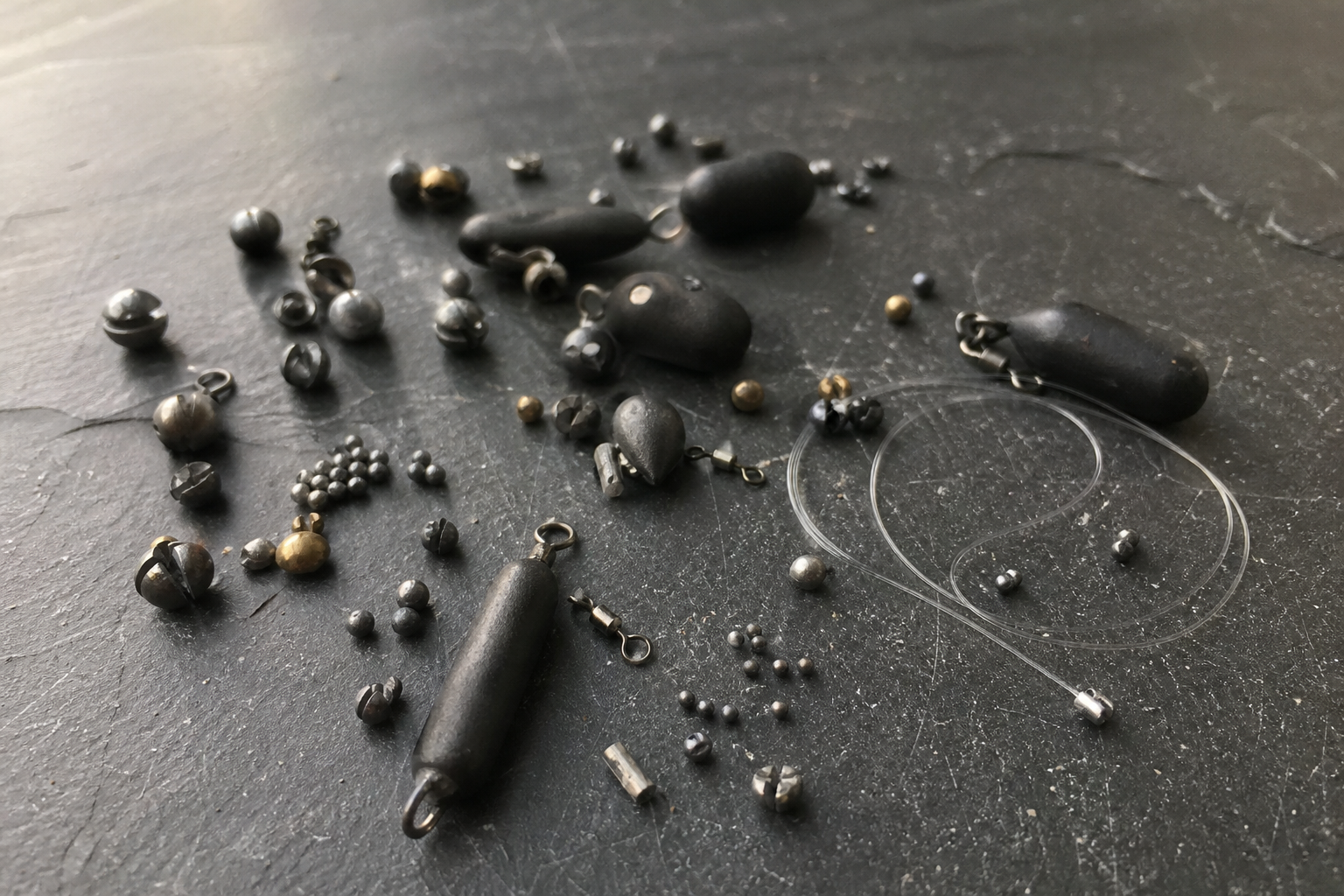
Lead Weights and Fishing: What the Law Allows
Explains the two legal weight thresholds for lead attached to a fishing line in England and Wales, what is exempt, reasons for the restrictions and which non-lead alternatives to choose.
At a Glance
- Lead on a line is legal only at 0.06g or less or more than 28.35g (over 1oz) in England, and at 0.06g or less or 1oz (28.35g) or more in Wales.
- Lead weights between 0.06g and 28.35g attached to the line are banned.
- Lead enclosed in a line core, feeder, float or fly is exempt from the definition of a separate lead weight.
- Restrictions were introduced to protect swans and other waterbirds from lead poisoning.
- Non-lead alternatives are widely available and the supply ban has removed most mid-sized lead products from the market.
If you are setting up a rig and want to know which weights you can legally use, the law on lead weights in fishing is straightforward once you know the two thresholds. In England, lead weights attached to a fishing line are only permitted if they weigh 0.06g or less or more than 28.35g (over 1oz). In Wales, the lower threshold is the same and lead weights of 1oz (28.35g) or more are permitted. Everything in between is banned. This article explains those thresholds in plain English, covers what is exempt from the rules, explains why the restrictions exist, and gives practical guidance on what to use instead across different methods.
The Legal Thresholds: Which Lead Weights Are Permitted
The rule in England and Wales works around two permitted ends of the weight scale, with a banned range in the middle. GOV.UK freshwater rod fishing guidance states these thresholds directly.
| Weight or size | Legal to use on the line? | Notes |
|---|---|---|
| 0.06g or less (dust shot, size 14 to size 8) | Yes | These are the only lead split-shot sizes permitted as line weights |
| Between 0.06g and 28.35g (e.g. most bomb and leger weights, split shot larger than size 8) | No | This mid-range is banned for lead attached to the line |
| More than 28.35g (over 1oz) in England; 1oz (28.35g) or more in Wales | Yes | Large lead weights in this range are permitted on the line |
| Non-lead weights (any size) | Yes | Permitted subject to other byelaws; no weight threshold applies |
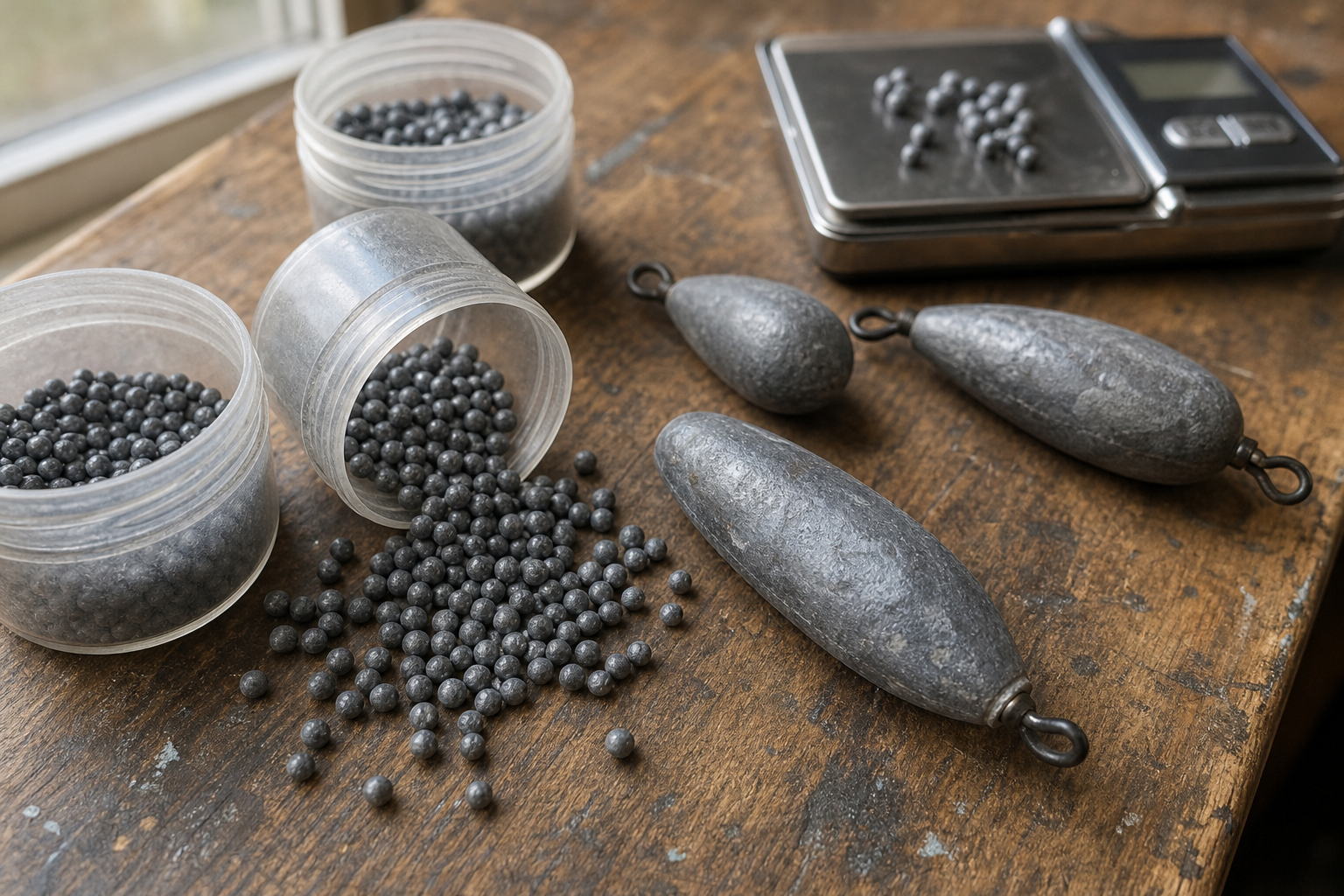
Put simply: tiny dust shot can be lead, and so can heavy carp or sea leads over 1oz (or from 1oz in Wales). The mid-range, which covers most traditional split shot larger than size 8 and the majority of bomb and leger weights below 1oz, must not be lead if you are attaching it to your line.
Where the Rules Come From
The thresholds for use are set by national rod fishing byelaws in England and by Natural Resources Wales byelaws in Wales. Separately, the Environmental Protection (Anglers' Lead Weights) (England) Regulations 2015 revoked and replaced the earlier Control of Pollution (Anglers' Lead Weights) Regulations 1986 for England. They prohibit the supply of mid-range lead weights for weighting fishing lines in England, keeping the same 0.06g and 28.35g exceptions. GOV.UK guidance translates the thresholds into familiar split-shot terminology: lead shot from size 14 to size 8 sits at or below the 0.06g permitted threshold.
Does the Same Rule Apply Across the UK?
The weight thresholds described in this article apply in England and Wales. They are not a UK-wide rule.
In England, the national rod fishing byelaws set by the Environment Agency establish these thresholds. Regional byelaws for the North West, Midlands, North East and South East confirm that the national lead weight byelaws apply in their areas.
In Wales, Natural Resources Wales uses the same 0.06g lower threshold but permits lead weights of 1oz (28.35g) or more, whereas England requires more than 28.35g. Welsh byelaws are separate from English ones: Natural Resources Wales sets them for Wales, and the Environment Agency has no byelaw authority in Wales.
In Scotland and Northern Ireland, entirely separate licensing and regulatory frameworks apply. The rules described here do not extend to those nations.
Check the rules for where you are fishing
The weight thresholds described in this article are confirmed for England and Wales. If you are fishing in Scotland or Northern Ireland, check the rules with the relevant local authority before using lead weights.
What Counts as a Lead Weight (and What Is Exempt)
In plain terms, a lead weight is anything you clip or tie to your line to add weight, unless the lead is enclosed inside a product rather than attached separately. The legal definition covers split shot and any other object suitable for weighting a fishing line, with four specific exemptions.
Lead is not classed as a "lead weight" for the purposes of these rules when it is:
- Fully enclosed in the core of a fishing line, such as lead-core line used in carp fishing
- Incorporated into the construction of a swim-feeder, where the lead is part of the feeder body rather than a separate item
- Incorporated into a self-cocking float, where the ballast is built into the float
- Built into a fishing fly or lure, where the lead is enclosed within the dressing or body
These exemptions exist because the lead in such products is unlikely to be ingested by wildlife once the item is in the water. A separate split shot clipped to a line and then lost is a different matter entirely.
| Item | Contains lead? | Counts as a "lead weight"? | Why |
|---|---|---|---|
| Split shot clipped to the line | Yes | Yes | Separate weight attached to the line |
| Bomb or leger weight tied to the line | Yes | Yes | Separate weight attached to the line |
| Lead-core fishing line | Yes | No | Lead is enclosed within the line core |
| Swim-feeder with internal lead | Yes | No | Lead is part of the feeder's construction |
| Self-cocking float | Yes | No | Lead is incorporated into the float |
| Weighted fly or lure (lead enclosed) | Yes | No | Lead is built into the fly or lure |
| Non-lead shot or weight (any type) | No | Not applicable | Subject to other byelaws; no lead restriction applies |
If you use a lead-core leader for carp fishing, a swim-feeder with lead built into its frame, a self-cocking waggler, or a weighted nymph with enclosed lead, you are not affected by the ban. The restriction is specifically about separate lead weights clipped or tied to the line.
Why Lead Weights Are Restricted
The restrictions were introduced to protect swans and other waterbirds. Birds feeding or nesting near freshwater can ingest lost split shot and small weights from the bankside or from the bottom, and lead poisoning from ingested weights can be fatal. The exemptions for enclosed lead reflect the practical reality that lead sealed inside a feeder, float or fly body is far less likely to be swallowed.

Mute swan floating on a lake. by Wildlife Boy1 / Flickr · CC BY 2.0
What to Use Instead: Compliant Weights for Different Methods
Non-lead shot and weights are widely available from UK tackle retailers in the same sizes and shapes as the lead equivalents. For everything in the banned mid-range, choosing a non-lead material is the practical solution, and because reputable retailers are no longer permitted to supply mid-sized lead weights for angling use, non-lead versions are now the standard offering for those sizes.
Float Fishing
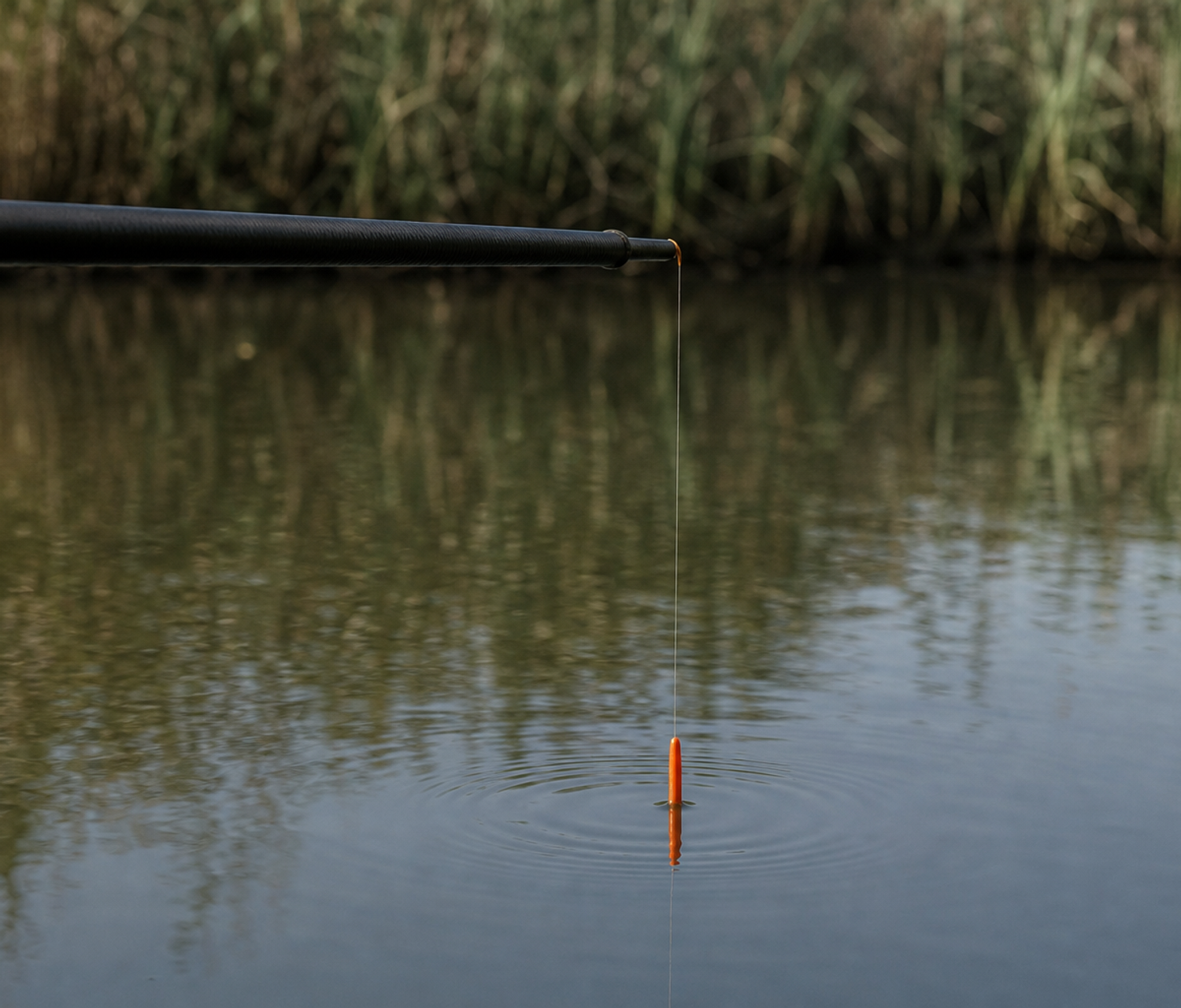
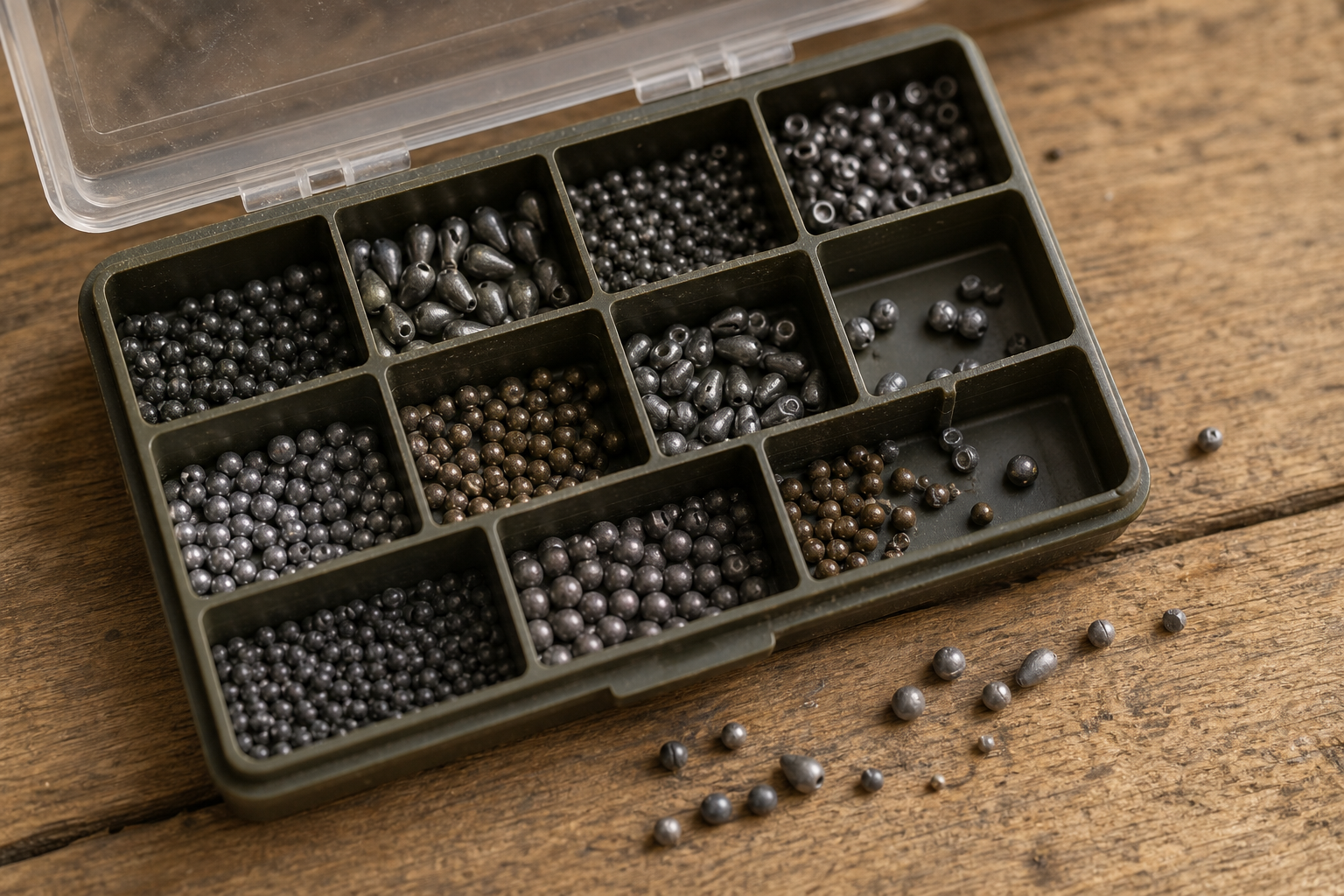
A typical float fishing shotting pattern uses a spread of mid-sized split shot down the line. Most of those sizes fall in the banned range if made of lead. The practical solution is non-lead micro-shot made from tin, bismuth or tungsten alloys. These are sold in the same size designations as lead shot and perform in the same way. Even where tiny lead dust shot at size 14 to size 8 remains technically legal, non-toxic alternatives are preferable for fish care and environmental reasons and are no harder to use.
Feeder and Ledger Fishing
Most bomb, pear and inline leger weights used for feeder and ledger fishing weigh between 10g and 40g, which puts them squarely in the banned mid-range if made of lead. UK tackle suppliers now offer non-lead alternatives in these sizes as standard, made from materials such as tungsten, steel or composite alloys. When buying, check the packaging: any weight in the banned mid-range sold by a reputable UK retailer will be non-lead. If you come across a mid-sized weight that appears to be lead, treat that as a sign to look elsewhere.
Carp Fishing
Many carp leads weigh more than 1oz, which means they may legally be lead at that size. In England a lead weight must be more than 28.35g (over 1oz), while in Wales 1oz (28.35g) or more is permitted. A carp lead below 28.35g that is made from lead and attached to the line would not be compliant. If you are unsure of a weight's mass, use non-lead alternatives to remove any doubt. Many experienced carp anglers choose non-lead leads regardless, to avoid the accumulation of lost lead in the lake bed.
Sea Fishing
The same legal definition applies to sea fishing tackle, not only freshwater. Most shore and boat fishing weights are heavy enough to sit above the banned range if made of lead. In England that means over 1oz (more than 28.35g), while in Wales 1oz or more is allowed. Non-toxic alternatives are increasingly available for sea use and are worth considering as a straightforward swap.
Fly Fishing and Nymphing
Weighted flies and lures with enclosed lead are exempt from the definition of a lead weight and are not affected by the ban. If you add separate pinch-on split shot to a leader for nymphing purposes, any lead shot used must be 0.06g or less. Non-lead alternatives in small sizes are readily available and remove that constraint entirely, making them the more practical choice for the purpose.
When in doubt, choose non-lead
If you are unsure whether a weight or shot is compliant, choose a non-lead alternative. Non-lead shot and weights are available in the same sizes and shapes as lead, and their use avoids any risk of breaking the rules.
The Rules on Supplying Lead Weights
The Environmental Protection (Anglers' Lead Weights) (England) Regulations 2015 make it illegal in England to supply lead weights in the banned mid-range for use in weighting fishing lines, with the same exemptions as the use rules. There is a legal presumption that split shot supplied to anglers is intended for weighting lines unless the seller can demonstrate otherwise.
In practice, this means that mid-sized lead split shot should not be available from reputable UK tackle retailers. The supply-side ban has done much of the work of removing these products from the market, which is why non-lead alternatives are now the default for those sizes in any well-stocked tackle shop. If you encounter a weight in the banned range being sold as lead, that is reason to question the supplier.
Reducing Lost Tackle: Good Practice at the Water
Reducing the amount of any tackle that ends up in or around the water is good angling practice, regardless of what it is made from. These habits are not legal requirements but they are part of fishing responsibly.
- Use a weak link in ledger and carp rigs so that if a rig snags, the hooklength breaks rather than the main line, leaving less terminal tackle (the hooks, weights and other components at the end of the line) behind.
- Match your breaking strain to the job. Overly heavy line can mean a snagged rig pulls free completely rather than breaking cleanly at the intended weak point.
- Do not discard old or unused lead weights into the water or onto the bank. Legacy lead tackle from old boxes should be retired and disposed of responsibly rather than mixed in with modern non-lead equivalents.
- Retrieve line carefully to reduce break-offs when winding in from distance.
- When sorting through an inherited or old tackle box, set aside any lead shot or weights in the banned range rather than using them. Replace with non-lead equivalents and keep the two separate.
These steps reduce the risk of any tackle causing harm once it leaves your hands, and they make for cleaner, better-managed fishing sessions.
References and Further Reading
- Legislation.gov.uk: The Control of Pollution (Anglers’ Lead Weights) Regulations 1986.
- GOV.UK: National rod fishing byelaws for England, freshwater fishing with a rod and line.
- Natural Resources Wales: Fishing with rods and lead, angling byelaws guidance.
- Canal and River Trust: Lead weights guidance for anglers, PDF leaflet.
- BASC: Wildfowling code of practice, lead shot and wetlands rules.
Frequently asked questions
Which lead weights are legal to attach to a fishing line in England and Wales?
In England, lead weights attached to a fishing line are permitted only if they weigh 0.06g or less or more than 28.35g (over 1oz). In Wales, the lower threshold is the same and lead weights of 1oz (28.35g) or more are permitted. Weights between those thresholds are banned.
Do these lead weight rules apply across the whole UK?
No. The thresholds described apply in England and Wales. Scotland and Northern Ireland have separate licensing and regulatory frameworks, so check the rules with the relevant local authority.
Are any lead items exempt from the rules?
Yes. Lead fully enclosed in a line core, incorporated into a swim-feeder, built into a self-cocking float, or enclosed within a fly or lure does not count as a separate lead weight.
What should anglers use instead of mid-range lead weights?
Non-lead shot and weights are widely available in the same sizes and shapes. Common alternatives include tin, bismuth, tungsten, steel and composite alloys for the banned mid-range sizes.
Is it illegal to supply mid-sized lead weights in England?
Yes. The Environmental Protection (Anglers’ Lead Weights) (England) Regulations 2015 make it illegal in England to supply lead weights in the banned mid-range for use in weighting fishing lines.
Lake & Lines Editorial Team
Editorial team
The Lake & Lines editorial team brings together freshwater fishing guides and researched tackle advice, helping beginners and returning anglers prepare for better days by the water.