Bait and terminal tackle for beginners: what to buy for your first coarse-fishing trip
A concise guide to bait and terminal tackle for beginners: maggots, sweetcorn, bread, hooks, floats, non-toxic shot, legal rules in England and Wales and a practical shopping list for a first stillwater trip.
You have a rod, a reel and a date for your first session. Your kit list says "bait and terminal tackle" and leaves it at that. This guide covers exactly that gap: which baits to buy, which hooks, floats and weights to pick up, how much of each you need and what the rules in England and Wales say about certain items before you get to the checkout. It is written for a first stillwater session, most likely at a commercial fishery or a club pond, and it focuses on float fishing with simple presentations. It is not a rig-tying tutorial and it is not a complete kit checklist: those subjects are covered elsewhere, and this guide sits between them.
What "terminal tackle" actually means
Terminal tackle is the collective term for the hooks, floats, weights and small connectors that sit at the fishing end of your line. Everything between your rod rings and the bait counts as terminal tackle in the broad sense: the float that signals a bite, the split shot that sinks it to the right depth, the hook that holds the bait and the swivel that joins sections of line cleanly.
It appears as a separate category from your rod, reel and main line because these are the components you adapt most often. You might change your hook size mid-session to suit smaller fish, swap a float when the wind picks up, or add and remove shot as you adjust the depth. Terminal tackle is also what you lose most easily, to snags, tangles and the occasional enthusiastic fish.
Understanding what falls into this category helps when you are standing in a tackle shop deciding what to put in the basket. A rod is a one-off decision. The small items at the business end of your line are consumables, and a modest stock of them is worth having before you go.
Bait for your first stillwater session
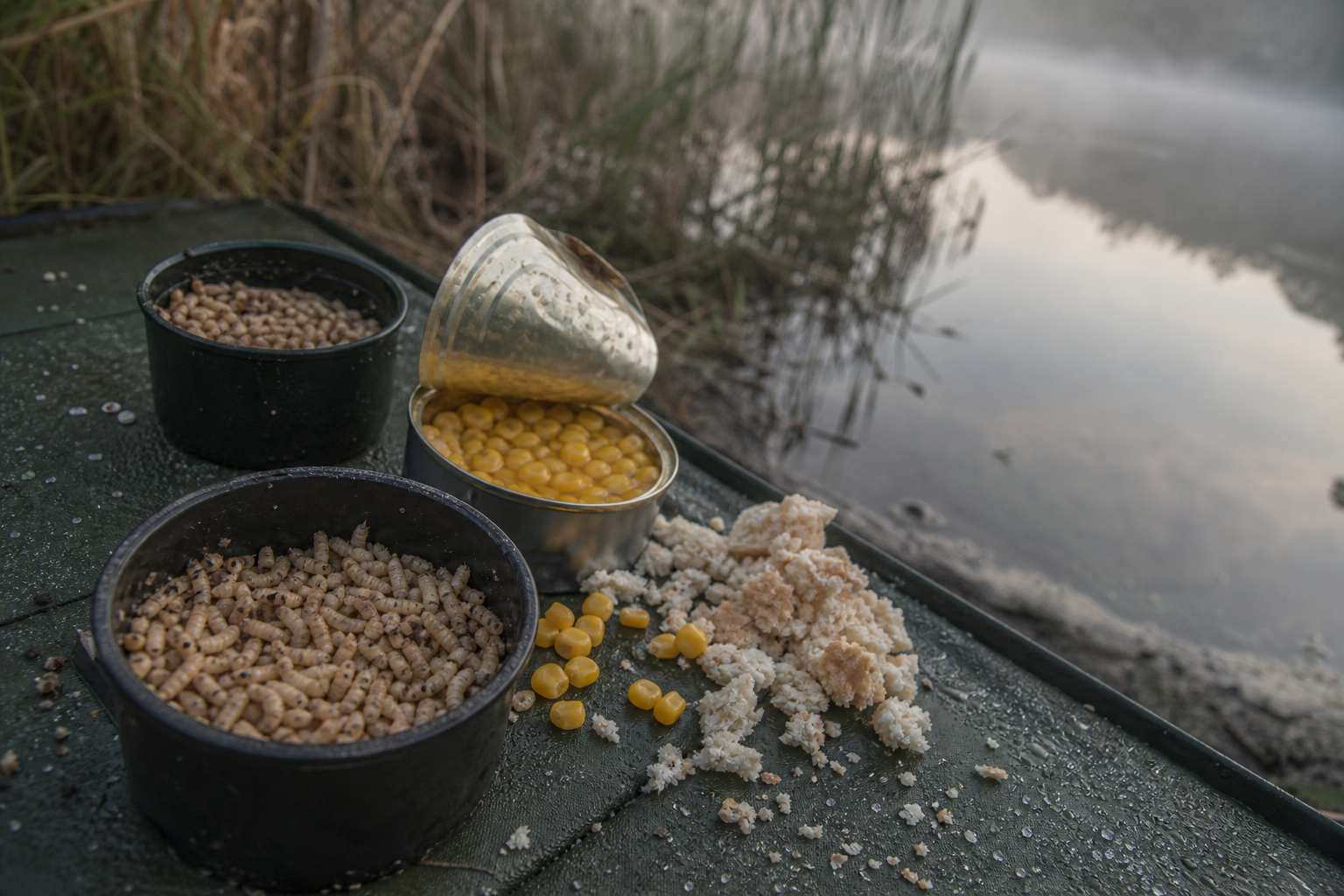
The first coarse fishing bait choices you make do not need to be complicated. Three core options cover most situations on a commercial fishery or club pond, and one or two optional additions are worth considering depending on the water. For a first trip, the goal is versatility and simplicity rather than a full bait station.
Maggots
Maggots are the most widely used coarse fishing bait in Britain for good reason. They catch roach, perch, bream, skimmers and smaller carp reliably, they work throughout the year and they can be fished on the hook, scattered in the water as loose feed to attract fish into your swim, or used for both at once.
Buy them fresh from a local tackle shop rather than ordering online for a first session: freshness matters, and a tackle shop will have them ready to fish. For a half-day session of three to four hours, half a pint is plenty. A full pint gives you more loose feed to work with and suits a longer day. Store them in a cool place before you go: a cool box with an ice pack works well on a warm day.
A single maggot on a size 14 or 16 hook is a classic presentation. Two maggots on a size 12 or 14 broadens the appeal to larger fish without overcomplicating things.
Sweetcorn
Sweetcorn is one of the most effective baits for tench, bream and carp on stillwaters, and it is available from any supermarket for less than a pound a tin. A single grain on a size 14 hook is the standard presentation: bright, soft and easy for fish to take confidently.
There is no preparation required beyond draining the tin and keeping it in a sealed pot. You can loose feed a few grains around your float to attract fish, or use it as a change bait alongside maggots. One tin is more than enough for a full day's fishing.
Bread
A fresh slice of white bread gives you two useful presentations for free. Bread flake is a small pinch of soft bread pressed lightly onto the hook: it falls slowly through the water and works well for roach, perch and carp near the surface or mid-water. A bread punch uses a small circular tool to cut a tight disc from the densest part of the slice, giving a harder, more defined piece that stays on the hook longer and suits bottom fishing.
Take a couple of fresh slices in a sandwich bag. Stale bread does not work as well, and there is no need to buy anything specialised. This is a genuinely useful addition to your bait selection at no real cost.
Worms and hook pellets (optional additions)
Dendrobaena worms, sold in small tubs at most tackle shops, are worth adding if you are targeting perch or bream in particular. A small section of worm on a size 12 or 14 hook is very effective for both species. Note that dendrobaena worms from a tackle shop are the right choice here: freshly dug garden worms are less predictable in quality and can be difficult to hook cleanly.
Hook pellets are worth considering if you are fishing a commercial carp water where the fish are accustomed to pellet feed. Mid-size prepared hook pellets, around 8 to 10 mm, are the standard choice and come ready to use. They are an optional addition rather than an essential: if your venue is a mixed fishery or a general club water, maggots, sweetcorn and bread will serve you better.
For most first sessions, one live bait (maggots) plus one or two simple alternatives (sweetcorn and bread) covers everything you are likely to encounter on a stillwater. You do not need to arrive with every bait available.
Key bait rules (England and Wales)
- Crayfish as bait
- Banned
- Livebait fish
- Restricted
Applies nationally under Environment Agency byelaws
Must be caught from, kept at and used in the same water without specific consent
Hooks for stillwater float fishing
Hook sizing confuses most beginners at first because the numbering system runs the wrong way: a size 16 hook is smaller than a size 12. The higher the number, the smaller the hook. For a first stillwater session, sizes 12 to 16 cover almost everything you are likely to catch, from roach and rudd on the smaller hooks to bream, tench and smaller carp on the larger ones.
The other decision is whether to use barbless or barbed hooks. Most commercial fisheries in England require barbless or micro-barbed hooks as a condition of fishing there: it is not a matter of national law, but it is close to a universal venue rule on commercial waters. Barbless hooks also make unhooking fish much quicker and cleaner, which matters for both the fish and for a beginner who is not yet comfortable handling a hook in a fish's mouth. Start with barbless and you will not need to think about it.
The table below gives a clear starting point for matching hook size to bait and target species.
| Hook size | Suitable baits | Typical target fish |
|---|---|---|
| 12 | Single maggot, small worm section, bread flake | Perch, bream, tench, smaller carp |
| 14 | Single maggot, single grain sweetcorn, bread flake | Roach, bream, tench, perch |
| 16 | Single maggot, small bread punch, small worm tip | Roach, rudd, small perch |
A packet of 10 to 15 barbless hooks in each of two or three sizes from this range is a sensible amount to buy. Start with sizes 12, 14 and 16: one packet of each gives you enough variety to adapt on the day without spending much. Hooks are lost to snags and tangles, so having a few spares of each size matters more than having a wide range of patterns.
Floats for a small stillwater
Float choice can look overwhelming in a tackle shop, but for a first stillwater session you only need two types, and you do not need many of either.
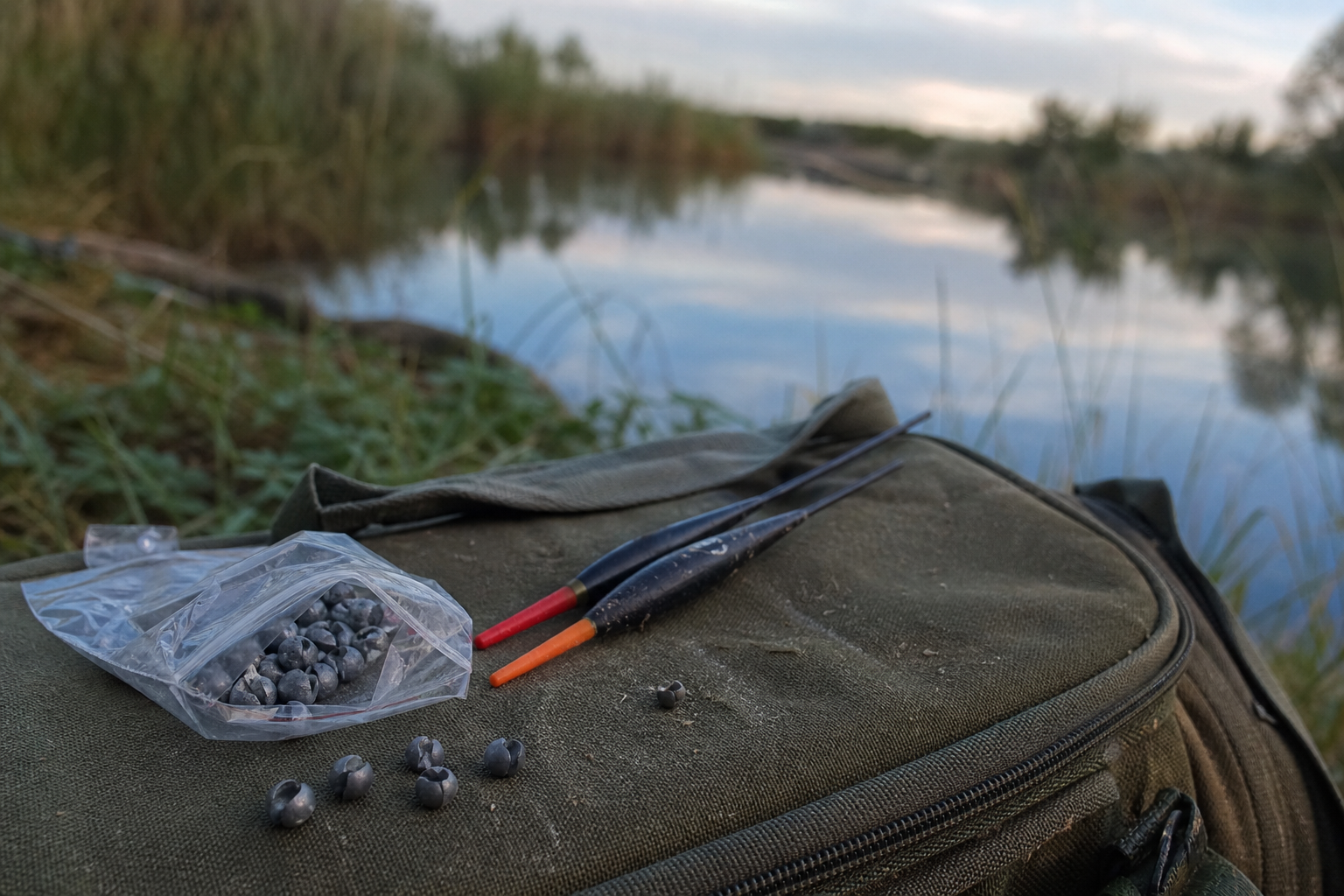
A bodied waggler is the more versatile choice for open-water float fishing on a still lake or pond. The bulbous body low on the float gives it stability and casting weight, and it copes well with a gentle ripple. Most stillwater float fishing for a first session will use a bodied waggler.
An insert waggler is a lighter, thinner float designed for calmer, shallower conditions. The fine insert tip makes bites easier to spot when fish are taking the bait delicately. It is worth carrying one alongside a bodied waggler, because it suits the quieter, close-in swims you might find on a calm morning.
Stick floats are designed for flowing water and are not the right choice for a stillwater session. They can wait until you fish a river.
When you buy floats, you will see a BB rating on the packaging. This indicates the carrying capacity of the float: a float rated at 3BB needs three BB-sized shot on the line to cock it correctly. This is simply how much weight the float is balanced for, and it matters when you are setting up. For a beginner session, a bodied waggler around 3BB and an insert waggler around 2BB cover most depths and distances on a small stillwater.
Start with two floats, not twenty
A bodied waggler at around 3BB and a lighter insert waggler at 2BB will cover most depths and distances on a small stillwater. Add more patterns once you understand what your water requires.
Two or three floats in slightly different sizes is genuinely sufficient. A large collection will not help you catch more fish on a first trip, and different situations reveal themselves in time.
Split shot and weight rules
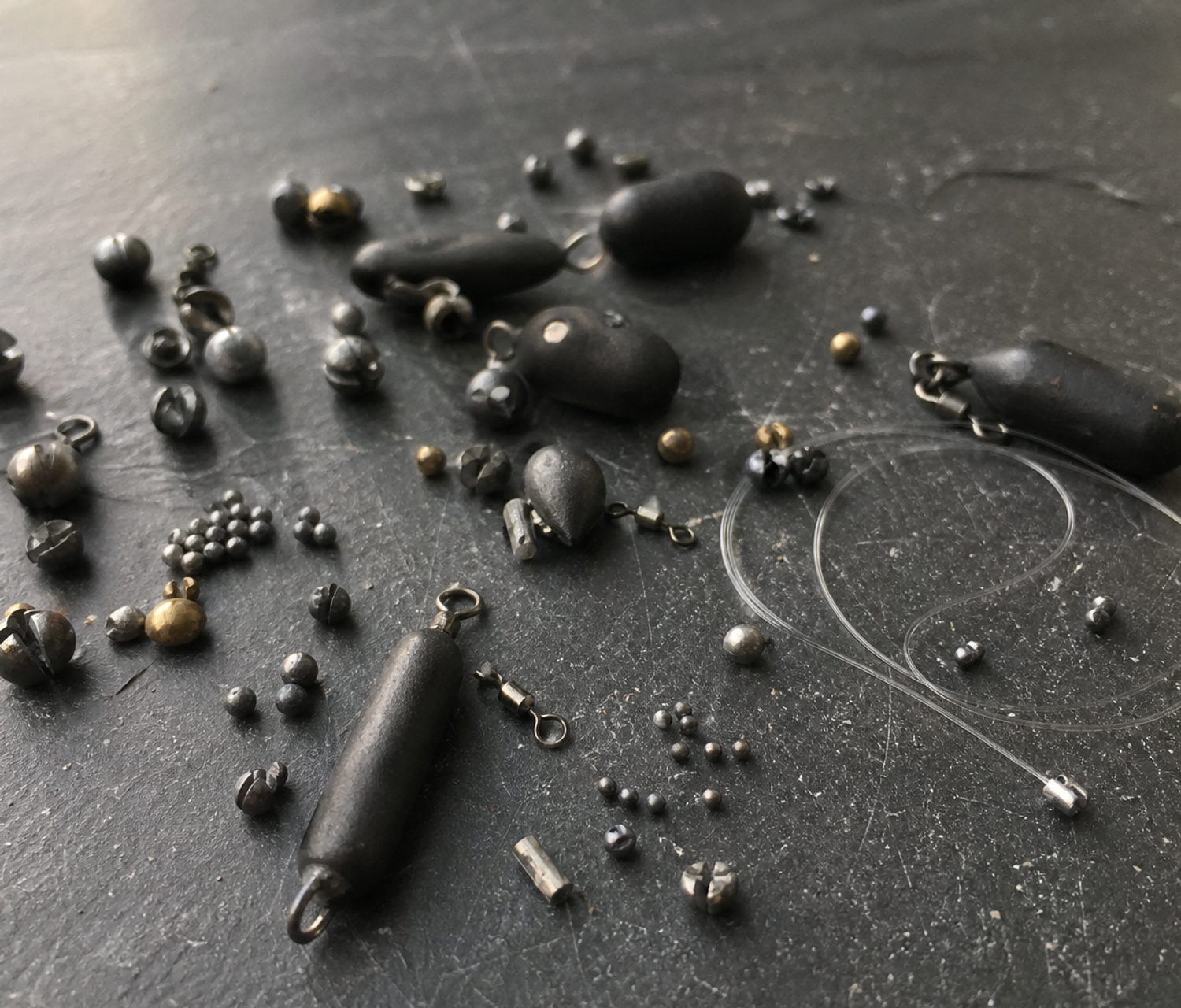
Split shot is used to balance the float and present the bait at the correct depth in the water. The shot pinches onto the line at set intervals, pulling the float down to its cocking depth and keeping the bait where you want it. Without the right amount of shot on the line, the float will sit too high and bites will be hard to read.
A mixed split shot pack covering sizes from No.8 up to SSG (the largest commonly used size) gives you enough range to set up a simple rig and make adjustments on the day. The standard UK shot sizes from largest to smallest run: SSG, AAA, BB, No.1, No.4, No.6, No.8. A mixed pack from a tackle shop will usually include most of these.
There is an important legal point to understand before you buy: lead split shot in intermediate sizes is banned in England and Wales when fixed to the line, under Environment Agency byelaws. The permitted range covers very small shot (0.06 g or less, roughly equivalent to a No.8) and heavier weights at 28.35 g (1 oz) or above. The intermediate sizes that fall between these limits are the ones that caused widespread harm to birds, particularly swans, when ingested. Most modern mixed shot packs for coarse fishing use non-toxic or low-toxicity materials, such as tungsten or bismuth, which avoids this issue entirely. Check the labelling before you buy: "non-toxic", "lead-free" or "EA approved" on the pack means you are in the right range. Most tackle shop staff can point you directly to a compliant pack.
Check the shot pack before you buy
Lead split shot in intermediate sizes is banned on a line in England and Wales under Environment Agency byelaws. Look for a mixed pack labelled non-toxic or lead-free, or check that the sizes offered are within the legal range. Most tackle shop staff can point you to a compliant pack.
Two other small items complete your terminal tackle for a first float session. A few swivels in size 8 or 10 are useful for joining hook lengths to your main line cleanly and without twist: a small packet of five or so is enough. A disgorger is a small plastic tool used to remove a hook safely from a fish's mouth without touching the hook or applying pressure to the fish. It should be in your pocket before you cast. Most tackle shops sell them for very little, and some give them away with a purchase. Do not leave the shop without one.
Rules and restrictions to check before you go
The regulations that affect bait and terminal tackle choices are not especially complicated, but they are worth knowing before you shop rather than after. This section covers the rules that have a direct bearing on what you buy or bring to the water.
Bait bans. Using crayfish as bait is banned throughout England and Wales under Environment Agency byelaws. This applies regardless of where the crayfish came from or whether they are alive or dead. Some regional byelaws also restrict the use of live or dead freshwater fish as bait. As a general rule for England and Wales, live fish may only be used as bait without specific consent from the relevant authority if they have been caught from, kept at and are being used in the same water. For a first session using maggots, sweetcorn and bread, none of this affects your choices directly: it is useful background as your fishing develops.
Lead shot. Intermediate lead shot sizes are banned when attached to the line in England and Wales, as described in the previous section. Buy a non-toxic mixed pack and you are covered.
Venue rules. Commercial fisheries set their own conditions, and these vary. Barbless or micro-barbed hooks are required at most commercial fisheries in England, but it is always worth confirming with the specific water before you go. Some venues also restrict certain baits, including boilies, meat and particle baits, particularly on waters managed primarily for mixed coarse species. A quick look at the fishery's website or a phone call beforehand takes a minute and avoids a frustrating conversation at the gate.
Rod licence. Most adults fishing in England need a rod licence from the Environment Agency before they begin. This is separate from the day ticket or club membership that gives you permission to fish a particular water. The licence covers the act of fishing, not the location. The rules, costs and exemptions are covered in detail elsewhere, and it is worth reading them before your first session.
Close season. Rivers in England and Wales are closed to coarse fishing from 15 March to 15 June inclusive. Most enclosed stillwaters, including commercial fisheries and club ponds, are open throughout the year. If you are planning a session on a river at any point, the close season is relevant. For a stillwater first trip, it almost certainly is not, but it is worth knowing the distinction.
Key bait and tackle rules (England and Wales)
- Crayfish as bait
- Banned
- Livebait fish
- Restricted
- Lead shot (intermediate sizes)
- Banned on the line
- Barbless hooks
- Required at most commercial fisheries
- River close season
- 15 March to 15 June inclusive
Applies nationally under Environment Agency byelaws
Must be caught from and used in the same water without specific consent
Weights between 0.06 g and 28.35 g restricted in England and Wales
Check your venue's rules before fishing
Does not apply to most enclosed stillwaters
A practical first-session shopping list
This is what a first-time stillwater angler needs to buy before a float-fishing session. It is not everything that exists in a tackle shop and it is not a long-term kit plan: it is the short, specific list that covers a day at a commercial fishery or club pond.
Bait:
- Maggots, half a pint for a short session or a full pint for a longer day, bought fresh from a local tackle shop
- Sweetcorn, one tin from a supermarket, drained into a small pot
- Bread, two fresh slices of white bread in a sandwich bag
- Dendrobaena worms, one small tub (optional, particularly useful for perch and bream)
- Hook pellets, 8 to 10 mm, one small bag (optional, worth adding only if your venue is primarily a carp water)
Terminal tackle:
- Barbless hooks in sizes 12, 14 and 16, one packet of each (10 to 15 hooks per packet)
- Bodied waggler, two floats at around 3BB
- Insert waggler, one float at around 2BB
- Non-toxic mixed split shot pack covering No.8 to SSG
- Swivels in size 8 or 10, a small packet of four or five
- One disgorger
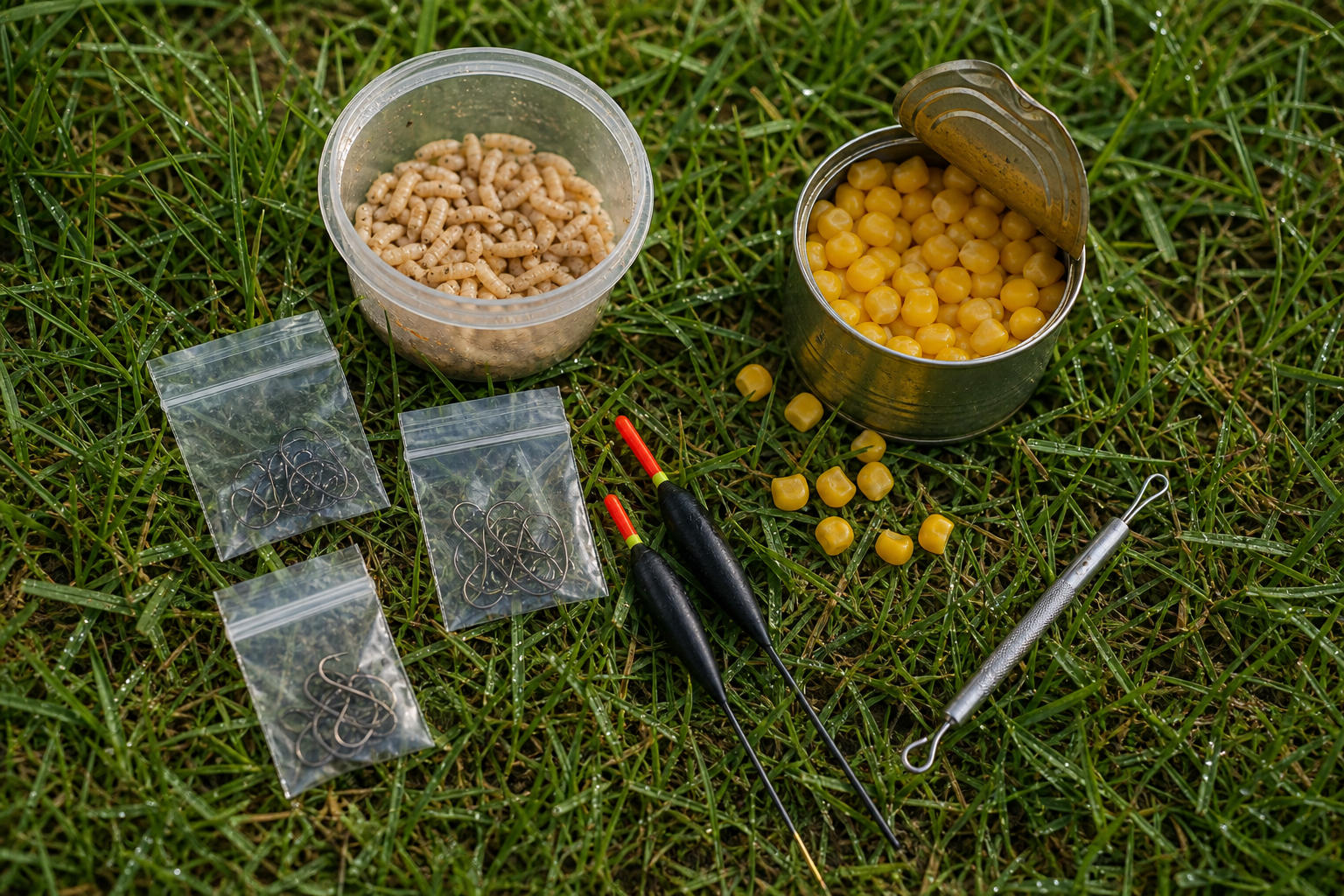
This list fits comfortably into a small tackle bag alongside your rod, reel and line. It is not the complete picture of what you will eventually carry, but it is genuinely all you need for a first session. The additional items, more float patterns, different hook sizes, specialist baits and a wider range of weights, reveal themselves in time as you fish more and your sessions become more specific. For now, the list above covers the water, the fish and the conditions you are most likely to encounter.
Frequently asked questions
What baits should I buy for my first stillwater session?
Start with maggots (half to a full pint), one tin of sweetcorn and two slices of fresh white bread. Optional additions are dendrobaena worms for perch and bream and 8–10 mm hook pellets for carp waters.
Which hook sizes and type are best for beginners?
Buy barbless hooks in sizes 12, 14 and 16, one packet of each (10–15 hooks). These sizes cover roach, rudd, perch, bream, tench and smaller carp and are widely accepted at commercial fisheries.
How many floats and what types do I need?
Take two or three floats: a bodied waggler around 3BB and a lighter insert waggler around 2BB. That pair covers most distances and depths on a small stillwater.
What split shot should I buy and are there legal issues?
Choose a mixed non-toxic or lead-free shot pack covering from No.8 to SSG. Intermediate lead shot sizes fixed to the line are banned in England and Wales, so check the pack labelling for 'non-toxic' or 'lead-free'.
Are there any legal or venue rules I should check first?
Yes. Crayfish as bait is banned in England and Wales, livebait fish are restricted, many fisheries require barbless hooks and rivers have a close season. Confirm the venue's rules and ensure you have the correct rod licence.
Lake & Lines Editorial Team
Editorial team
The Lake & Lines editorial team brings together freshwater fishing guides and researched tackle advice, helping beginners and returning anglers prepare for better days by the water.