Method Feeder Pellets and Hookbaits for Small Commercial Lakes
A concise shortlist for method feeder pellets and hookbaits on small commercial lakes. Covers pellet size, oil content, wafters, banded pellets, seasonal tweaks and venue rules.
If you're heading to a small commercial stillwater with a method feeder and you need to sort out your bait box first, this is the article for you. It covers what to put in the feeder (feed pellets) and what to put on the hook (wafters, banded pellets and a few alternatives), how the two work together, and what to look for when venue rules or conditions change your options. It is a researched shortlist based on current UK availability, not a bait preparation or technique guide. For the preparation side, including how to dampen pellets correctly and how to load a method feeder cleanly, see our method feeder bait preparation guide.
Prices mentioned throughout are approximate at time of writing and are given in GBP as a guide only.
What to Look for in Method Feeder Pellets
Size and texture for loading the feeder
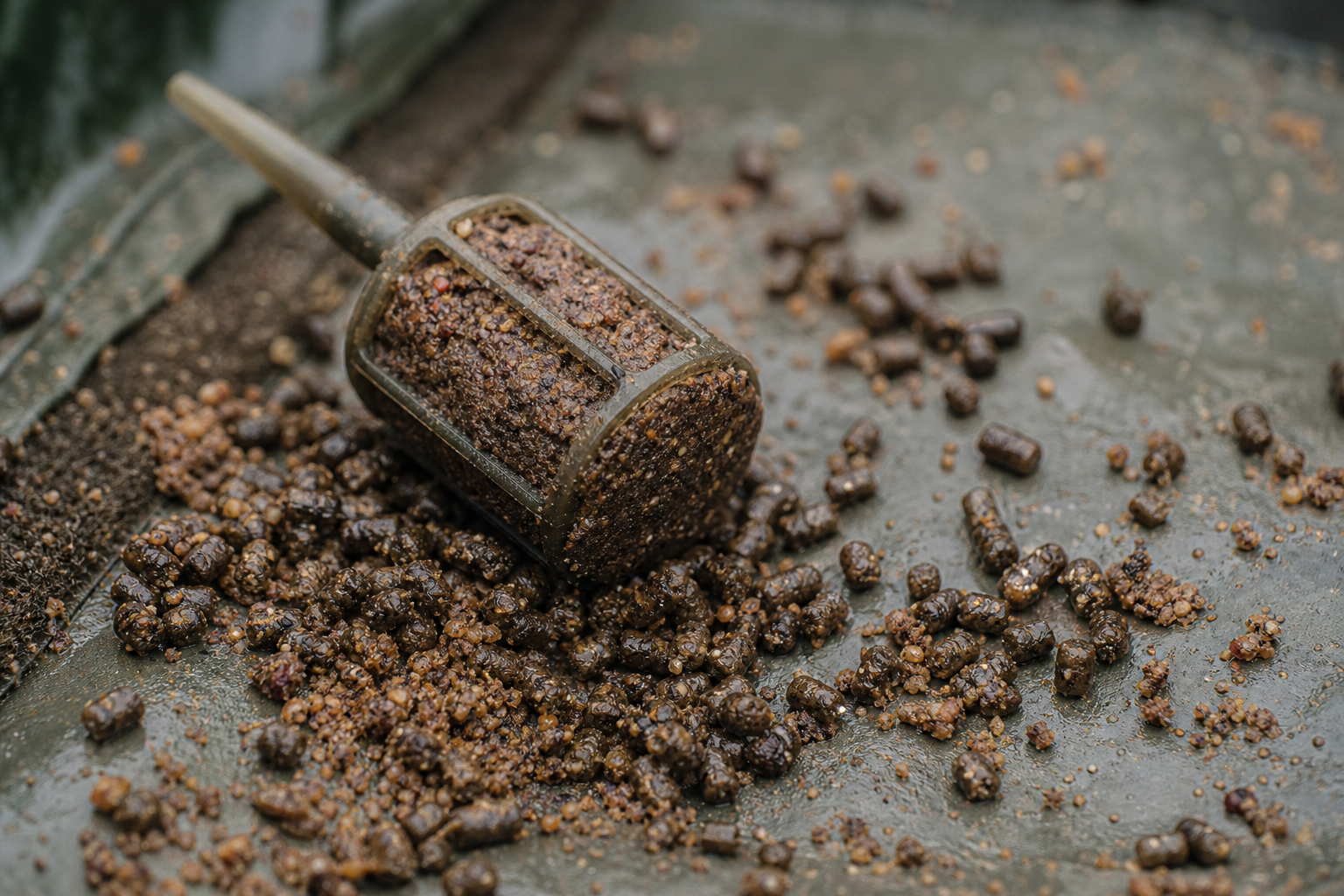
The 2 mm micro pellet is the standard starting point for loading a method or hybrid feeder on UK commercial stillwaters, and there are good reasons for that. Micros compress cleanly into a tight, even ball around the feeder, which holds together during the cast and then breaks down at a pace that keeps fish rooting around in a concentrated patch close to your hookbait. They are also small enough that even shy fish will pick them up freely without becoming suspicious.
Adding some 4 mm pellets into the mix introduces variation in breakdown rate: the larger pellets take longer to soften, which means the swim continues releasing attraction even as the micros dissolve. On busy summer sessions targeting carp, that extended draw can make a difference. The practical trade-off is that mixed sizes do not compress quite as cleanly, which makes the feeder slightly harder to load neatly. If you are still getting comfortable with the method feeder process, starting with pure 2 mm micros is the sensible call.
Oil content and season
Medium-oil carp pellets are well suited to spring and summer fishing on heavily stocked commercial waters. The oil leaches into the water, carrying attraction away from the feeder bed and drawing fish in. As the water cools in autumn and winter, however, fish metabolisms slow and they tend to feed with less urgency. High oil content can be counterproductive in cold water, coating fish mouths and potentially reducing the appeal of other baits in the swim. Lower-oil or "all-season" pellet formulations are a safer choice for colder conditions, or on less intensively stocked venues where fish feed more cautiously regardless of season. The principle is straightforward: oil aids attraction at warmer temperatures and can work against you when the water is cold.
Venue bait rules
Before you buy anything, check the fishery rules. Many UK commercial lakes specify which pellets are permitted, sometimes requiring anglers to use only the fishery's own branded product. This is not arbitrary: fisheries manage bait rules to protect fish health, maintain water quality and control the introduction of unwanted substances. Some venues sell approved pellets at the lakeside, which is worth knowing before you load up on stock at home.
Check fishery rules before you bait up
Many small commercial lakes specify which pellets and hookbaits are permitted. Some sell approved pellets on-site. Always read the fishery notice at the gate or check the venue website before buying bait. Rules vary between venues and are set by the fishery operator, not by a national standard.
Feed Pellets Worth Considering
The options below reflect current UK availability and general suitability for small commercial stillwaters. Where a pellet can also serve as a hookbait when banded, that is noted. This is a researched shortlist; prices are approximate at time of writing.
Bait-Tech Carp and Coarse Pellets (2 to 6 mm) are a versatile mid-oil option that works well as both a feed pellet and a banded hookbait, which means one bag can do two jobs on the day. They suit carp, F1s and general coarse species on commercials, and are widely available through UK tackle shops and online retailers. Approximate price: around £4 per 700 g bag. One thing to check is whether your venue permits them on silver fish waters, where some fisheries restrict oil-content levels.
2 mm micro method pellets (various brands) are the default choice for loading method and hybrid feeders and are produced by most of the main UK bait brands. The key quality to look for is consistency of pellet size, which affects how evenly they compress. Approximate price: £3.50 to £6 per bag. They require careful dampening, and getting the moisture level right is important: too wet and they smear rather than compress cleanly; too dry and the feeder will fall apart on the cast.
Mixed 2 to 4 mm blends combine the compression of micros with the slower breakdown of larger pellets. They are useful on busier summer sessions where you want to hold fish in the swim over a longer period. Approximate price: £4 to £6 per bag. Slightly harder to mould cleanly for newer method feeder anglers, but worth experimenting with once you are comfortable loading a standard feeder.
Ready-softened expander pellets (3 to 4 mm) are a convenient option for hybrid feeders, which use pellets in a softer, expanded state rather than dry micros. They skip the dampening step entirely, which is useful for shorter sessions or when you want to simplify your setup. Approximate price: £3 to £5 per tub. The main limitation is shelf life: once a tub is opened, the pellets need to be used within a short time before they deteriorate.
| Pellet type | Best size | Best for | Approx. price | Main limit |
|---|---|---|---|---|
| Carp & coarse pellets (e.g. Bait-Tech) | 2–6 mm | Carp, F1s; also works banded as hookbait | £4–£6 / kg | Medium oil; may be banned on some silver-fish venues |
| Micro method pellets (various) | 2 mm | Loading method and hybrid feeders tightly | £3.50–£6 / bag | Need careful dampening; smear if too wet |
| Mixed 2–4 mm blends | 2–4 mm | Busier summer sessions; drawing a range of fish | £4–£6 / bag | Harder to mould cleanly for beginners |
| Ready-softened expanders | 3–4 mm | Hybrid feeders; grab-and-go convenience | £3–£5 / tub | Shorter shelf life once opened |
Hookbaits for Method Feeder Work
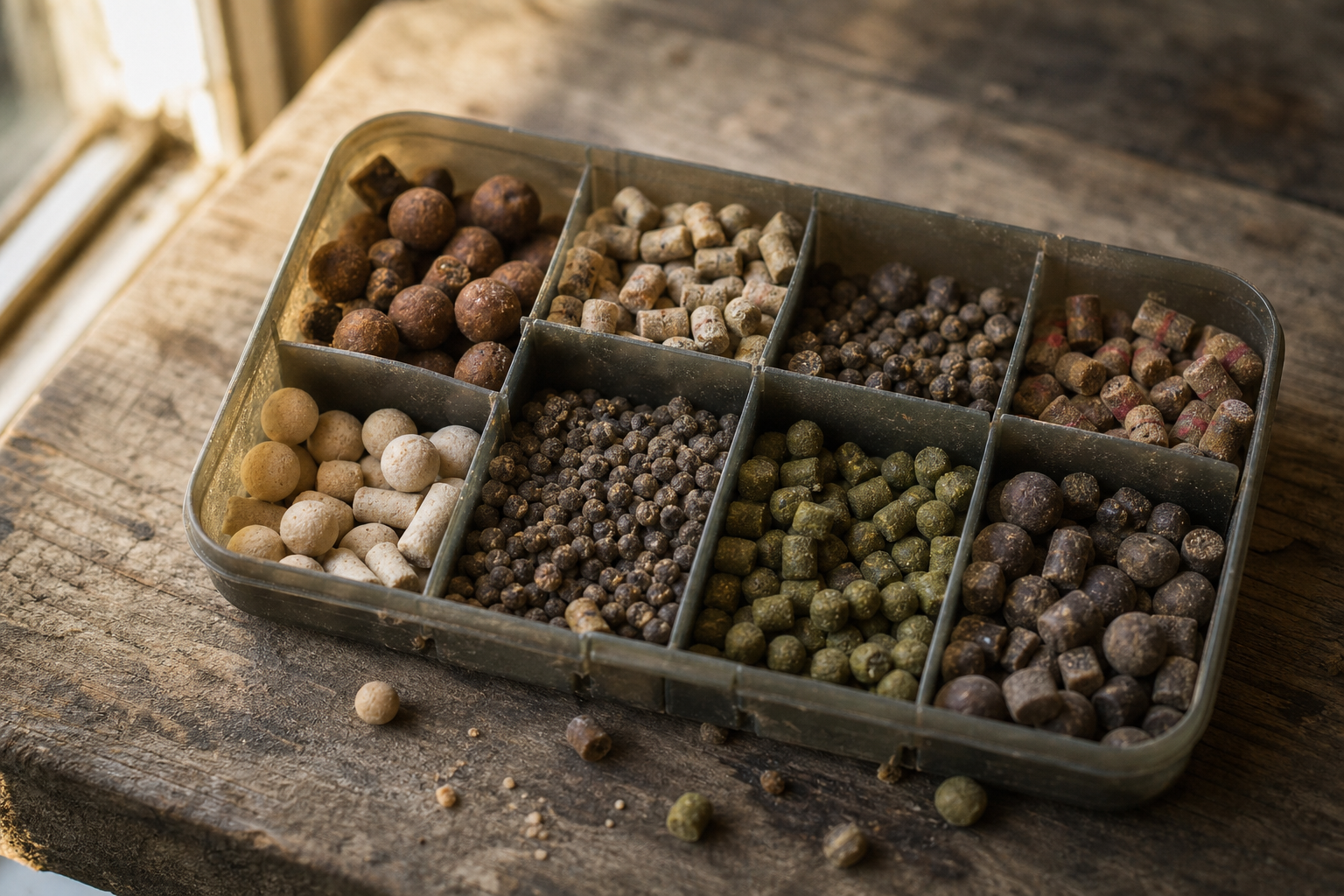
Method feeder hookbaits generally fall into three categories: balanced wafters, banded or hair-rigged pellets, and natural or alternative baits used over a pellet bed. Which category suits best depends on the species you are targeting, the water temperature and how much pressure the fish are under. The following sections cover each in turn. For rig setup and hair-length adjustment, see our method feeder bait preparation guide.
Balanced wafters
A wafter is a hookbait with a small buoyant core that partially counteracts the weight of the hook. When it is correctly balanced against the hook being used, it settles to the lake bed slowly and naturally, sitting just above or within the compressed feed pellets rather than pinning hard to the bottom. This behaviour makes it difficult for fish to distinguish from a free offering, which is why wafters are so widely used in commercial pellet fishing setups.
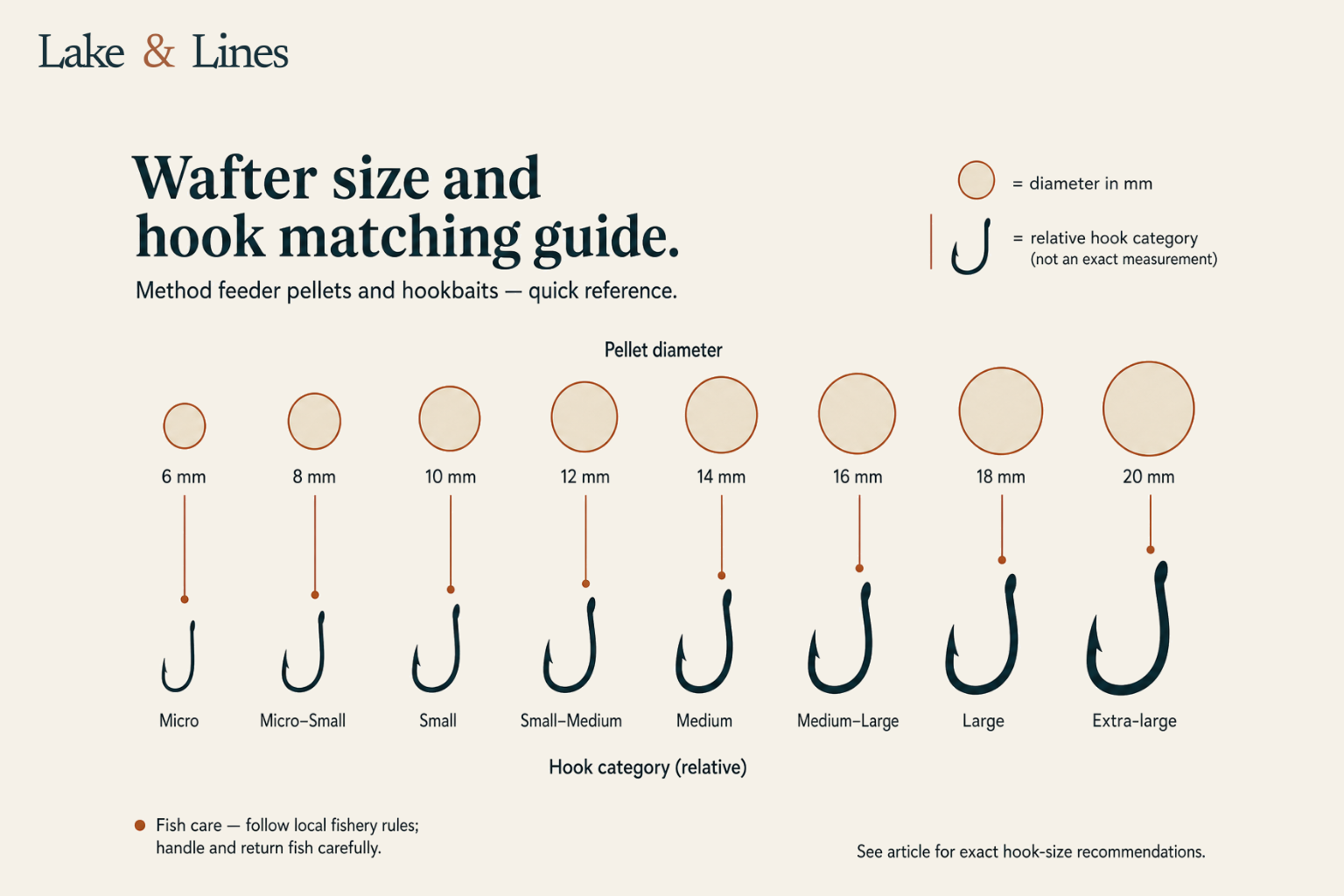
The important practical point is that "balanced" is relative to the hook you are using. A wafter that works perfectly on a size 12 may sit too heavy on a size 10 or be over-buoyant on a size 14. Always test your wafter in a bucket or tub of water with the hook attached before you fish it. If it sinks slowly and settles gently, the balance is good. If it floats or drops like a stone, change the hook size or try a different wafter size.
Mainline Match Wafters (8 to 12 mm) have a consistent all-round reputation and are widely available across UK tackle shops. They mimic boilies or pellets over a feed bed and are regarded as a reliable general-purpose choice for commercial carp and F1 fishing. Approximate price: £4.25 to £5.99 per tub.
CC Moore NS1 Dumbell Wafters (10 x 14 mm) have a citrus profile and dumbbell shape that sits differently in the water than a round wafter, giving a slightly different visual presentation. They have a strong track record on commercial stillwaters but can be too aggressive in flavour on heavily pressured or very clear venues. Approximate price: £5 to £7 per tub.
Bait-Tech Critical Wafters are softer in texture than most wafters, which makes them particularly suited to shy-biting F1s and bream in cooler water. The softer texture means they are less durable through repeated recasting, so they work best when you are fishing a swim you intend to stay in and casting to the same spot repeatedly. Approximate price: £5 to £6 per tub.
Sonubaits Micro Band'Um Wafters are smaller wafters designed for finesse presentations, typically where fish are wary or where the target species runs smaller, such as F1s on commercial day-ticket waters. Each tub contains multiple colours, which gives you some flexibility without buying several separate pots. Approximate price: £4 to £6 per tub. The smaller size can be fiddly to mount correctly on larger hooks, so check the wafter-to-hook matching table below before choosing a hook size.
BaitNow Wafters (2026 range) are a newer entrant to the UK market, available in 6, 8 and 10 mm sizes. The range gives some useful flexibility for matching hook size and venue type, but as a recently launched product it does not yet have the established track record of the options above. Worth considering if the size range suits your fishing, but approach with reasonable caution until more anglers have fished them through a full season.
| Wafter size | Hook size (approx.) | Notes |
|---|---|---|
| 6–8 mm | 12–14 | Finesse work; F1s, skimmers, bream |
| 10–12 mm | 10–12 | General carp and F1 commercial fishing |
| 14–15 mm | 8–10 | Larger carp; summer sessions |
| 18–20 mm | 6–8 | Targeting bigger fish; less common on small lakes |
Banded pellets and expander pellets as hookbaits
Banding a hard pellet onto the hook using a small silicone band gives you a hookbait that is essentially indistinguishable from the feed pellets surrounding it. Because it looks, smells and feels identical to a free offering, it can be a very effective presentation, particularly when fish are feeding confidently. It is also the most cost-effective approach: you are using the same commercial fishing pellets for both feed and hookbait, so no additional purchase is needed.
The limits of banded pellets are worth understanding. Silicone bands can perish, especially in warm weather or after prolonged use, so carry spares and replace them if they look worn. More importantly, when fish have been caught on banded pellets repeatedly, they can become suspicious of them. On a heavily pressured commercial, a wafter offering a slightly different buoyancy behaviour and perhaps a contrasting flavour will often draw more bites than a hard pellet that the fish have learned to treat with caution.
Expander pellets mounted on a hair rig or quick-stop sit between these two options. They are softer than a hard hookbait pellet, which some fish find more acceptable, particularly in cooler water. They are also easier to mount without needing a band. On venues where fish are not under significant pressure, an expander can produce well and gives you one more variable to experiment with through the session.
Alternative hookbaits over a pellet bed
There are sessions where loading the feeder with pellets while using a completely different hookbait is the most productive approach. Corn, luncheon meat, maggots and worm all work over a method feeder pellet bed, and they offer a contrasting visual and scent signal that fish who have seen every wafter in the lake may find harder to ignore.
This approach is also useful when pellet-based hookbaits are restricted by venue rules, or when you simply want a change of presentation mid-session. A piece of yellow corn over a dark pellet bed, or a bunch of maggots over micros, can trigger bites that have dried up on standard presentations. You do not need to abandon pellets in the feeder; the combination of a pellet feed with a non-pellet hookbait is a well-established approach on UK commercials.
Matching Pellets and Hookbaits to the Session
A simple starting point
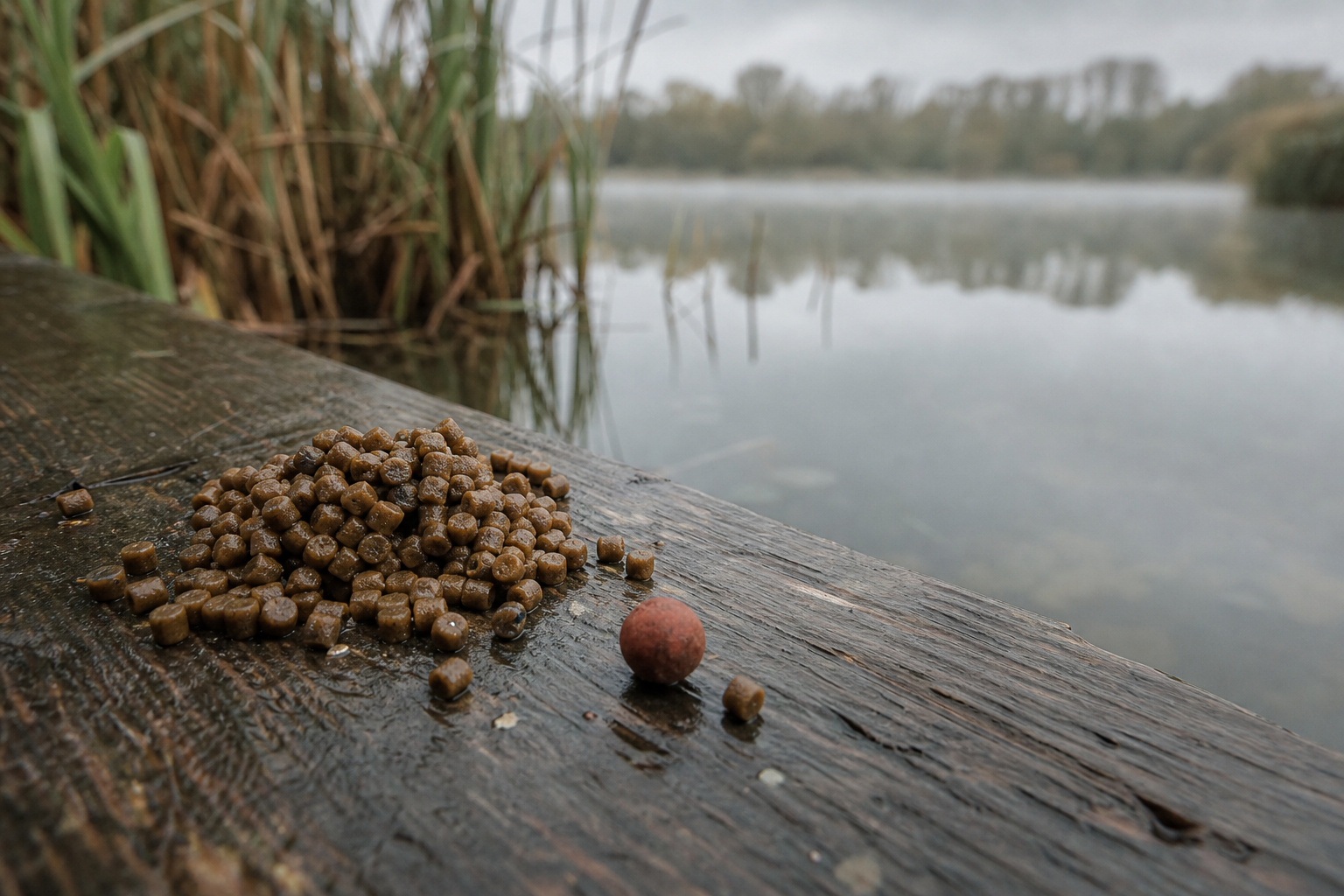
If you want a plain, no-fuss answer to what to buy before your first method feeder session: one bag of 2 mm carp and coarse pellets and one tub of 8 mm balanced wafters will cover the majority of small commercial stillwater situations. The micros load the feeder cleanly, the wafter sits just above the compressed pellets when correctly balanced, and the combination is well understood by the fish on most UK day-ticket waters. That is genuinely enough to get started. Everything else in this article is refinement, not foundation.
Adjusting for season and conditions
Spring and summer are the most straightforward conditions for method feeder fishing on a commercial lake. Medium-oil 2 mm micros or a 2 to 4 mm blend give good attraction, and a bright or high-attract wafter in the 8 to 12 mm range works well over a confident feeding spell. Fish tend to be more competitive during warmer months, so moderate to generous feeding patterns are appropriate.
Autumn calls for a modest adjustment. Switching to an all-season or lower-oil pellet reduces the risk of over-attracting fish in cooling water, and a slightly smaller or more naturally coloured wafter (washed-out pinks, creams and natural shades rather than vivid orange or yellow) often outperforms bright options as the fish become more cautious.
Winter is where restraint pays off. Lower-oil micros or fine expanders in small quantities, cast to the same spot repeatedly, allow fish to build confidence without feeling pressured by a large bait bed. Small wafters in the 6 to 8 mm range, or a soft expander pellet, suit the reduced feed volume and tend to work better than large, buoyant hookbaits on lethargic fish.
| Season | Feed pellet choice | Hookbait suggestion | Feed volume |
|---|---|---|---|
| Spring / Summer | Medium-oil 2 mm micros or 2–4 mm blend | 8–12 mm bright wafter or banded pellet | Moderate to generous |
| Autumn | All-season or lower-oil micros | 8–10 mm wafter, natural colours | Moderate |
| Winter | Lower-oil micros or fine expanders | Small 6–8 mm wafter or expander pellet | Cautious; little and often |
Common problems and how to fix them
Pellets falling off the feeder almost always comes down to moisture. If they are too wet, they smear against the mould and fall away from the feeder in a lump rather than compressing cleanly. If they are too dry, they will not bind at all. Dampen your micros gradually, mixing as you go, until a small handful squeezed in your palm holds its shape and then crumbles apart cleanly. It takes a little practice, but the adjustment is usually small.
Liners without proper bites are often a sign that the hookbait is not sitting correctly relative to the feed. Fish are intercepting the line or nosing around the feeder bed without committing to the hookbait. Test your wafter in a tub or bucket of water with the hook attached: it should sink slowly and settle with a gentle, natural movement. If it floats or drops hard, adjust the hook size or move to a different wafter size. A short hair, keeping the bait close to the bend, is generally the starting point for method feeder presentations.
Bites drying up mid-session is a common experience on pressured commercials, and the instinct to pile in more feed rarely helps. Before increasing your feed volume, try switching the hookbait colour or style instead. Moving from a bright wafter to a natural-coloured one, or switching from a wafter to a banded pellet, can be enough to restart the bites without unsettling the swim.
Spending Priorities and What You Can Skip
A reliable bag of 2 mm micros does not need to come from a premium brand. What matters is consistent pellet size and getting the dampening right on the day. Budget and mid-range bags from established tackle brands perform just as well in the feeder as more expensive alternatives, and in pellet-heavy commercial fishing, you will go through a fair volume in a session.
A quality tub of wafters is where a modest extra spend is worthwhile, particularly if you are targeting carp or F1s on a pressured day-ticket water. Correct buoyancy genuinely affects bite rate, and a wafter from a brand with a consistent track record is more likely to perform as described than an unknown alternative.
Buying several flavour variants of wafters before you have been to a venue is not necessary. One proven flavour in a useful size (8 to 10 mm covers most situations) is enough for a first session. Experimenting with colour and flavour is best done once you know how the venue fishes, not before you have arrived.
Avoid buying large quantities of any unfamiliar pellet before checking the fishery rules at your chosen venue. Some commercials require their own branded product, and buying a large bag of something the venue does not permit is a straightforward waste of money.
Choosing method feeder pellets and hookbaits for a small commercial lake does not need to be complicated. The combinations that produce fish on UK stillwaters have been broadly consistent for many years, and the most common reason for a quiet day is presentation rather than an exotic flavour choice. Get the moisture right on your micros, test your wafter against the hook, and start simple. For preparation detail and loading technique, the method feeder bait preparation guide covers that ground thoroughly. For the feeder and mould equipment itself, the guide to best method feeder kits walks through what to look for before you buy.
Frequently asked questions
What pellet size should I use in a method feeder on small commercial lakes?
Start with 2 mm micro pellets for clean compression and a natural feed bed. Use a 2–4 mm mixed blend to extend breakdown and hold fish longer on busy summer sessions.
When should I choose medium oil or low oil pellets?
Use medium-oil pellets in spring and summer to leach attraction. Switch to lower-oil or all-season pellets in autumn and winter when fish feed more cautiously.
Can I use the same pellets as a hookbait?
Yes. Hard pellets can be banded to the hook and expander pellets can be mounted on a hair. Banded pellets match the feed well but wafters often tempt wary fish after pressure.
How do I check if a wafter is balanced correctly?
Test the wafter in a bucket or tub with the hook attached. It should sink slowly and settle gently. If it floats or drops hard, change hook size or try a different wafter size.
What should I do if bites stop mid-session?
Avoid simply adding more feed. Try changing the hookbait colour or style first, for example switch from bright wafters to natural shades or from wafters to a banded pellet or alternative bait.

Lake & Lines Editorial Team
Editorial team
The Lake & Lines editorial team brings together freshwater fishing guides and researched tackle advice, helping beginners and returning anglers prepare for better days by the water.