Staying Warm While Fishing: Clothing and Session Planning for Cold Days on the Bank
Simple, practical advice for staying warm while fishing in cold British conditions. Layer smartly, protect hands, feet and head, use shelter and a padded chair, carry spares and warm drinks.
At a Glance
- Dress for the coldest, least active part of the session using a base, mid and outer layer.
- Base layers should be merino or synthetic wicking; avoid cotton.
- Use fleece or a gilet for mid layer and a waterproof, windproof shell for the outer layer.
- Protect hands, feet and head; carry spare dry socks and gloves and use an insulated chair or closed cell foam under feet.
- Bring a shelter, eat and drink regularly, plan your session and know hypothermia signs.
If you are planning a cold-weather session and want to know what to wear and how to stay comfortable, this guide answers that directly. Keeping warm while fishing in Britain is less about expensive gear and more about understanding why the bank creates a specific cold-weather problem, and then solving it methodically. Get the clothing right, plan the session sensibly, and a winter morning on the water is something to look forward to rather than endure.
Why Sitting Still Changes Everything
Most outdoor activities keep you warm through movement. Walking, cycling, even a slow round of golf all generate body heat as a byproduct of physical effort. Fishing does not work that way. Once you are settled in your swim, you may sit largely still for several hours, with only brief bursts of activity when casting, reeling in or handling a fish. Your body produces very little heat in that state, and whatever warmth you arrived with gradually drains away.
This makes fishing unusual among outdoor hobbies, and it means the clothing logic is different. If you dress for the average temperature and activity level of the day, you will almost certainly feel cold during the long static spells that make up most of a session. The correct approach is to dress for the coldest, least active point of the session, not the comfortable middle.
British conditions add another layer of difficulty. Autumn and winter days here tend to be damp and windy rather than deeply frozen. A raw 7°C day with a steady breeze coming off the water can drain warmth just as effectively as a harder frost, and the moisture in the air accelerates heat loss through clothing that is not properly waterproofed. That combination of chill, wind and damp is what you are dressing against.
The Three-Layer Approach for Bank Fishing
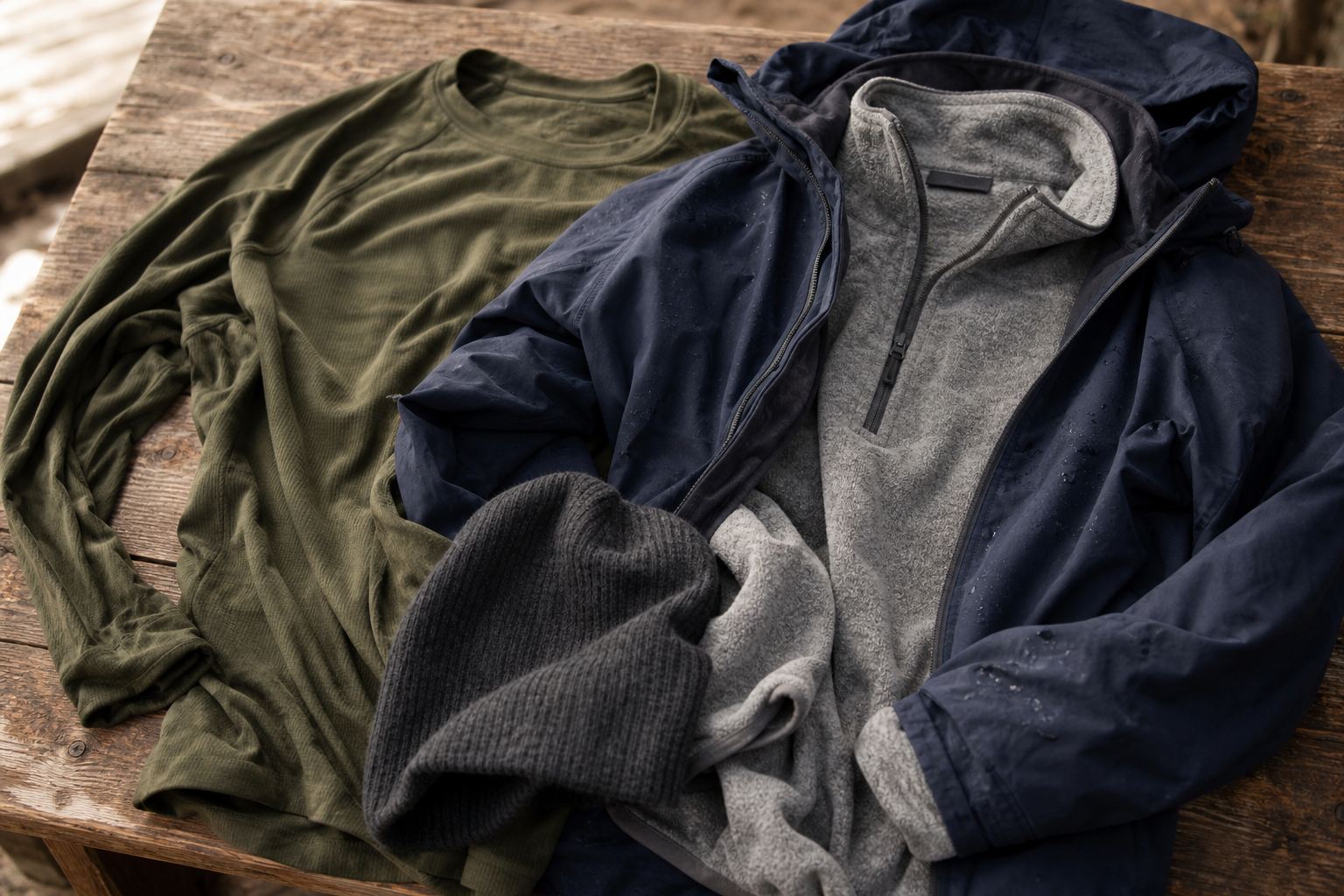
The solution that works consistently for cold-weather bank sessions is the same layered approach used across outdoor activities: a base layer to manage moisture, a mid-layer to trap warmth, and an outer shell to block wind and rain. The principle is not fishing-specific, but the application is. Each layer needs to work for someone sitting still for long periods, not someone covering ground.
Base Layer: Keeping Moisture Away from Your Skin
The base layer sits against your skin and its job is to move moisture away before it can make you cold. Sweat, even light sweat from a walk to the swim or setting up your rods, will chill you quickly once you stop moving if it is trapped against your skin in an absorbent fabric.
Choose merino wool or a synthetic wicking fabric (polyester-based sports baselayers work well). Both move moisture outward and continue to insulate even when slightly damp. The fit should be close but not restrictive. Avoid cotton entirely at this layer. Cotton absorbs moisture and holds it, which is exactly what you do not want during a session where you alternate between brief activity and long stillness.
Mid Layer: Trapping Warmth While You Sit
The mid-layer insulates by trapping warm air close to your body. Fleece is the most practical choice for most anglers: it is widely available, dries quickly, is easy to put on and take off, and does not lose its insulating properties when compressed in a bag. A good fleece jacket or a heavyweight fleece top is a reliable foundation here.
A gilet (sometimes called a body warmer) is worth considering as an additional or alternative mid-layer. It protects the core, where warmth matters most, without restricting arm movement when you are handling tackle or casting. Using two lighter mid-layers rather than one very bulky garment also gives you more flexibility to adjust as the temperature changes through the day.
Outer Shell: Wind and Rain Protection
The outer layer's purpose is to block wind and stop rain getting in. For a UK bank session, a waterproof and windproof shell jacket and trousers are the appropriate choice. Fishing-specific suits are cut for sitting (longer at the back to prevent cold air getting in at the waist) and often have well-placed front pockets, but a general outdoor waterproof and overtrousers that you already own will work equally well.
Wax cotton jackets are a classic choice but are not ideal for sustained wet cold. They resist light rain well, but in prolonged wet weather they can saturate and lose their insulating effectiveness. They are also heavier and less packable than modern waterproof shells. If wax cotton is what you have, pair it with a proper waterproof layer underneath or over it.
| Layer | Purpose | Suitable materials | What to avoid |
|---|---|---|---|
| Base | Moves moisture away from skin | Merino wool, synthetic wicking fabrics | Cotton, which holds moisture |
| Mid | Traps warm air | Fleece, down gilet, insulated jacket | One very bulky layer (limits adjustment) |
| Outer | Blocks wind and rain | Waterproof, windproof shell jacket and trousers | Wax cotton alone in wet, cold weather |
Protecting Your Extremities
Your core can be well insulated but if your hands, feet or head are cold, you will feel it through your whole body. These are the points where most anglers lose comfort first, and they are also the points that need the most practical thought because fishing involves using your hands constantly.
Hands and Gloves
The challenge with gloves for fishing is that you need your fingers to tie knots, handle small hooks and feel what is happening on the line. Full gloves solve the warmth problem but create a dexterity problem. The most practical approach is fingerless gloves for active fishing, supplemented by full gloves or mittens during the long quiet spells between casting.
Some anglers keep one glove off the rod hand and one glove on the other. Fishing-specific gloves with neoprene panels or waterproofing are available and handle repeated contact with cold water better than standard wool gloves. Thin liner gloves under a slightly larger outer glove are a non-specialist alternative that works well. Whatever you use, keep a dry spare pair in your bag.
Feet and Footwear
Feet get cold quickly when you are sitting still, partly because circulation slows without movement and partly because you are in contact with cold, damp ground. Walking boots are not ideal for static bank sessions: their insulation is designed to work under the compression of walking, and when you sit still it compresses without generating heat.
Insulated wellington boots or purpose-made fishing boots (designed for static wear) tend to perform better. Thermal socks help considerably. If your socks become damp during the session, change them; a spare dry pair in a sealed bag is one of the most practically useful things you can carry. Waterproof socks are worth considering for longer static sessions in wet conditions.
Head and Ears
A warm hat that covers your ears is one of the single most effective changes you can make to your cold-weather comfort on the bank. A significant amount of body heat is lost from an uncovered head, and the ears and back of the neck are particularly vulnerable to wind chill.
A fleece or wool hat worn throughout the session makes a disproportionate difference to how warm you feel overall. Add a neck buff or scarf to cover the gap between your collar and hat, and you close off one of the most common routes for cold air to reach your body.
Dressing for the Session, Not Just the Weather
A common mistake is to suit up fully before leaving the car and then walk to the swim, set up the rods and arrange the chair fully layered. By the time you sit down, you have worked up some warmth and dampness in your base layer. As you cool down over the next hour, that moisture chills you from the inside out. The result is that you feel colder at midday than you would have done if you had managed your layers from the start.
The practical solution is to walk to your swim in fewer layers. Leave the insulating mid-layer in your bag until you have finished setting up. Do the active work (carrying gear, positioning chairs, rigging rods) in your base layer and outer shell, then add your mid-layer once you are seated and settled. This keeps layers for sitting still at the bank dry and performing as they should throughout the session.
Layer up once you're settled
Walk to your swim and set up in lighter clothing, then add your insulating layers once you stop moving. Sweating into your base layer early in the session will make you colder once you sit still.
Adjust in response to what happens through the day. If the temperature drops sharply in the afternoon, add a layer. If you need to walk to the car and back, shed one. The system works best when you treat it as a dynamic tool rather than a fixed outfit.
Shelter, Seating and Heat from the Ground
Clothing alone does not tell the whole story. Where you sit and what you sit on has a meaningful effect on how warm you stay over a long session.
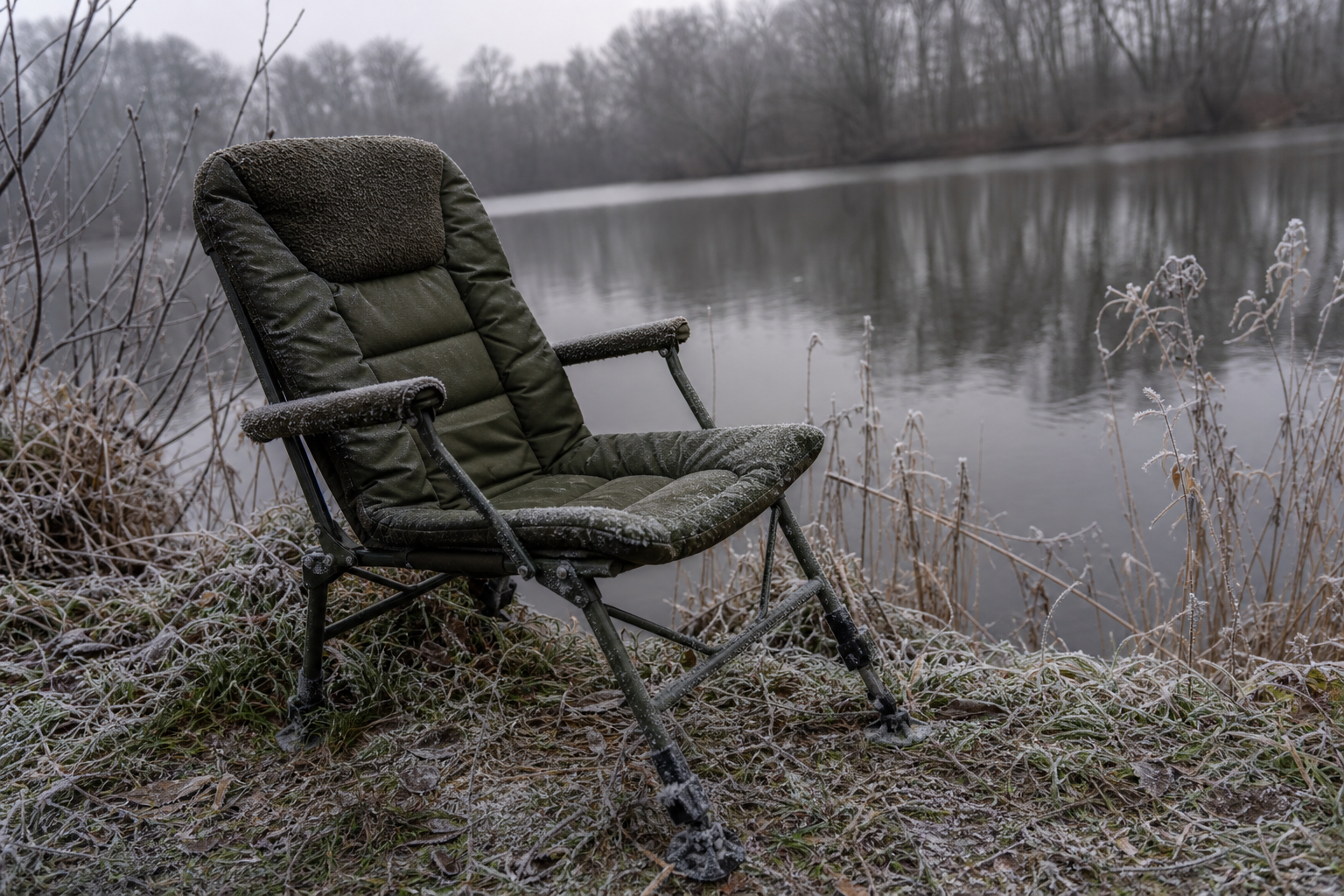
A padded or elevated fishing chair keeps you off the cold ground and reduces the rate at which heat drains downward through contact with damp earth. A low stool or an upturned tackle bag offers much less protection. A dedicated fishing chair is not an extravagance on a cold day; it is a genuine comfort tool. For longer sessions, a small piece of closed-cell foam mat placed under your feet makes a further difference.
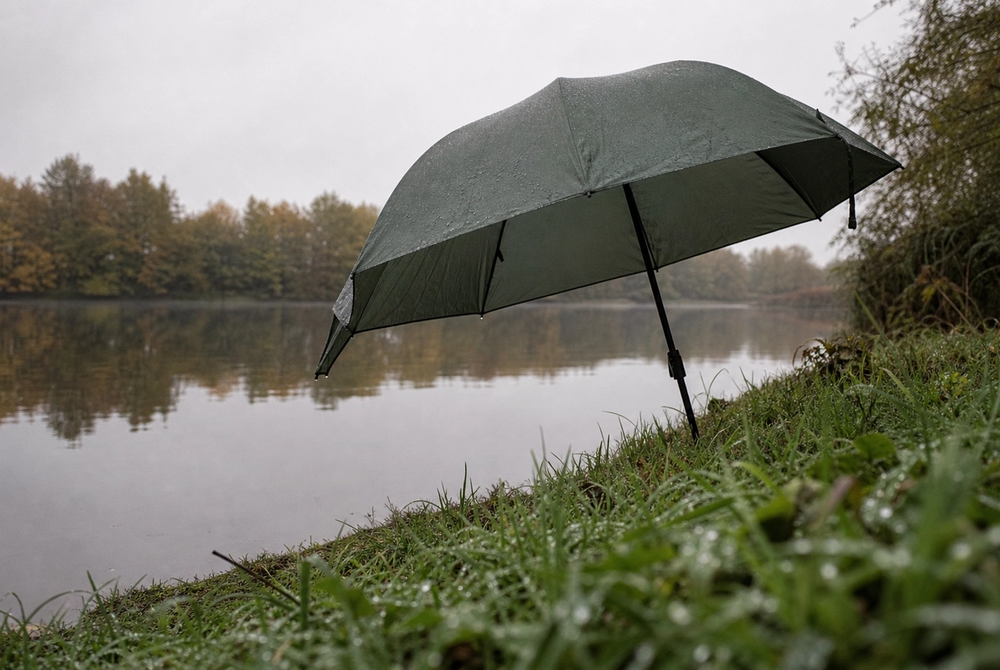
A fishing umbrella or day shelter changes the warmth equation considerably. Blocking the wind is often more valuable than an extra layer of clothing. A good shelter also keeps rain off your outer layer, which means your waterproofing stays effective for longer and you arrive home drier. Position the shelter opening away from the prevailing wind where the swim allows it.
Planning a Cold-Weather Session
Good preparation starts the evening before. Check the forecast carefully, and look at wind chill and rainfall as well as the headline temperature. A dry 4°C day with light wind is very different from a wet 6°C day with a strong breeze. Pack your layers accordingly, but always bring more than you expect to need.
Let someone know where you are going and when you plan to be back, particularly if you are fishing alone in winter. This takes thirty seconds and is a sensible habit at any time of year, but it matters more when conditions are cold and exposure is a genuine consideration.
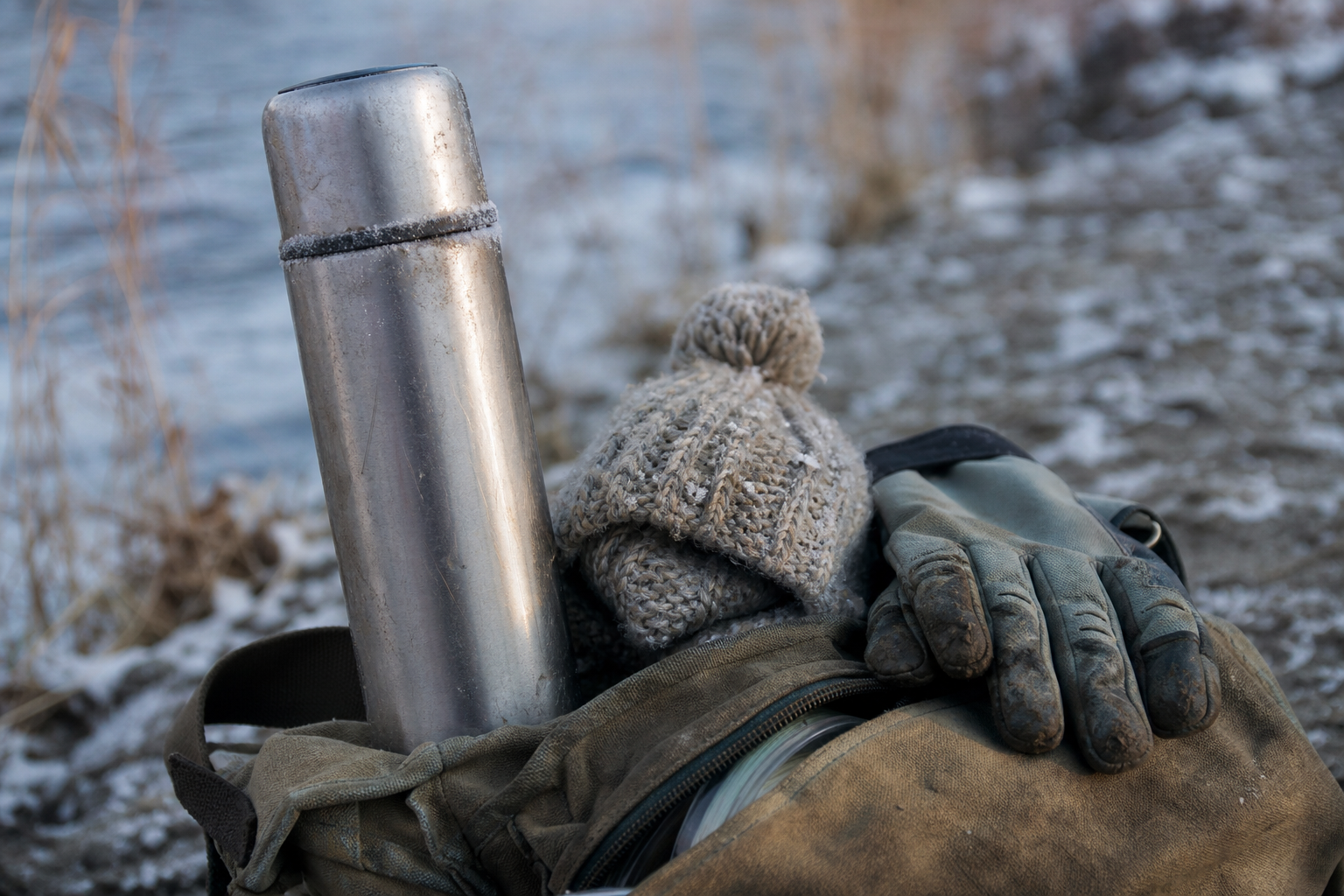
During the session, eat and drink regularly. Warm food and hot drinks from a flask help maintain body temperature and make a long session substantially more comfortable. Drink tea, coffee or soup rather than alcohol. Alcohol feels warming briefly but causes the blood vessels near the skin to dilate, which accelerates heat loss from the body's core. It is not a practical solution to feeling cold on the bank.
Have a planned end time and stick broadly to it. There is no useful principle that says a session must continue until a certain hour. If conditions deteriorate sharply or you become uncomfortably cold, finishing early is the correct decision.
Carry a spare base layer
A dry base layer in your bag costs nothing extra on the day and matters a great deal if you get wet. Keeping a set of dry socks in a sealed bag is equally useful for longer sessions.
Recognising Hypothermia: What to Know Before You Go
Most day sessions on a British commercial lake or club water do not put a healthy, well-dressed angler at serious risk of hypothermia. But it is worth knowing the signs, partly because awareness makes you a safer angler and partly because the people most at risk, including older anglers, those with cardiovascular or metabolic conditions, and anyone fishing alone for extended periods, are a significant part of the angling community.
In the early stages, hypothermia presents as vigorous shivering, a feeling of intense cold and general discomfort, but the person remains mentally alert. At this stage, adding insulation, moving somewhere warm and eating or drinking something warm is the appropriate response. In the moderate stage, confusion, slurred speech and poor coordination develop. These signs require urgent action: insulate the person, keep them as still as possible and call 999. Do not rub the person's limbs or give them alcohol.
NHS guidance treats hypothermia as a medical emergency: it lists shivering, pale, cold and dry skin, slurred speech, slow breathing and tiredness or confusion as symptoms, and says to call 999 or go to A&E if you think someone has hypothermia. If you are uncertain whether someone is in difficulty, treat it as an emergency.
Hypothermia: early signs to know
- Vigorous shivering
- Early stage
- Confusion or slurred speech
- Moderate stage
- Loss of coordination
- Progressing
- Pale, cold skin even indoors
- Any stage
Normal mental state at this point
Requires urgent action
Call 999 immediately
Move to warmth and seek help
The practical message is straightforward: dress well, stay dry, eat and drink throughout the session, and know what to look out for in yourself and in anyone fishing nearby. Following this article's clothing and session-planning advice puts the risk of reaching that point well into the distance for most healthy anglers on a typical British winter day.
A Note on Budget and Existing Kit
If you already own good outdoor or walking layers, a waterproof shell and warm socks, you very likely have what you need for cold-weather fishing. The principles behind a walking layer system translate well to fishing, and readers who want a fuller explanation of how outdoor layering works will find the hiking layering system guide from Fieldworthy a useful reference. The practical application at the bank is different in some respects (you are sitting rather than walking, and you are handling wet fish and terminal tackle), but the underlying logic is the same.
Fishing-specific clothing for cold weather does offer some genuine advantages. It tends to be cut longer at the back to prevent cold air getting in at the waist during prolonged sitting. Specialist waterproof suits often handle repeated exposure to water, bait and fish slime better than general outdoor clothing. Front pockets are positioned for someone sitting down rather than standing. If you fish regularly through the colder months and find that your existing clothing leaves gaps, these are the practical reasons to consider fishing-specific alternatives.
If you are building a layering system for the first time, the outer shell is the priority. Keeping rain and wind out of your clothing makes every layer beneath it work better. A solid waterproof jacket and overtrousers, paired with a fleece and a wicking base layer, is a fully functional fishing clothes setup for cold weather. The rest can follow as you work out what your sessions actually need.
Frequently asked questions
How should I layer for cold bank fishing?
Use a three layer system: a merino or synthetic wicking base, a fleece or gilet mid layer for trapped warmth, and a waterproof, windproof outer shell. Dress for the coldest, least active moment of the session and adjust layers as you settle.
What is the best glove setup for fishing in cold weather?
Use thin liner or fingerless gloves for dexterity while fishing, and add full gloves or mittens during long quiet spells. Fishing gloves with neoprene or waterproof panels are useful and always keep a dry spare pair in your bag.
How can I keep my feet warm when sitting still?
Insulated wellingtons or fishing boots designed for static wear work better than walking boots. Wear thermal socks, carry a spare dry pair in a sealed bag and sit on a padded or elevated chair to reduce heat loss to the ground.
Is a shelter worth taking for a winter session?
Yes. A fishing umbrella or day shelter blocks wind and rain, often improving comfort more than an extra clothing layer. Position the opening away from the prevailing wind and use it to keep your outer layer drier.
What signs of hypothermia should I watch for and what should I do?
Early signs include vigorous shivering and intense cold. Moderate signs are confusion, slurred speech and loss of coordination. Respond by adding insulation, moving to warmth and giving hot drinks. If signs progress, call 999 and seek urgent help.

Lake & Lines Editorial Team
Editorial team
The Lake & Lines editorial team brings together freshwater fishing guides and researched tackle advice, helping beginners and returning anglers prepare for better days by the water.