Feeder Rod Length and Quivertip Choice: a Practical Guide for Commercial Lakes
Match feeder rod length to casting distance and peg space, then use the softest quivertip that stays stable. A 9 to 10ft rod and 1.5oz carbon tip suit most commercial lakes.
At a Glance
- Match rod length to cast distance and peg space rather than fish size.
- For most commercial lakes a 9 to 10ft rod and a 1.5oz carbon tip are good default choices.
- Use the softest quivertip that remains stable; step up in rating for wind or heavier feeders.
- Glass tips are more forgiving and detect subtle bites; carbon tips are crisper and suit braid and heavier work.
- On the bank, set the rod low with a slight tip bend and adjust tip rating if you see sagging or bounce.
You have a feeder rod, or you are about to choose one, and you want to know whether it suits your local commercial. Perhaps you are returning to fishing after a few years away, or you have a setup that works after a fashion but sessions feel unreliable and you are not sure why. Understanding feeder rod length and quivertip choice is fundamentally a matching exercise: the two are related decisions, shaped by how far you need to cast, what feeder weight you are using and the conditions on the day. Most commercial lake fishing is well served by a narrower range of options than the tackle shop shelves might suggest, and what you already own may be closer to right than you think.
Why Rod Length Matters More Than Rod Power
The first thing to set aside is the idea that a longer or heavier rod is better for bigger fish. Rod length is primarily a casting and control tool. It governs how far you can cast comfortably, how quickly you can pick up line on the strike and how much room you need behind you on the peg. Even a large commercial carp is routinely landed on a 9-foot rod. Fish-fighting power comes from the blank's action and your drag setting, not from an extra foot of length.
The practical question is always: how far do you need to cast, and how much space do you have around you?
| Length | Typical use | Why it suits that venue |
|---|---|---|
| 8–9ft | Tight pegs, very short-range bomb or method | Limited casting arc, close-in accuracy |
| 9–10ft | Commercial carp and F1 lakes, 25–40m casts | Comfortable casting weight, easy to handle on standard pegs |
| 10–11ft | Larger stillwaters, deeper pegs, mixed species | Extra line pick-up, more control in crosswinds |
| 11–12ft+ | Rivers and big reservoirs | Casting leverage for heavier feeders, line held clear of flow |
At the short end, a rod of 8 to 9 feet is accurate at close range and easy to manage on a tight peg, but it gives you less leverage for a long cast and less tip height when you need to pick up line quickly. At the long end, an 11 to 12-foot rod generates real casting power and holds the line clear of a river's surface flow, but on a compact commercial peg with a tree behind you and an angler either side, the extra length can become an inconvenience rather than an advantage. The middle ground is where most stillwater feeder fishing happens.
Choosing the Right Rod Length for Your Commercial Lake
Most UK commercial carp and F1 lakes call for casts of 25 to 40 metres, typically to a far-bank island, a mid-lake shelf or a marked feature. A 9 to 10-foot rod rated around 30 to 50 grams covers this range comfortably. The casting weight rating tells you roughly how heavy a loaded feeder the rod is designed to handle; staying within that rating protects the blank and makes casting more consistent.
If you already own a 10 or 11-foot rod, the honest answer is that it will almost certainly work on a commercial lake. The extra length gives you slightly more line pick-up speed and a longer casting arc, which costs you nothing on a wide peg. The case for a shorter rod is mostly about fit: if your pegs are narrow, overhung with vegetation or designed for close-in fishing at 15 to 20 metres, a 9-foot rod will be more comfortable to swing and easier to keep low over the water. If you are mainly fishing open commercial stillwaters at normal distances, an existing 10 to 11-footer is not worth replacing.
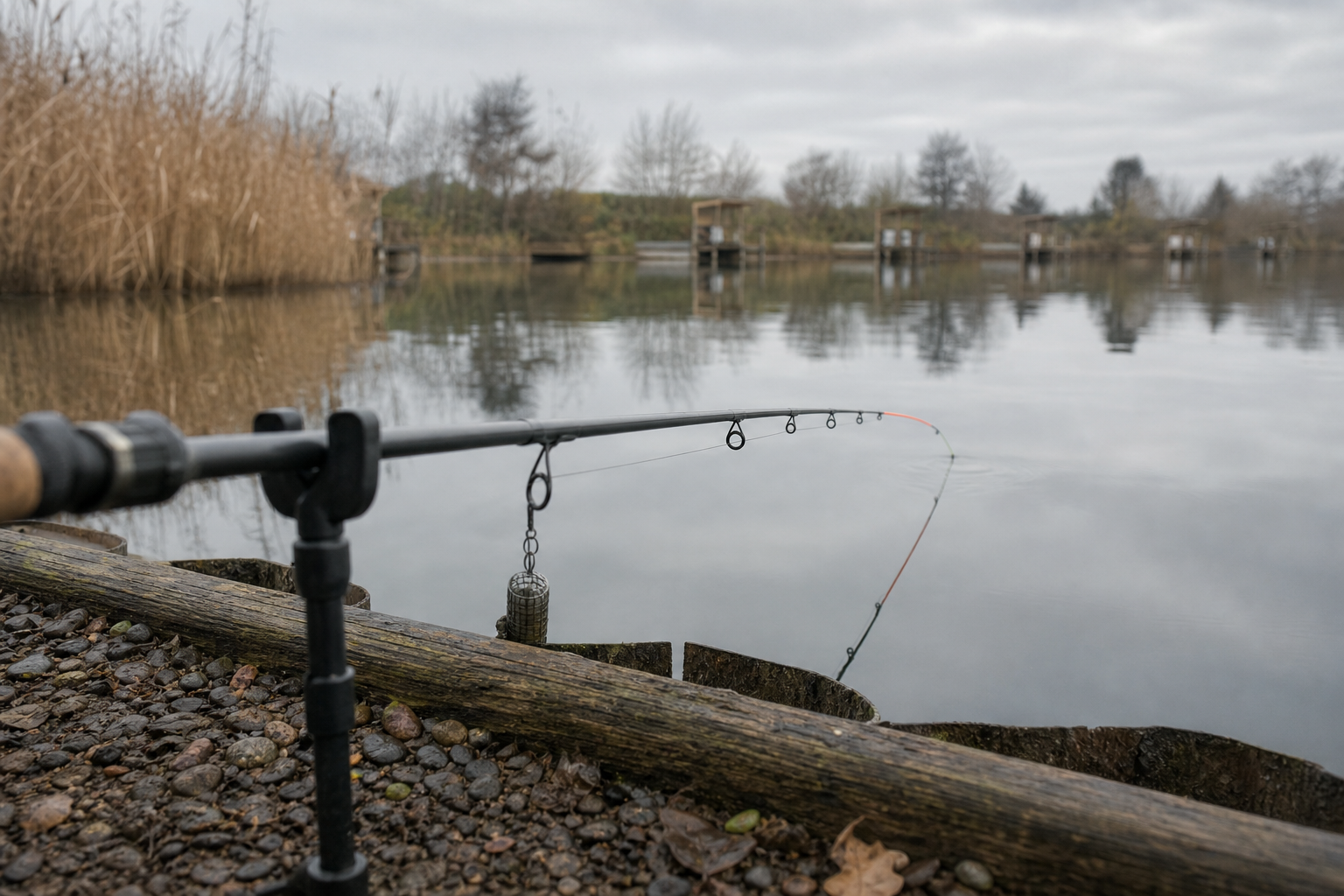
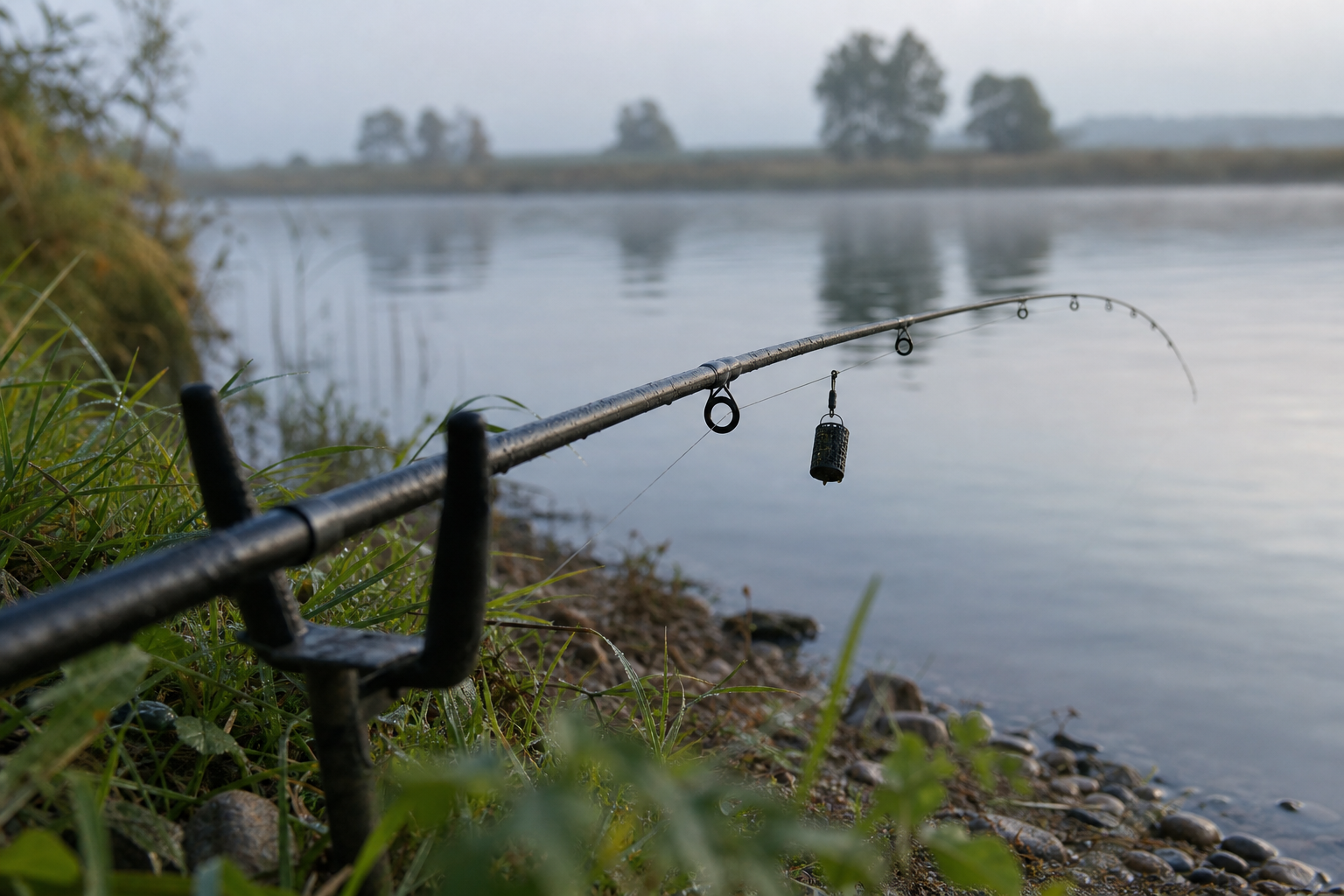
Rod-tip position is connected to all of this. On still water, you want the rod low and pointing roughly towards the feeder, so the line runs directly from tip to water with as little bow as possible. This keeps the quivertip reading the line rather than catching the breeze. Exactly how you set this up in relation to your tip choice is covered in more detail below.
Quivertips Explained: What the Rating Actually Means
The ounce rating on a quivertip refers to the approximate weight required to pull the tip to a standard deflection angle. A 1oz tip needs roughly 1oz of force to reach that bend; a 2oz tip needs twice as much. Higher rating equals stiffer tip. Most rods come with two or three interchangeable tips as standard, and some anglers build a small working set of four or five to cover different conditions and feeder weights.
The rating matters because the tip has two jobs: it must absorb the tension from your loaded feeder without over-bending, and it must be sensitive enough to show a bite clearly. If the tip is too stiff for your feeder weight, it will sit dead straight and you will only see heavy, late bites. If it is too soft, it will sag or bounce in the wind and you will not be able to read it at all.
| Rating | Best for | Typical feeder weight |
|---|---|---|
| 0.5–1oz | Light feeders, shy-biting silvers and F1s, calm conditions | Under 20g loaded |
| 1–1.5oz | Commercial carp and F1 work, normal conditions | 20–30g loaded |
| 1.5–2oz | Carp method feeders, light crosswind, slightly longer cast | 25–40g loaded |
| 2.5–3oz | Larger venues, stronger wind, heavier feeders | 40–60g loaded |
| 3oz+ | Rivers, strong flow, heavy cage feeders | 60g+ |
Glass Tips Versus Carbon Tips
The ounce rating tells you the stiffness level but not the material, and the material makes a real difference to how a tip feels in use.
Glass tips are softer and more parabolic in the way they bend: they spread the load along more of the tip's length, which amplifies small movements and makes them forgiving to use with light feeders and monofilament mainline. A glass 1oz tip will feel noticeably different from a carbon 1oz tip at the same stated rating, because glass gives through more of its length rather than bending sharply near the base.
Carbon tips are crisper. They recover faster after a cast, which matters when you are repeatedly punching out a loaded method feeder. They transmit movements more directly and pair well with braid, where the lack of stretch in the mainline means you want a tip that does not exaggerate every small vibration. Most rods come with carbon tips as standard.
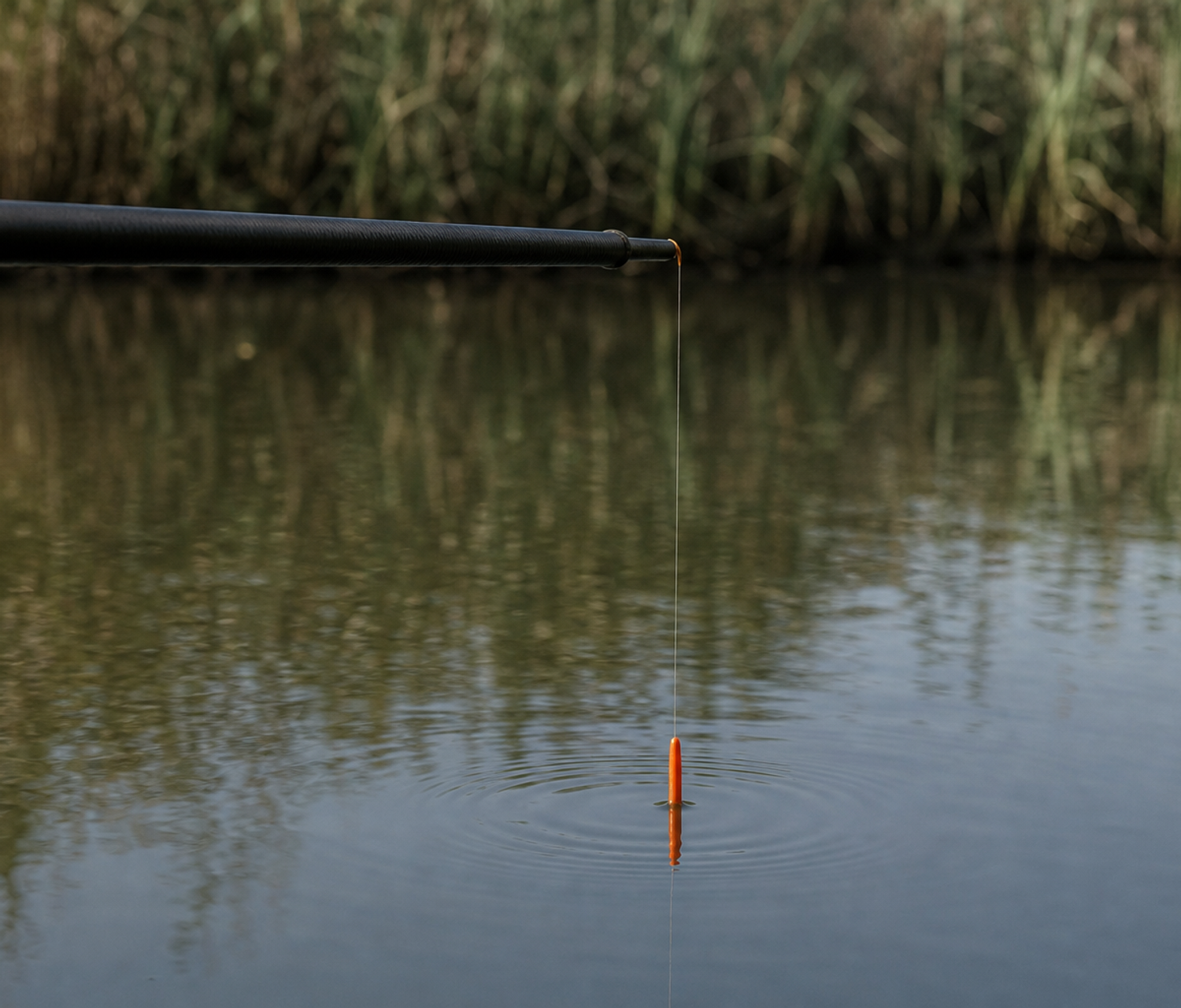
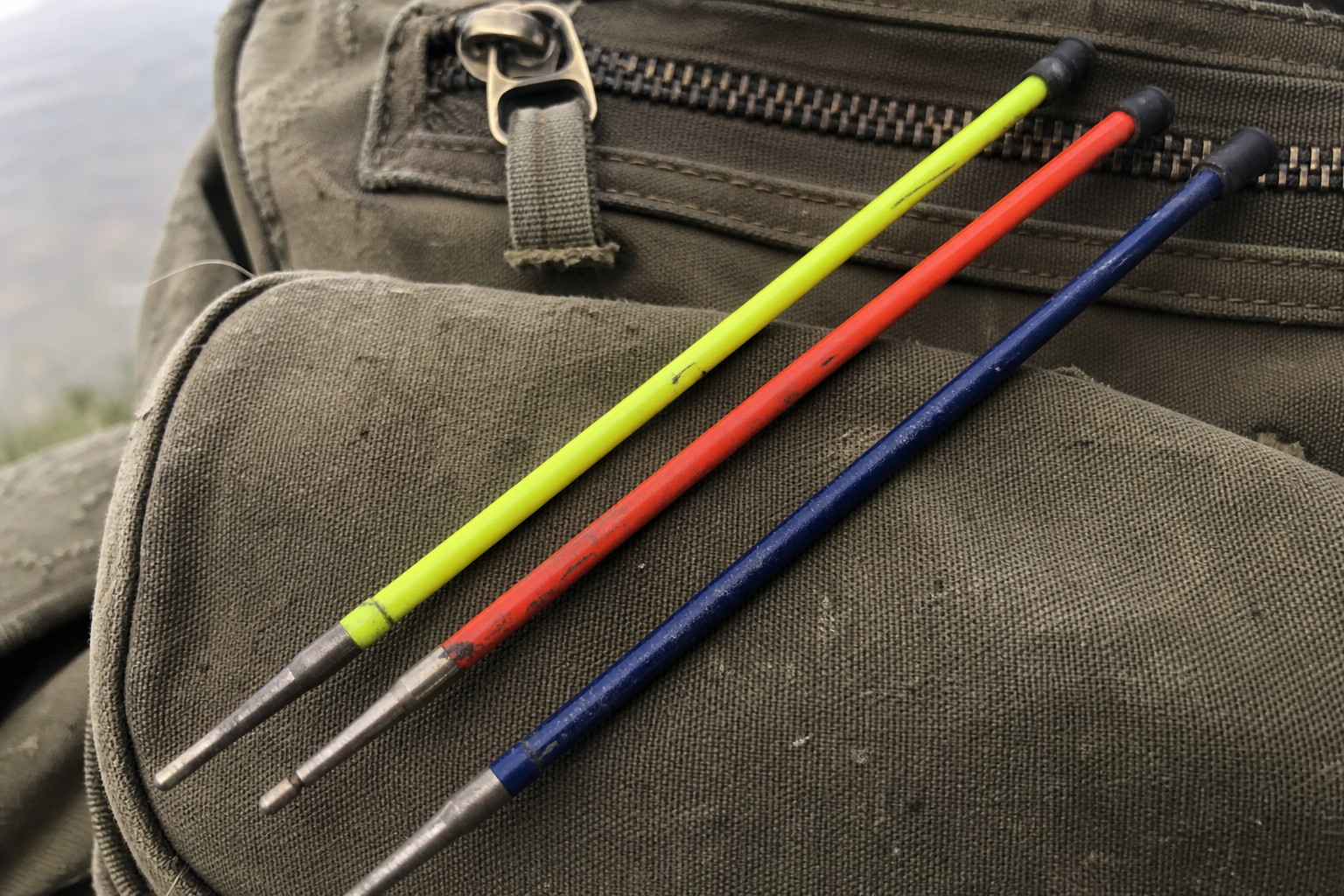
A note on high-visibility painted sections: these are not cosmetic. Against dark water, choppy conditions or low light on a grey autumn afternoon, a brightly painted tip section genuinely helps you read a gentle dip or a slow lift that you would otherwise miss.
What Quivertip for a Commercial Lake?
For a typical commercial carp or F1 lake, with casts of 25 to 40 metres and a method or hybrid feeder loaded to around 25 to 35 grams, the starting point for most anglers on most days is a 1.5oz carbon tip. That is a direct answer to a question that deserves one.
A working starting set for commercial lake fishing
Most commercial carp and F1 fishing is covered by three tips: a 1oz glass for calm days and small feeders, a 1.5oz carbon for everyday method feeder work, and a 2oz carbon for windier conditions or slightly longer casts. You do not need more than this to start.
The decision process from there is straightforward:
- Fit the 1.5oz carbon tip as your default when fishing a loaded method feeder at normal commercial distances.
- If the tip is bouncing in the wind or being dragged round by undertow (the sub-surface water movement that can pull the line even on a seemingly calm lake), step up to a 2oz carbon.
- If you are fishing shorter, targeting smaller fish or F1s, or the day is genuinely calm and you want to detect gentle lifts and drop-backs, drop to a 1oz glass tip.
- If you switch from monofilament to braid mainline, consider dropping one step softer in tip rating. Braid has almost no stretch, so it transmits every movement directly to the tip. A stiffer tip on braid can produce violent, sharp movements that are hard to read and can contribute to hook pulls on the strike.
The core principle is simple: use the softest tip that stays stable. If the tip is sagging under its own weight or swinging in the breeze, it is too soft for the conditions. If you are only seeing heavy, sudden lunges and missing the earlier, quieter part of each bite, the tip is probably too stiff.
Adjusting on the Bank When Things Are Not Working
This is where most technique articles leave you to work it out for yourself. What follows is a practical process for the three most common problems.
You Are Not Seeing Bites
The most likely culprits are a tip that is too stiff, slack line between rod and feeder, or a rod angle that is not aligned with the line. Start by checking the basics before you change the tip.
- Lower the rod so it is close to the water surface and pointing roughly towards your feeder.
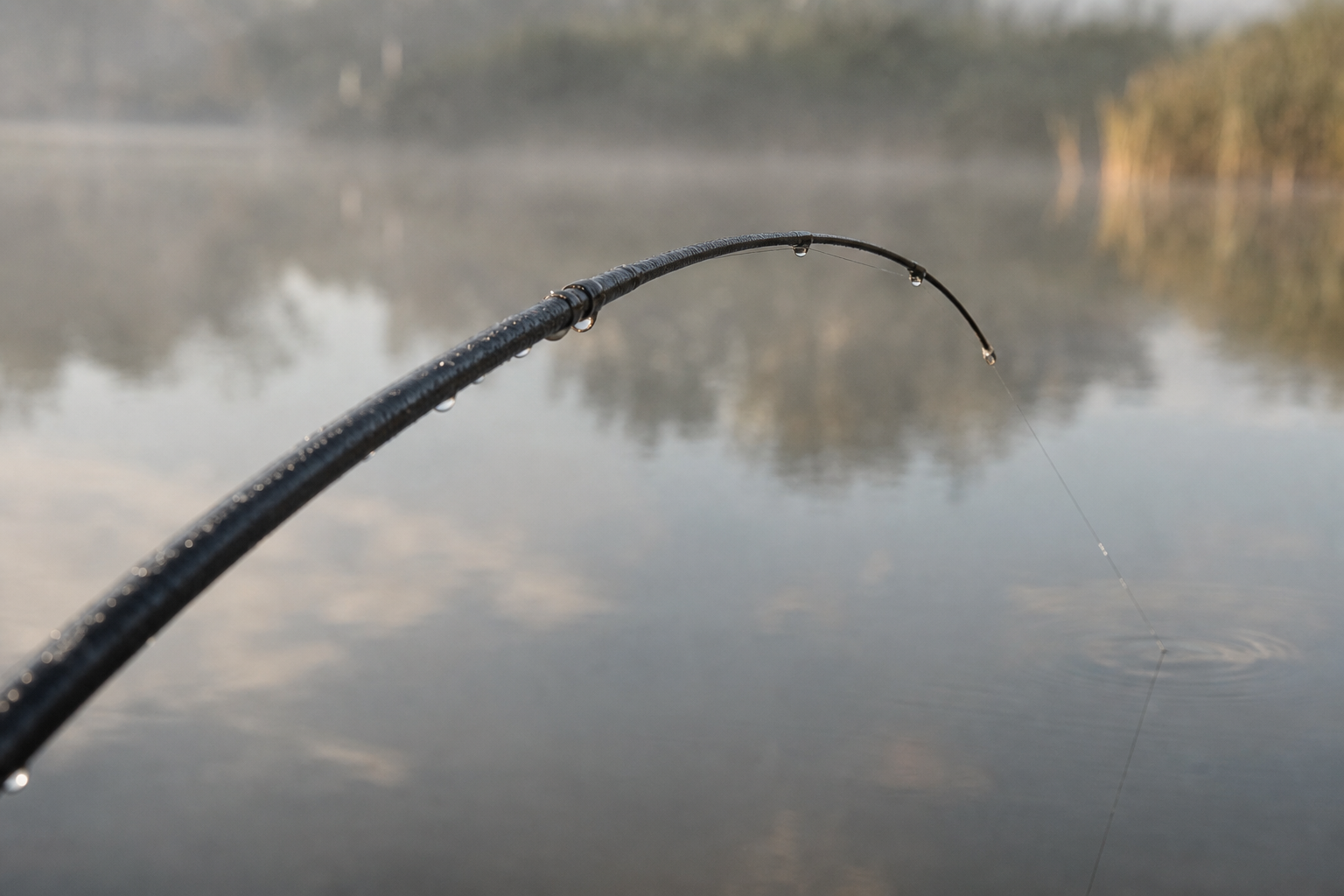
- Reel in slowly until there is a gentle, visible bend in the tip. You are not trying to pull the tip over hard; you want a slight arc that gives the tip room to move in both directions.
- If the tip is sitting dead straight, tighten up a little more.
- If there is still no indication after several minutes with fish visible in the swim, try dropping one step to a softer tip and check the rod angle again.
The Tip Is Bouncing in the Wind
A bouncing tip means either the tip is too soft for the conditions, the rod is positioned too high and is catching the wind, or there is a large bow in the line between rod tip and water that is transmitting surface movement into the tip.
- Lower the rod towards the water. Even a few inches of height reduction can make a measurable difference.
- Reel in until the line is reasonably taut and running fairly directly from rod tip to water, without a big belly.
- If the bounce continues, step up one tip rating.
You Are Striking but Not Connecting
A tip that is too stiff can hide the earlier part of a bite. The fish picks up the bait, moves a short distance, and the tip barely registers until the fish is already committed or has already dropped the bait. By the time you see a proper indication, the moment has passed.
- Try dropping one step softer in tip rating.
- Tighten the line slightly more than before, so any movement is transmitted to the now-softer tip more immediately.
- Watch for small preliminary movements rather than waiting for a decisive pull.
Note that missed strikes can also be caused by hook sharpness, rig length or bait presentation. If dropping to a softer tip and adjusting the line tension makes no difference after several attempts, it is worth reviewing the rig rather than continuing to change the tip.
Matching Rod, Tip, Feeder and Conditions: a Simple Framework
The decisions above are easier to make consistently if you work through them in the same order each session. Here is a repeatable process for setting up on the bank.
Choosing your setup on the day
Identify the venue type and likely cast distance
Commercial lake under 40m: 9–10ft rod. Larger stillwater or river: 10–12ft rod.
Choose a feeder within the rod's casting rating
Add the feeder body, weight and bait together. Stay well within the rod's stated maximum to avoid overloading the blank.
Fit the starting tip for your feeder weight
Light feeder under 20g: 0.5–1oz. Medium feeder 20–35g: 1–1.5oz. Heavy feeder or windy: 2oz+.
Set the rod low and tighten to a gentle bend
Point the rod towards the feeder. Reel in until the tip is curved slightly but not dragged hard over.
Watch and adjust
Too much bounce or sag: step up a tip rating. No bites but fish showing: step down and tighten the line.
The key relationship to keep in mind is that the tip rating and the feeder weight are linked. Change the feeder and the right tip may change too. A 30-gram loaded method feeder on a calm day suits a 1.5oz carbon; switch to a lighter cage feeder at 15 grams on the same rod and the 1oz glass will give you a clearer read. Work through the steps again each time you make a significant change to your feeder choice.
A Note on Using Multiple Rods
In England and Wales, a standard coarse fishing rod licence covers up to two rods. A three-rod licence is available separately for those who want it. National byelaws allow up to four rods for licensed anglers, provided all rods are within three metres of each other and are not left unattended with a baited hook or bait in the water.
In practice, most day-ticket commercial lakes limit anglers to two rods regardless of what their licence permits, and some venues restrict to one rod during busy periods. Always check the fishery's rules at the gate or on their website before setting up a second rod.
Rod length is not regulated under national byelaws in England and Wales. There is no minimum or maximum length restriction at a national level, though individual fisheries can and do set their own rules, so it is worth checking if you are unsure.
If you fish rivers, the annual close season for coarse fishing in England and Wales runs from 15 March to 15 June. Most commercial stillwaters remain open year-round, but check before travelling. Anglers fishing in Northern Ireland should note that rod licensing and close season rules are administered separately by DAERA and differ from the England and Wales framework.
Frequently asked questions
What feeder rod length is best for a commercial lake?
For most commercial carp and F1 lakes cast 25 to 40 metres, a 9 to 10ft rod rated around 30–50g is ideal. Use 8–9ft for tight pegs and 11–12ft for larger stillwaters or rivers.
Which quivertip rating should I start with?
Start with a 1.5oz carbon tip for a 25–35g loaded method feeder. Drop to a 1oz glass for light feeders and calm days, or step up to a 2oz carbon in wind or for heavier feeders.
What are the differences between glass and carbon tips?
Glass tips bend more parabolically and amplify small movements, good with monofilament and light feeders. Carbon tips are crisper, recover faster and suit braid and repeated heavy casts.
Why is my tip bouncing in the wind and how do I fix it?
Lower the rod towards the water, reel in until the tip has a gentle bend, then step up one tip rating if bouncing continues. A taut, low line reduces surface movement.
Can I use a 10 or 11ft rod on a commercial peg?
Yes. A 10–11ft rod will usually work well on commercial lakes and gives extra line pick-up. Consider a shorter 9ft rod only if the peg is very tight or overhung.
Lake & Lines Editorial Team
Editorial team
The Lake & Lines editorial team brings together freshwater fishing guides and researched tackle advice, helping beginners and returning anglers prepare for better days by the water.